
When the Adirondack Skies Sparkle: Your Guide to the 2025 Geminid Meteor Shower
If you’ve ever wanted to see the Adirondacks put on a celestial fireworks show, the Geminids are your ticket.

The Geminids Meteor Shower will put on a fanstastic show over the Adirondack skies in December, 2025.
On a quiet, wintry December night, long after the ski lifts stop spinning and the last round of hot cocoa has been poured, a different kind of magic arrives overhead—bright, blazing streaks of light tearing across the cold, dark sky.
The Geminids meteor shower, one of the most reliable and spectacular annual sky events, returns to the Adirondacks on the nights of December 13–15, 2025, with peak viewing expected late on the 13th into the pre-dawn hours of the 14th.
For stargazers, romantics, science nerds, and anyone who needs one last excuse to bundle up and step outside, the Geminids are a show you don’t want to miss.
What makes the Geminids so special
The Geminids aren’t just any meteor shower—they’re widely considered the most impressive meteor display of the year, often producing 100–150 meteors per hour under ideal conditions.
Unlike the quick summer Perseids, the Geminids are known for their slow, bright, almost painterly streaks that linger for a moment before fading into the night. Many appear yellowish, gold, or even green, thanks to mineral fragments burning in Earth’s atmosphere.

Celestial fireworks.
Even better: the shower is reliably strong every year, and because it occurs in mid-December, cold, dry air often means better transparency and sharper views. Yes, it’s a chill-you-to-the-bones kind of night—but the payoff is worth every mitten, neck gaiter, and hand-warmer packet in your arsenal.
A meteor shower with a strange origin story
Most meteor showers are created from the dusty tails of comets. The Geminids? Not so much.
According to NASA, these fiery streaks come from 3200 Phaethon, a rocky asteroid—sometimes nicknamed a “rock comet”—that sheds bits of itself as it loops near the sun. When Earth plows through that debris field each December, the fragments ignite in our atmosphere, creating the colorful, long-lasting arcs that have made the Geminids legendary.
In other words, you’re not watching comet dust. You’re witnessing fragments of an asteroid burn up dramatically. Metal. As. Heck.
Best places to watch in the Adirondacks
You don’t need a telescope or a mountaintop to enjoy the Geminids. In fact, the best meteor viewing spots in the Adirondacks are anywhere dark, open, and far from artificial light. Thankfully, that’s something the six-million-acre park has in abundance.

Meteor shower reflected in a still Adirondack lake.
1. Your own backyard (if you’re lucky enough to live here)
Many Adirondack residents enjoy naturally dark skies right outside their doors. If you can turn off nearby lights and give your eyes time to adjust, you may get an incredible show without leaving home.
2. Public lakeshores and boat launches
Open shorelines provide big-sky panoramas—perfect for watching meteors streak from horizon to zenith. Frozen lakes can offer reflections that double the magic, but always stay near shore and use caution early in the season.
3. Open fields and meadows
Whether it's a trailhead clearing, a local recreation field, or a quiet meadow you have permission to access, flat open spaces give you unobstructed 360-degree viewing.
4. Quiet backroads and rural pull-offs
Many Adirondack highways wind through areas with little to no light pollution. Look for safe, legal pull-offs where you can park well off the road. These offer expansive views of the sky without leaving your vehicle for long.
5. Campgrounds and day-use areas that remain accessible
Several state and town recreation areas remain open for off-season parking, even if amenities are closed. These typically offer broad sightlines and safe nighttime access—but always check local guidelines before heading out.
Bonus: Any frozen lake with a clear view of the sky acts as a natural observatory. Just stick close to the shoreline.
When and how to watch.
Peak time
The peak viewing time for the Geminid meteor shower will be late night on December 13 through dawn on December 14, 2025. To fully enjoy the experience, it is essential to have clear skies. Be sure to check local weather forecasts and clear-sky apps in advance, as cloud cover can obscure meteors and diminish your viewing experience.
According to Almanac.com, the Geminid meteor shower is a good option for kids who have difficulty staying awake until midnight, when many other meteor showers typically begin. For those who prefer to go to bed earlier, the Geminids will start around 9 PM. The viewing experience will improve as the night goes on, with peak activity occurring around 2 AM local time.
Where to look
Although meteors appear to radiate from Gemini, look slightly away from the radiant into the darker parts of the sky for the longest streaks.
Viewing tips

Arrive early to let your eyes adjust—20 to 30 minutes.
Bring extra layers—temperatures often dip into the single digits-and pack hand warmers, hats, and gloves. Dressing in moisture-wicking, insulated clothing ensures you stay warm and comfortable during extended periods outside, making your meteor shower experience more enjoyable and safe.
Use red-light headlamps, not white flashlights.
Bring a thermos of something warm.
Recline, whether on a camp chair or insulated pad, for maximum viewing comfort.
Keep electronics tucked away—phone screens will ruin night vision.
Check the moon phase: In 2025, the moon sets early enough to leave much of the late-night sky dark. A huge win.
The rise of “noctourism.”
Noctourism—travel centered around nighttime experiences—is on the rise worldwide, and the Adirondacks are uniquely primed to lead the movement in the Northeast.
Dark skies are becoming a rare commodity, and travelers are increasingly seeking destinations where they can enjoy stargazing, night photography, guided astronomy walks, nocturnal wildlife outings, and even moonlit snowshoe hikes.
Communities around the Adirondacks are beginning to embrace this trend, adding stargazing programs, expanding observatory hours, and promoting our naturally dark landscapes as a major draw.
The Geminids offer a perfect entry point for anyone curious about exploring the park in a whole new light—or lack thereof.
Appreciating Adirondack winter nights.
Winter is a season that slows everything down. Sound carries farther. Air turns crisp enough to feel electric. And when the clouds part, the Adirondack sky becomes an enormous stage for cosmic drama.
Watching the Geminids isn’t just about seeing meteors—it’s about stepping into the quiet, the cold, and the kind of stillness that’s become rare in everyday life. It’s about remembering that above our snowy mountains, the universe is always putting on a show.
Bundle up, step outside, and let the Adirondack night remind you just how dazzling December can be.
Learn more about meteor showers.
Shop for unique Adirondack apparel, gifts and merchandise.
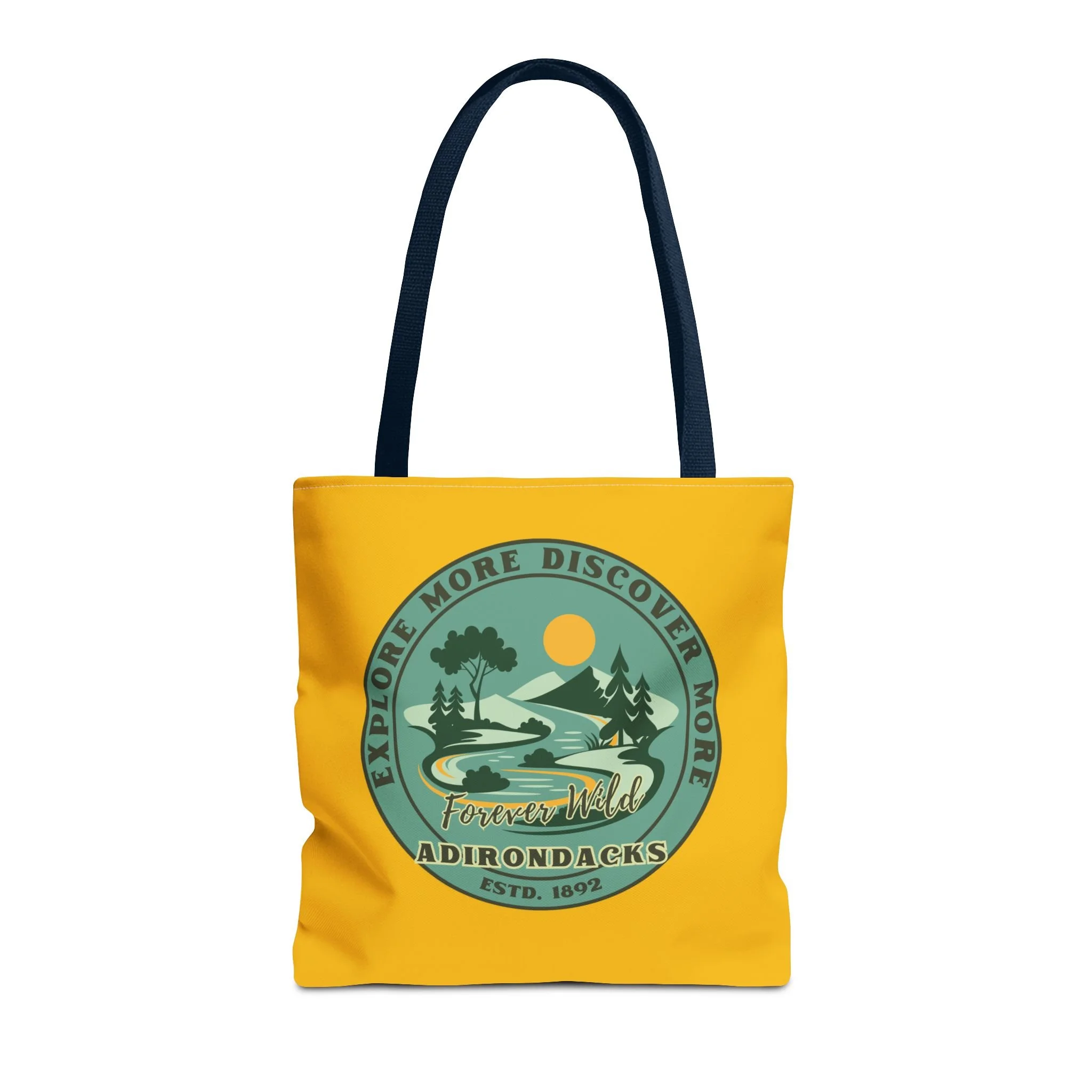
Bring a bold splash of the Adirondack spirit wherever you roam with this vibrant, adventure-ready tote bag. Featuring a chic golden hue and a retro-style design, this tote is more than just an accessory—it’s a statement of your love for the mountains, forests, and lakes that make the Adirondacks legendary.
Crafted from durable, easy-care polyester and finished with reinforced stitching, this bag is made to go the distance—from farmers’ markets to campsites, library runs to beach days. The roomy boxed corners make packing snacks, sweaters, books, or souvenirs a breeze, while the sturdy navy or black straps sit comfortably on your shoulder no matter how full the day (or the bag).
And with the playful “Find the Good Stuff Here” message on the reverse, this tote is a nod to curiosity, good vibes, and great finds.
Perfect for:
-
Day trips to your favorite lake or historic site
-
Grocery hauls and artisan market strolls
-
Picnic gear, beach towels, or a cozy flannel
-
Commuters who love to keep it wild
-
Gift-givers looking for something both beautiful and useful
Product Features:
-
100% polyester for strength and durability
-
Reinforced handle stitching for everyday carry confidence
-
Spacious 16" x 16" design with boxed corners for easy packing
-
Soft yet sturdy medium-weight fabric
-
Stylish navy handles to complement any outfit
Go ahead—Find the Good Stuff. Carry it in style.
A perfect gift for Adirondack lovers, nature enthusiasts, and anyone who believes “Forever Wild” is more than a motto—it’s a way of life.

In the Adirondack Mountains, every summit tells a story. Stories of persistence, breathtaking views, and a connection to nature so profound it’s almost mythical. This shirt doesn’t just celebrate the 46 High Peaks; it embodies them.
Soft-washed and garment-dyed, the fabric feels like a well-worn trail map—comfortably familiar yet sturdy enough for any adventure. The relaxed fit lets you move easily, whether you're scaling Colden or savoring a fireside evening. Double-needle stitching ensures it’s as resilient as the trails themselves, while the tubular design holds its shape through time, much like the enduring peaks it honors.
It's available in six hues inspired by Adirondack landscapes: Earthy Espresso, High Peaks Pepper, Evergreen Moss, Midnight Blue, Sunset Grape, and Autumn Ember Chili.
Try it on, and you’re not just wearing a T-shirt—you’re carrying the spirit of the High Peaks, ready to inspire your next trek or remind you of the ones you’ve conquered. Perfect for the 46er at heart—or anyone dreaming of their own Adirondack ascent.
Because adventure doesn’t stop when you leave the trail.
- Made with high quality, 100% ring-spun US cotton for long-lasting comfort.
- The relaxed fit keeps the wearer comfy in both casual and semi-formal settings while the crew neckline delivers that classic, neat style that makes it perfect for accessorizing.
- The pre-shrunk fabric ensures a consistently great fit.
- Made using 100% US cotton that is ethically grown and harvested. The manufacturer is a proud member of the US Cotton Trust Protocol ensuring ethical and sustainable means of production.
| S | M | L | XL | 2XL | 3XL | 4XL | |
|---|---|---|---|---|---|---|---|
| Width, in | 18.25 | 20.25 | 22.00 | 24.00 | 26.00 | 27.75 | 29.75 |
| Length, in | 26.62 | 28.00 | 29.37 | 30.75 | 31.62 | 32.50 | 33.50 |
| Sleeve length from center back, in | 16.25 | 17.75 | 19.00 | 20.50 | 21.75 | 23.25 | 24.63 |
| Size tolerance, in | 1.50 | 1.50 | 1.50 | 1.50 | 1.50 | 1.50 | 1.50 |
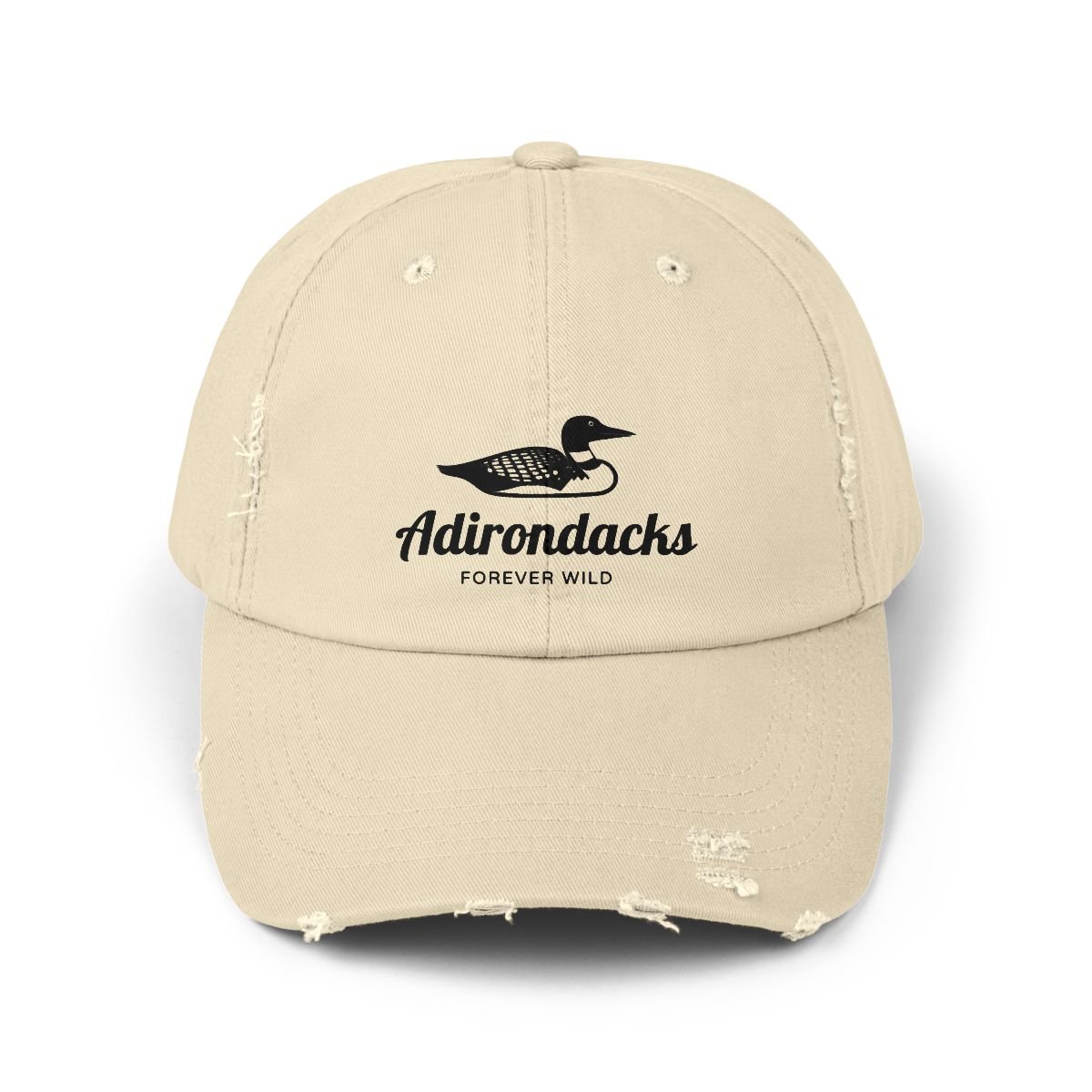
You’ve wandered through the misty pines at dawn, the echo of a distant loon calling across the lake. You’re not one for the ordinary—your gear, like your adventures, must be timeless. Enter the Adirondack Loon Cap.
Crafted from 100% cotton twill, this is no ordinary cap. It’s the kind you throw on for a day of rugged escapades or an afternoon stroll by the water's edge. Its worn-in look whispers of trails yet to be explored.
The low profile hugs the contours of your head just right, while the D-ring closure with a self-fabric hideaway strap ensures an impeccable fit—no matter how wild the wind or how far the journey.
Protection from the sun? Naturally. But more than that, it’s about wearing something that feels like it’s always been part of your story.

This classic unisex jersey short-sleeve tee fits like a well-loved favorite. Soft cotton and quality print make even the roughest beast fall in love with it over and over again.
These t-shirts have-ribbed knit collars to bolster shaping. The shoulders are tapered for a better fit over time. Dual side seams hold the garment's shape for longer. Perfect when your out on the trail tracking the elusive Sasquatch.
.: Made with 100% Airlume combed and ring-spun cotton, a lightweight fabric that is easy to layer, breathable. Perfect for an active Adirondack Park lifestyle.
.: The retail fit that is ideal for casual and semi-formal settings. The crew neckline adds a classic, neat style that's perfect for accessorizing.
.: Manufactured in the USA and internationally in humane, no-sweat-shop, sustainable way and is part of the Fair Labor Association as well as Platinum WRAP certified.
.: The tear-away label minimizes skin irritations.
.: Fabric blends: Ash and Heather Prism colors - 99% Airlume combed and ring-spun cotton, 1% polyester; Heather and Solid Blend colors - 52% cotton, 48% polyester; Athletic Heather - 90% cotton, 10% polyester.

Our leather patch hats are made from 100% bio-washed chino twill. It's a very comfortable yet sturdy material that will last for ages. This stylish hat has an unstructured shape with a low profile and a pre-curved bill
.
.: Materials: 100% bio-washed chino twill cotton (hat), 100% PU leather (patch)
.: Unstructured, six-panel, low-profile
.: Pre-curved bill
.: Sewn-in label
.: Blank sourced from Bangladesh
.: NB! Hand-wash only
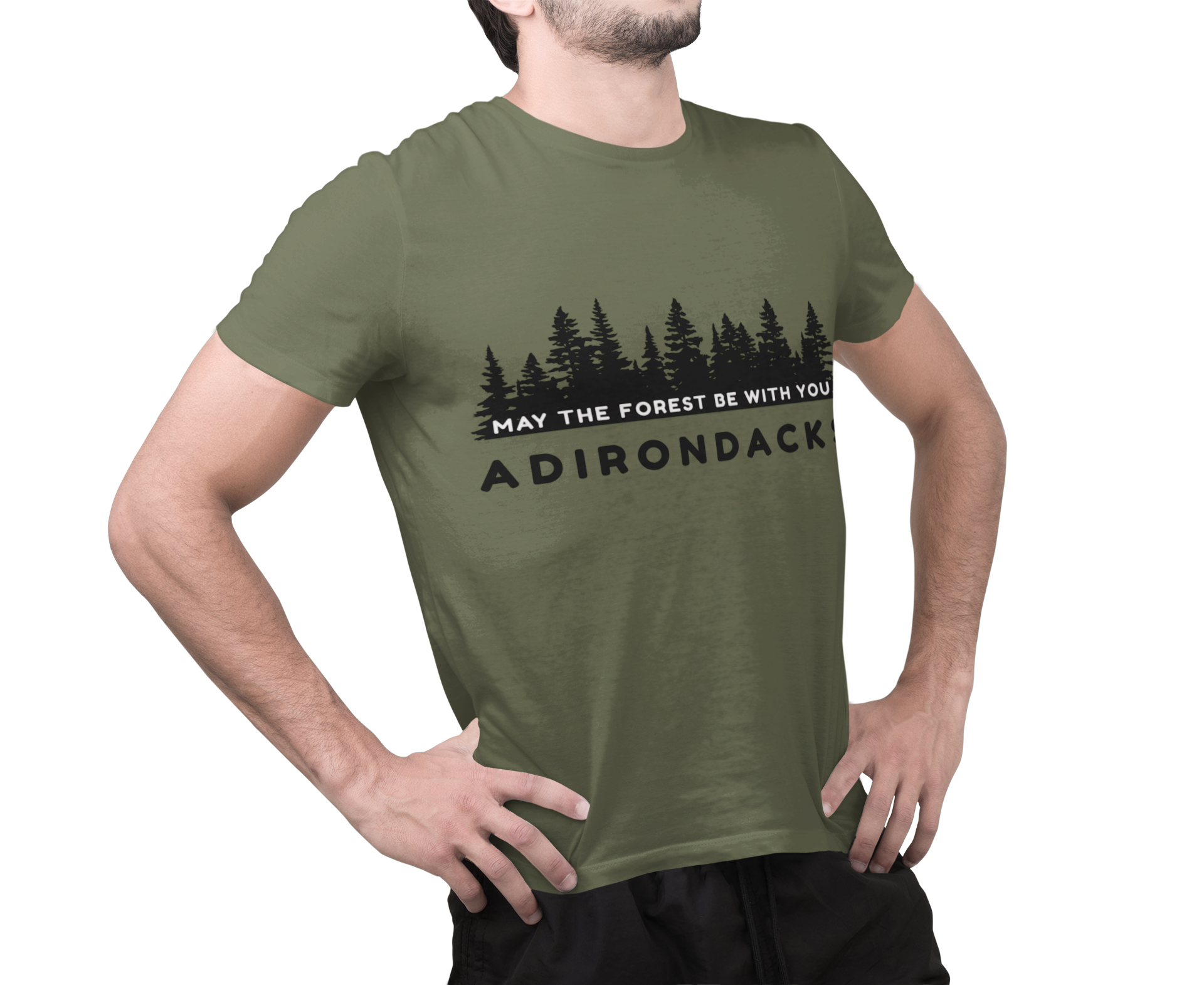
Channel your inner Guardian… of the woods. This cheeky "May the Forest Be With You" Adirondacks t shirt is perfect for hikers, campers, and anyone who prefers pine trees over palm trees. With a design that pays tribute to a galaxy far, far away—while keeping your boots planted firmly in the Adirondack backcountry—this shirt is a must-have for nature lovers and science fiction fans alike.
Printed on a super-soft, unisex tee made from ethically harvested, 100% ring-spun cotton, it's lightweight enough for summer hikes and cozy enough to layer in the fall. The durable shoulder tape and ribbed collar mean it holds up trail after trail, wash after wash. And the tear-away label? That's pure comfort.
Whether you're exploring the High Peaks or grabbing a beer in Lake Placid, this tee makes it clear: the forest is strong with you.
Why You'll Love It:
-
100% ring-spun US cotton (heather options include polyester)
-
Lightweight, breathable, and perfect for year-round wear
-
Classic unisex fit with a crew neck for versatile style
-
No side seams = no twisting or rubbing
-
Tear-away label for tag-free comfort
-
Ethically made by Gildan, a member of the US Cotton Trust Protocol
Get yours before they disappear into the forest mist.
| S | M | L | XL | 2XL | 3XL | 4XL | |
|---|---|---|---|---|---|---|---|
| Width, in | 18.00 | 20.00 | 22.00 | 24.00 | 26.00 | 28.00 | 30.00 |
| Length, in | 28.00 | 29.00 | 30.00 | 31.00 | 32.00 | 33.00 | 34.00 |
| Sleeve length, in | 8.23 | 8.50 | 8.74 | 9.02 | 9.25 | 9.49 | 9.72 |
| Size tolerance, in | 1.50 | 1.50 | 1.50 | 1.50 | 1.50 | 1.50 | 1.50 |

ADK Taste Instagram followers will immediately recognize our popular Loon Facts, which we share regularly. These factoids are now available on ceramic mugs, suitable for coffee, tea, hot cocoa, or even a hot toddy in front of the campfire.
These unique 11-oz hot beverage mugs feature an interesting fact about loons, such as “Fact #12: Loons are Not Ducks,” with an explanation. It's a great way to show off your love for the Common Loon, the Adirondacks, and random trivia.
This ceramic mug is perfect for coffee, tea, and hot chocolate. It also makes an excellent gift for nature lovers, bird watchers, and anyone who appreciates unique, trivia-inspired drinkware.
Material: White ceramic
Size: 11oz (0.33 l)
Uses: Coffee, tea, hot cocoa, hot toddy
Features: Durable, trivia-themed design, great gift idea
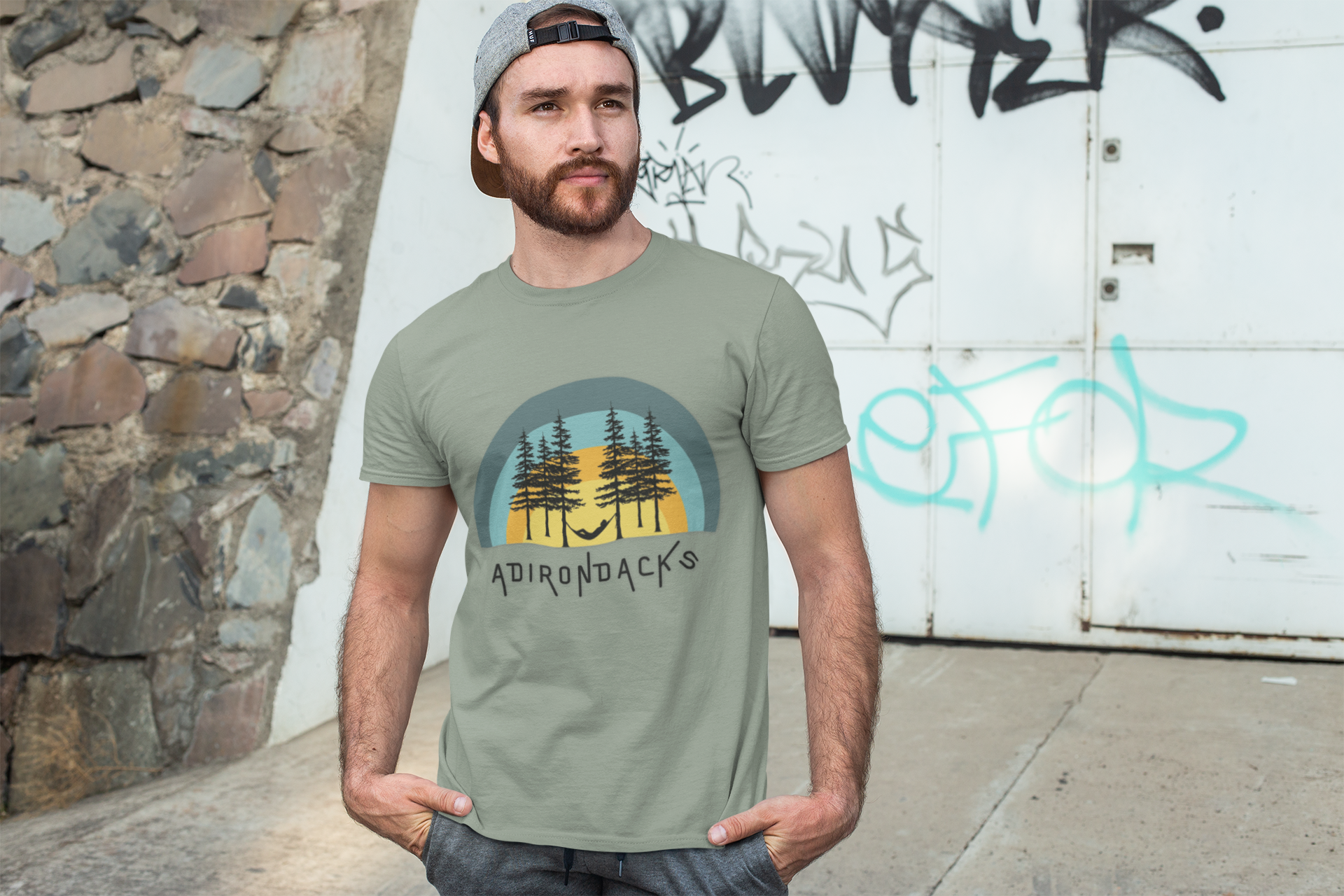
Bring a little slice of Adirondack serenity wherever you go. This unisex jersey t shirt captures the laid-back vibe of a perfect mountain evening—towering pines, a golden sunset, and a hammock swaying between the trees.
Whether you're sipping coffee on a camp porch, exploring a hidden trail, or just dreaming of your next Adirondack escape, this shirt keeps that mountain state of mind close to your heart.
Made for comfort and adventure, it's lightweight, soft, and durable—ideal for casual hikes, campfire nights, or everyday wear. It's also a great gift for fellow ADK lovers who appreciate gear that's as eco-friendly as it's stylish.
Designed with your comfort in mind.
Tailored with side seams for a great fit that holds its shape.
The ribbed knit collar retains its shape, wash after wash.
Shoulder tape adds durability for trail-to-town wear.
Crafted from 100% Airlume combed and ring-spun cotton—breathable, soft, and adventure-ready.
Care Instructions.
Machine wash cold (max 30C/90F)
Non-chlorine bleach only
Tumble dry low
Medium heat iron if needed
Slip it on, and it's like carrying a little piece of the Adirondacks with you—wherever you roam.
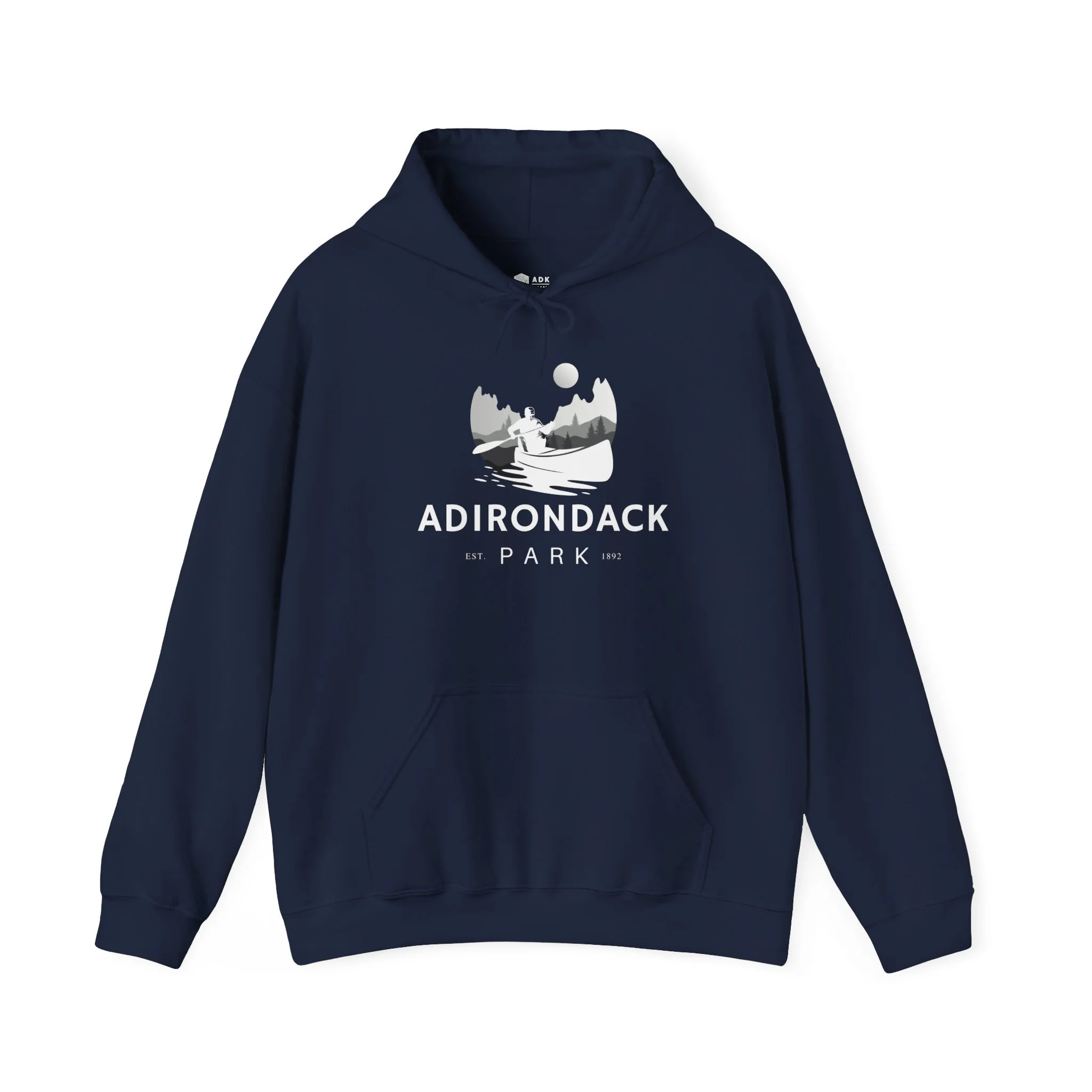
Show off your love for the Adirondacks in style with this Adirondack Park Unisex Heavy Blend™ Hoodie. Featuring a bold canoe-and-mountain design and “Est. 1892” tribute, this hoodie is a must-have for anyone who dreams of paddling serene Adirondack lakes or exploring rugged High Peaks.
Whether you’re relaxing by the campfire, strolling through Lake Placid, or looking for the perfect Adirondack-themed gift, this hoodie delivers warmth, comfort, and timeless style.
Crafted from a soft, durable cotton-poly blend, this item is ideal for layering year-round. The spacious kangaroo pouch pocket keeps hands warm on chilly evenings, and the adjustable drawstring hood adds a snug, cozy fit. Ethically produced with OEKO-TEX certified dyes, it’s as kind to the environment as it is to your weekend wardrobe. Extended sizes available.
This is more than just a hoodie—it’s a piece of the Adirondacks you can wear anywhere. Treat yourself or surprise the ADK enthusiast in your life—perfect for birthdays, graduations, or that next mountain getaway.
Product Highlights:
Soft & durable 50% cotton / 50% polyester blend
Spacious kangaroo pocket for warmth & convenience
Adjustable drawstring hood for the perfect fit
Ethically produced with OEKO-TEX certified dyes
Medium-heavy weight—ideal for year-round adventures
SMLXL2XL3XLWidth, in20.0822.0524.0225.9827.9929.92Length, in27.1727.9529.1329.9231.1031.89Sleeve length from center back, in33.5034.5035.5036.5037.5038.50Size tolerance, in1.501.501.501.501.501.50
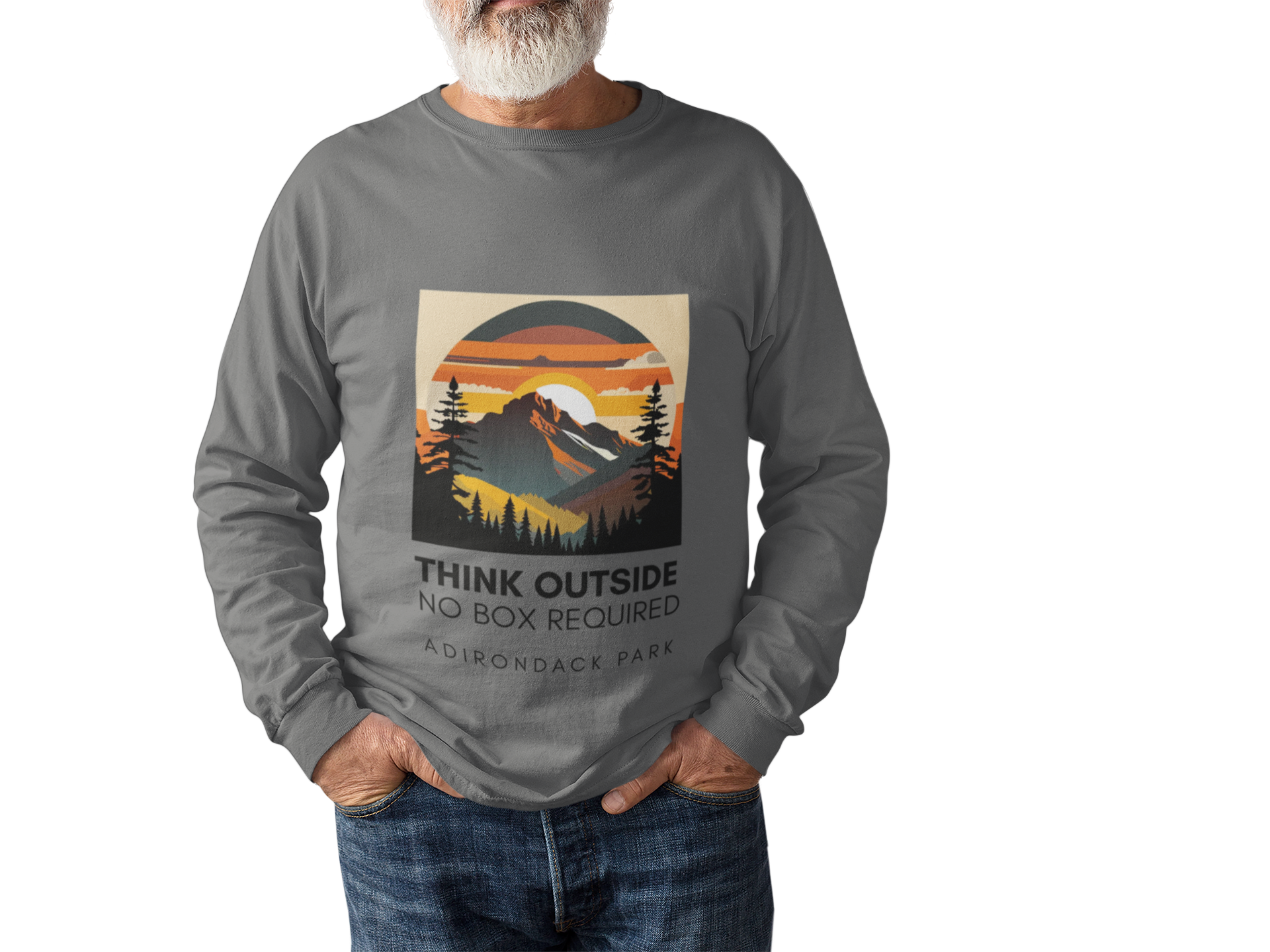
For those who believe the best ideas start under open skies—not fluorescent lights.
Our Think Outside: No Box Required long-sleeve performance tee is trail-tested, ADK Taste-approved. Built for cool mornings, summit scrambles, and campfire conversations, this lightweight layer keeps up wherever the day takes you.
Crafted from ultra-breathable, moisture-wicking polyester, it dries fast and moves freely—whether you’re chasing the sunrise over Heart Lake or paddling through the Fulton Chain. The vintage-inspired mountain and sunset graphic captures the spirit of the Adirondack Park: bold, natural, and endlessly inspiring.
It’s the perfect base layer for shoulder-season hikes, a top layer for lakeside runs, or your go-to shirt when you just want to bring a little “High Peaks energy” to your everyday routine.
Trail facts:
- 100% moisture-wicking polyester — lightweight (3.8 oz/yd²) and quick-drying
- Athletic cut built for movement
- Extended sizes available
- Tear-away tag for itch-free comfort
- Designed in the Adirondacks, inspired by the call of the wild
- Care: Machine wash cold, hang to dry, no bleach or ironing.
Whether you’re layering up for a dawn hike or winding down by the fire pit, this tee reminds you that the Adirondacks will always be your greatest inspiration—no box required.
| XS | S | M | L | XL | 2XL | 3XL | |
|---|---|---|---|---|---|---|---|
| Width, in | 18.50 | 20.00 | 21.50 | 23.00 | 24.50 | 26.00 | 28.00 |
| Length, in | 27.00 | 28.00 | 29.00 | 30.00 | 31.00 | 32.00 | 32.50 |
| Sleeve length, in | 33.25 | 34.00 | 34.25 | 35.50 | 36.25 | 37.00 | 37.75 |

Adirondack Explorer Sweatshirt is a cozy and stylish garment that exudes a sense of adventure and exploration. Perfect for nature lovers and outdoor enthusiasts, this sweatshirt is ideal for wearing on cool evenings by the campfire or during weekend hikes. It makes a great gift for those who enjoy spending time in the great outdoors, especially during camping trips, hiking excursions, and nature expeditions.
Product features
- Relaxed fit for comfortable wear
- 1x1 Ribbed collar, cuffs, and bottom hem for a well-fitted look
- 80% cotton, 20% polyester fabric blend for a soft and luxurious feel
- Embroidery decoration option available for a personalized touch
- Medium-heavy fabric for warmth and durability
Care instructions
- Machine wash: cold (max 30C or 90F)
- Non-chlorine: bleach as needed
- Tumble dry: low heat
- Do not iron
- Do not dryclean
| S | M | L | XL | 2XL | 3XL | |
|---|---|---|---|---|---|---|
| Width, in | 21.00 | 23.00 | 25.00 | 26.50 | 28.00 | 29.50 |
| Length, in | 27.50 | 28.50 | 29.50 | 30.50 | 31.50 | 32.50 |
| Sleeve length from center back, in | 31.50 | 33.50 | 35.25 | 36.75 | 38.25 | 39.25 |
| Size tolerance, in | 1.50 | 1.50 | 1.50 | 1.50 | 1.50 | 1.50 |
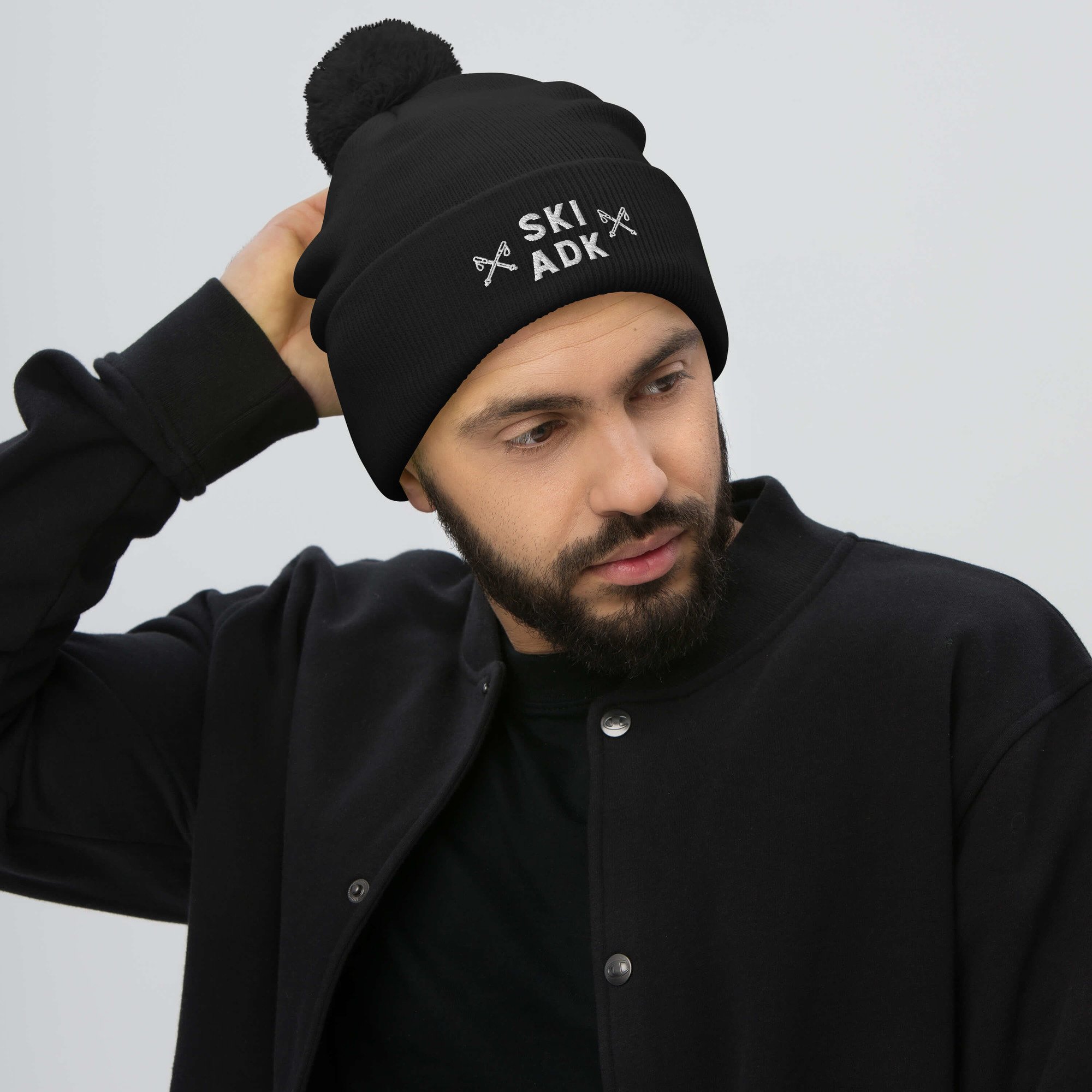
Look stylish on the trail or at the pub in this Adirondack Pom Pom Beanie. It offers tons of warmth and comfort and is destined to find its way into all your favorite cold-weather looks.
• 100% acrylic
• 12″ (30.5 cm) knit
• Fold-over 3″ (7.6 cm) cuff
• Pom-pom on top
• Unisex, one size fits most
• Product sourced from Vietnam
This product is made especially for you as soon as you place an order, which is why it takes us a bit longer to deliver it to you. Making products on demand instead of in bulk helps reduce overproduction, so thank you for making thoughtful purchasing decisions!

You didn’t set out to make a statement. Yet here you are, wrapped in an effortless style that turns heads as surely as the crunch of leaves on a mountain trail. This isn’t just a hoodie—it’s an ode to the wilderness.
The iconic Adirondack bear stands proudly across your heart, its silhouette evoking misty mornings and pine-scented trails. And, at the same time, it's got your back.
The Adidas Adirondack Bear Hoodie is crafted from a harmonious blend of 70% BCI cotton and 30% recycled polyester. This unisex Adidas fleece hoodie whispers its eco-conscious origins while delivering a softness that feels like a warm embrace after a day on the slopes, trails or a mountain lake.
The 3-panel hood adjusts with a sturdy drawcord—perfect for bracing against brisk Adirondack winds. The generously sized pouch pocket cradles your hands or stows away the treasures of the trail (or your keys, phone, or chocolate-covered espresso beans, whichever). On the right arm, the contrasting Adidas logo adds a subtle yet unmistakable nod to athletic heritage because cozy doesn’t mean compromising on cool.
Slide it on. Feel the balance of function, sustainability, and undeniable charm. Just don’t be surprised if the bear isn’t the only thing people admire.
Core features:
- 70% BCI cotton, 30% recycled polyester (fiber content varies for different colors)
- Medium-heavy fabric (8.5 oz /yd² (300 g/m²))
- Regular fit
- Sewn-in neck and left side label
| XS | S | M | L | XL | 2XL | 3XL | 4XL | |
|---|---|---|---|---|---|---|---|---|
| Width, in | 19.62 | 20.87 | 22.50 | 24.00 | 26.00 | 28.37 | 30.75 | 33.12 |
| Length, in | 27.50 | 28.25 | 29.25 | 30.00 | 30.75 | 31.75 | 32.75 | 33.75 |
| Sleeve length, in | 26.00 | 26.25 | 26.50 | 27.00 | 27.25 | 27.50 | 27.75 | 28.25 |
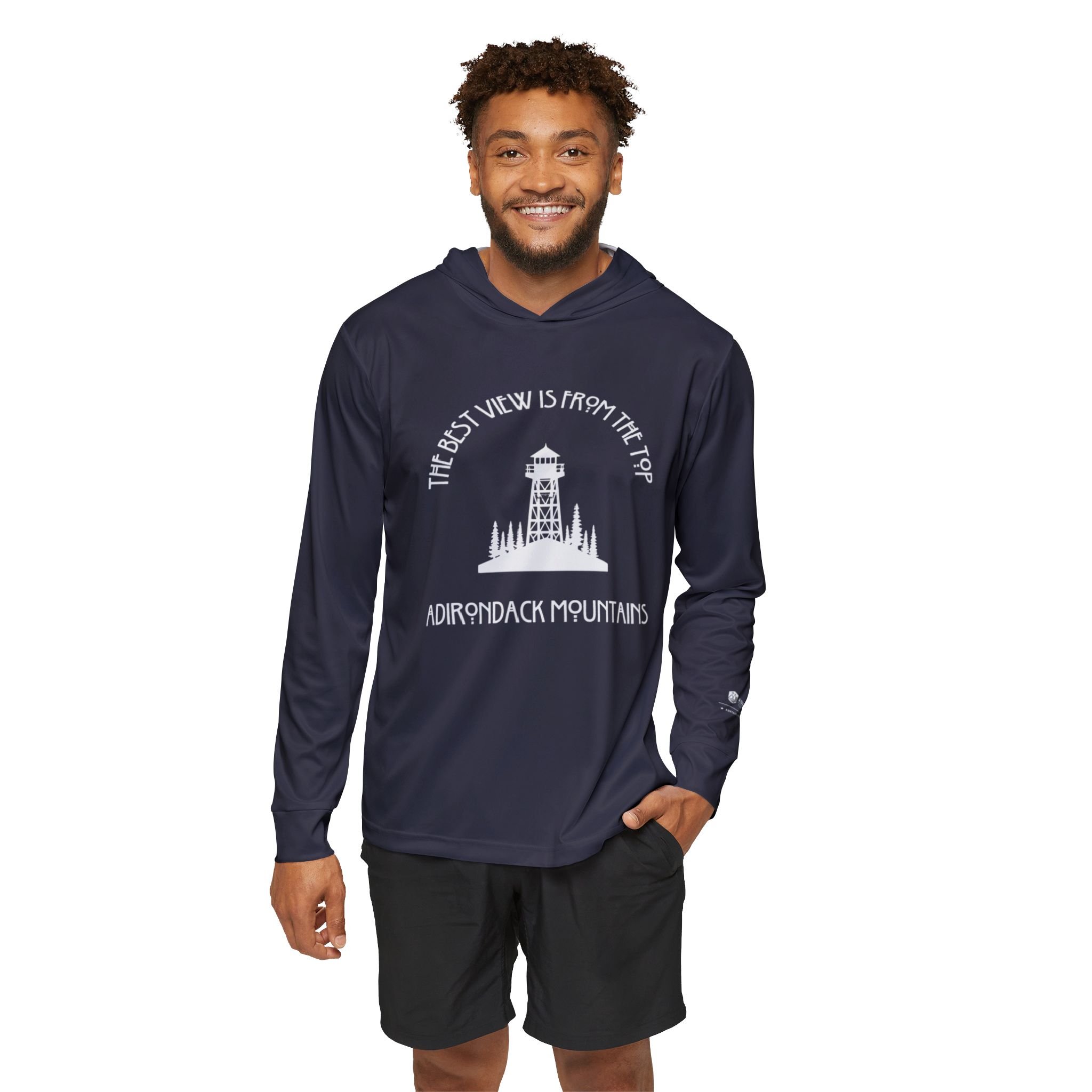
The Adirondack Adventurer's Elemental Hoodie
You've summited more High Peaks than you can count, outrun summer thunderstorms, cycled through sunlit canyons, and paddled miles of Adirondack lakes, rivers and streams. Every journey has a story, and every adventure demands a worthy companion. Enter The Adirondack Adventurer's Elemental Hoodie.
But this isn't just any hoodie. On its front, an iconic Adirondack Fire Tower stands tall, a tribute to explorers who know that "The Best Views are From the Top." Whether it's the summit of Wakely or a quiet perch above the tree line, this hoodie captures the spirit of discovery and the reward of reaching new heights.
Crafted for those who thrive in the untamed, this hoodie isn't just clothing; it's an all-access pass to peak performance. Its ultra-lightweight design is tailored to move as you do, whether chasing horizons on foot or pedaling into the unknown. The fabric? Pure genius—100% moisture-wicking polyester that works as hard as you do to keep you dry and comfortable, even when the midday sun tests your resolve.
Speaking of the sun, it doesn't stand a chance. With UPF 50+ protection, this hoodie shields you from harmful UVA and UVB rays, ensuring every outdoor moment is worry-free. Thoughtfully designed with a lined hood, it's a minimalist nod to style and comfort.
Whether you're conquering trails, perfecting your pace on a run, or simply soaking in a day of well-earned leisure, The Adventurer's Elemental Hoodie delivers -- breathable, stylish, and effortlessly comfortable on all fronts.
- Material: 100% moisture-wicking polyester
- Extra light fabric (4.13 oz/yd² (140g/m²))
- Sun protection: UPF +50
- Assembled in the USA from globally sourced parts
| S | M | L | XL | 2XL | |
|---|---|---|---|---|---|
| Chest width, in | 17.00 - 18.00 | 19.00 - 20.00 | 21.00 - 22.00 | 23.00 - 24.00 | 25.00 - 26.00 |
| Length, in | 28.00 | 29.00 | 30.00 | 31.00 | 32.00 |
| Sleeve length, in | 27.50 | 27.80 | 28.00 | 28.30 | 28.40 |

This is the perfect item for your wardrobe to show off your love of the Adirondacks' over 2,000 miles of hiking trails. Whether you are a 46er (or an aspiring one) or just someone who likes to take a walk in the woods, this unisex heavy cotton tee is a basic staple of any wardrobe.
It's super comfortable with specially spun fibers. No side seams mean there are no itchy interruptions under the arms, and the shoulders have tape for improved durability.
100% cotton for year-round comfort that is sustainable and highly durable.
The classic fit of this shirt ensures a comfy, relaxed wear.
The crew neckline adds a neat, timeless look that can blend into any casual or semi-formal occasion, like your sister's wedding rehearsal dinner or your Uncle Todd's funeral.
The tear-away label means a scratch-free experience with no irritation or discomfort whatsoever.
Made using 100% US cotton that is ethically grown and harvested.
The manufacturer is a proud member of the US Cotton Trust Protocol ensuring ethical and sustainable means of production.
SMLXL2XL3XL4XLWidth, in18.0020.0022.0024.0026.0028.0030.00Length, in28.0029.0030.0031.0032.0033.0034.00Sleeve length (from center back), in15.1016.5018.0019.5021.0022.4023.70Size tolerance, in1.501.501.501.501.501.501.50

The wind up on Whiteface Mountain can be as unpredictable as life itself. You need something that shows that you can handle both with equal grace. Enter the Adirondack Rider, a sweatshirt hoodie that's more than just fabric—it's a statement.
Crafted from 100% ring-spun US cotton, it's as soft as the first snowfall and just as durable. The relaxed fit gives you room to move, whether cruising around town or warming up by the lodge fire. But it's not just about comfort. This hoodie is made with care—sustainable, environmentally friendly production methods ensure it leaves as little trace as you do in the forever wild Adirondack Park.
And then there's the design: a subtle yet striking tribute to the thrill of snowboarding in the Adirondack Mountains. The sweeping curves of a rider shredding the gnar remind you of why you chase the snow. It's not just a sweatshirt; it's an invitation to adventure, to strap in and let the mountain guide you.
Wear it après shred in front of the fire or while running errands in town. Either way, you'll feel the pull of the Adirondacks wherever you go.
100% ring-spun US cotton
Light fabric (6.4 oz/yd² (217 g/m²))
Relaxed fit
Sewn-in twill label
Proud member of the U.S. Cotton Trust Protocol
Made with OEKO-TEX certified low-impact dyes, clean pigment dye colors are salt-free

Leave no trace with this tumbler. It's the perfect companion for any road trip – it fits perfectly into car cup holders. The rubber gasket makes it spill-resistant on bumpier roads, and the double-wall insulation makes sure drinks stay at the right temperature until the next pit stop. Features include:
- Double wall insulation
- Material: Stainless steel
- Fits perfectly in car cup holder
- Spill-resistant sliding lid with a rubber gasket to prevent leaks

Up before dawn, casting your line into a pristine Adirondack lake or stream. The mist rises, the silence is palpable, and you move with purpose. Every detail matters. That’s why we designed the Adirondack Fisherperson’s Long-Sleeve Tee, crafted from 100% polyester interlock fabric. Extra-lightweight but with a trusted companion's durability, this tee covers you from early morning chills to the high-noon sun. Its moisture-wicking capabilities ensure you stay dry when reeling in the big one, while the quick-dry fabric ensures the comfort lasts all day.
Need protection from the sun? A 40+ ultraviolet protection factor shields your skin from harmful UV rays, leaving you free to focus on the waters ahead, no matter the weather. You’ll feel secure knowing it’s built for the long haul, much like the rivers and lakes you cherish.
This is more than just a fishing shirt; it’s a part of your journey.
- 100% moisture-wicking polyester
- Extra light fabric (3.5 oz/yd² (118 g/m²))
- Athletic fit
| XS | S | M | L | XL | 2XL | |
|---|---|---|---|---|---|---|
| Width, in | 18.50 | 20.00 | 21.50 | 23.00 | 24.50 | 26.00 |
| Length, in | 25.30 | 26.30 | 27.30 | 28.30 | 29.30 | 29.80 |
| Sleeve Length, in | 33.00 | 33.50 | 34.50 | 35.50 | 36.50 | 37.50 |

Relive memories of summer camp daze in the Adirondacks. ADK Taste's unisex CAMP ADK baseball cap is made with 100% cotton twill for high-end comfort and durability.
These custom distressed hats bring back the cherished memories of summer camp in the Adirondacks. It's like finding lost treasure from your precious youth.
The hat's low profile, and the D-ring closure on a hideaway strap ensure proper sun protection and that perfect, adjustable fit needed in our adult years.
.: 100% cotton twill
.: Sewn-in label
.: Due to a unique, bespoke, and exclusive finishing process, distress and color may vary by item
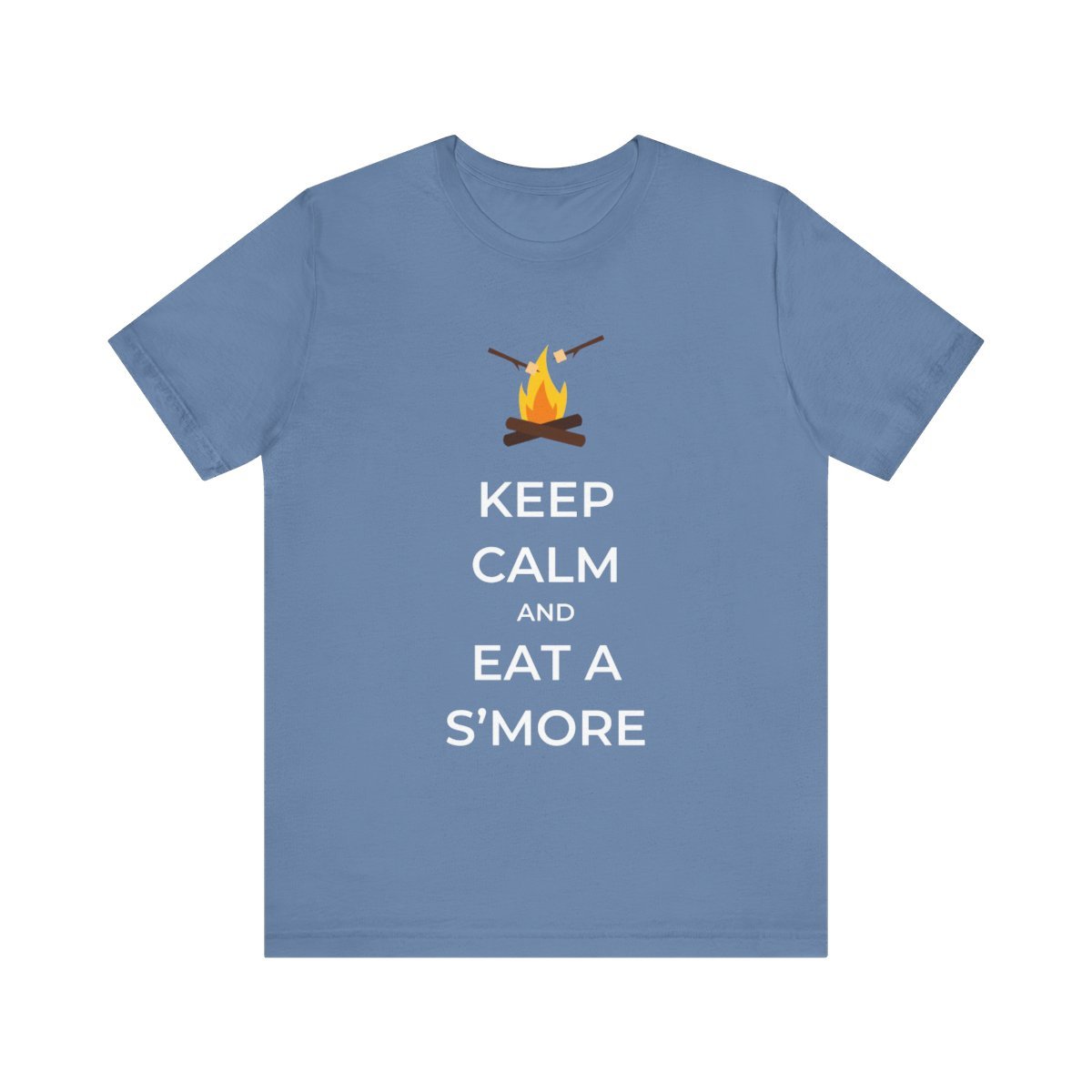
You're sitting around a crackling Adirondack campfire, the stars twinkling above as you balance a marshmallow at the perfect distance from the flame. The night air is crisp, laughter floats between friends, and everything is just right for a moment. Then someone spots it—your shirt, a conversation piece as irresistible as that golden-brown marshmallow.
Or maybe you're at your favorite watering hole in Manhattan's East Village, chilling over beers with good friends. You thrive on city life, but your heart is in the mountains. Let this T-shirt do the talking for you.
Made for those who don't take life too seriously but know how to enjoy the finer things (like s'mores and campfire stories), this T-shirt is your perfect companion for evenings by the fire or casual summer outings to the lake. It's light enough for Fourth of July celebrations yet sturdy enough for the rugged outdoors. Ideal for sparking a few laughs or starting the kind of conversations that go well into the night.
Crafted from 100% Airlume combed and ring-spun cotton, this tee is designed to retain its shape (even after a few marshmallow mishaps). With a retail fit, it's at home in a backyard BBQ as on a moonlit camping trip. Ribbed knit collar, shoulder tape for added durability—because life outdoors, much like humor, demands a little structure.
Carefully machine wash cold and tumble dry low, and this shirt will be ready for your next adventure—whether that's a weekend in the woods, an impromptu backyard bonfire or a laid-back weekend in the city.
Get ready to enjoy life with a smile on your face and a story on your shirt.
XSSMLXL2XL3XL4XLWidth, in16.5018.0020.0022.0024.0026.0028.0030.00Length, in27.0028.0029.0030.0031.0032.0033.0034.00Sleeve length, in8.608.909.209.509.7010.0010.4010.80Size tolerance, in1.501.501.501.501.501.501.501.50
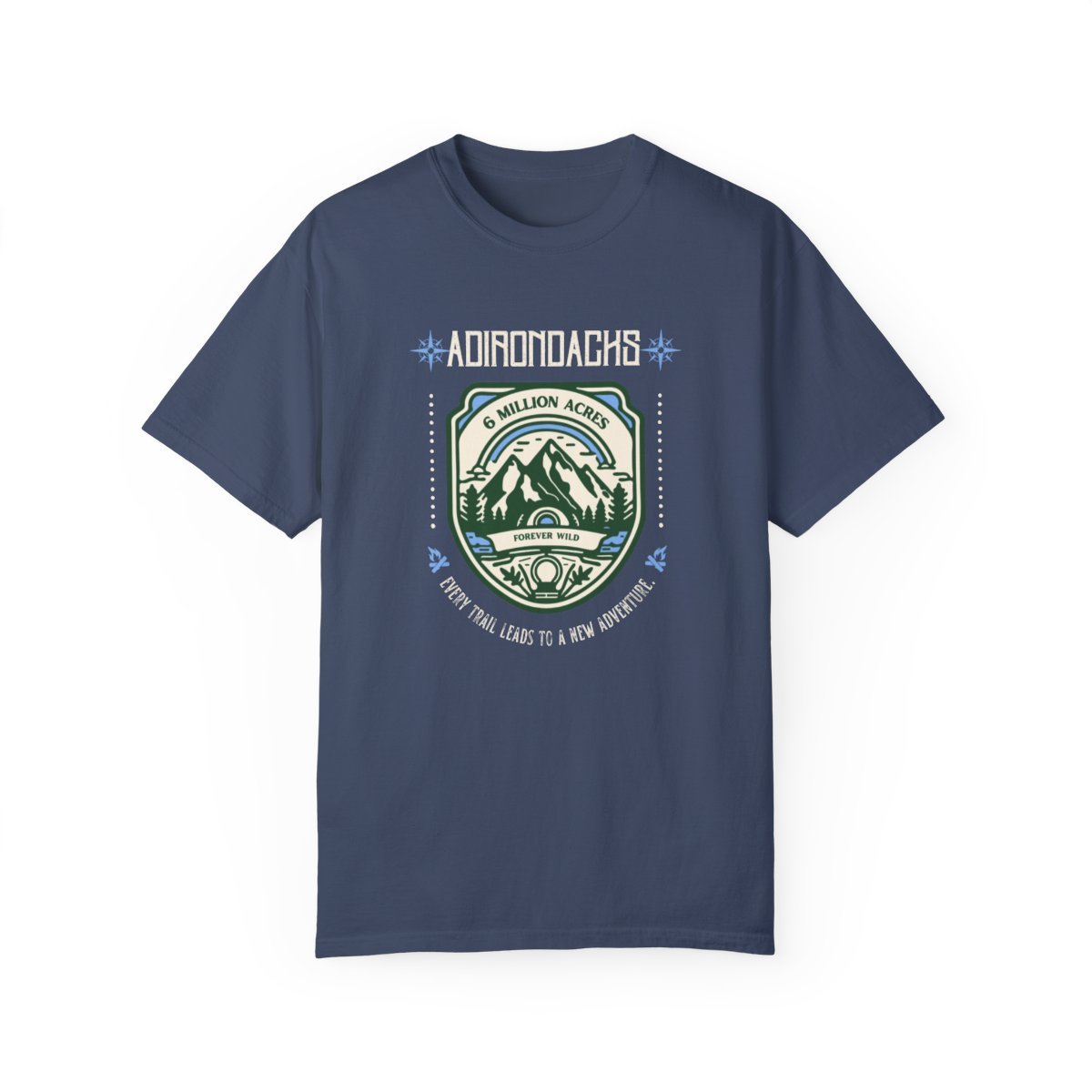
Some shirts simply clothe you. This one transports you. Made from 100% ring-spun US cotton, the Adirondack Trails tee feels like a well-worn favorite from the first time you slip it on. The garment-dyed, soft-washed fabric offers the kind of comfort perfect for morning coffee by the lake or spontaneous hikes through mountain trails. It’s not just a shirt—it’s a piece of the Adirondacks, wherever you go.
The relaxed fit makes it an effortless choice for both casual and semi-formal settings. Pair it with jeans, layer it under a jacket, or let it stand alone—this tee thrives in any environment, much like the mountains it celebrates. The crew neckline delivers that clean, classic style, and the tubular shape—thanks to its lack of side seams—ensures it retains its structure, wear after wear.
But durability is just as important. Double-needle stitching throughout means this shirt is built to last, enduring the same rugged journeys you seek. Pre-shrunk for reliable size retention, this tee comes with a sewn-in twill label, a slight nod to quality craftsmanship.
And in colors as vivid as an Adirondack landscape, you can choose the perfect shade to match your style. Ethically made and sustainably grown, the Adirondack Trails Tee is more than a shirt—it’s a tribute to the enduring spirit of the mountains.
| S | M | L | XL | 2XL | |
|---|---|---|---|---|---|
| Width, in | 18.25 | 20.25 | 22.00 | 24.00 | 26.00 |
| Length, in | 26.62 | 28.00 | 29.37 | 30.75 | 31.62 |
| Sleeve length from center back, in | 16.25 | 17.75 | 19.00 | 20.50 | 21.75 |
| Size tolerance, in | 1.50 | 1.50 | 1.50 | 1.50 | 1.50 |
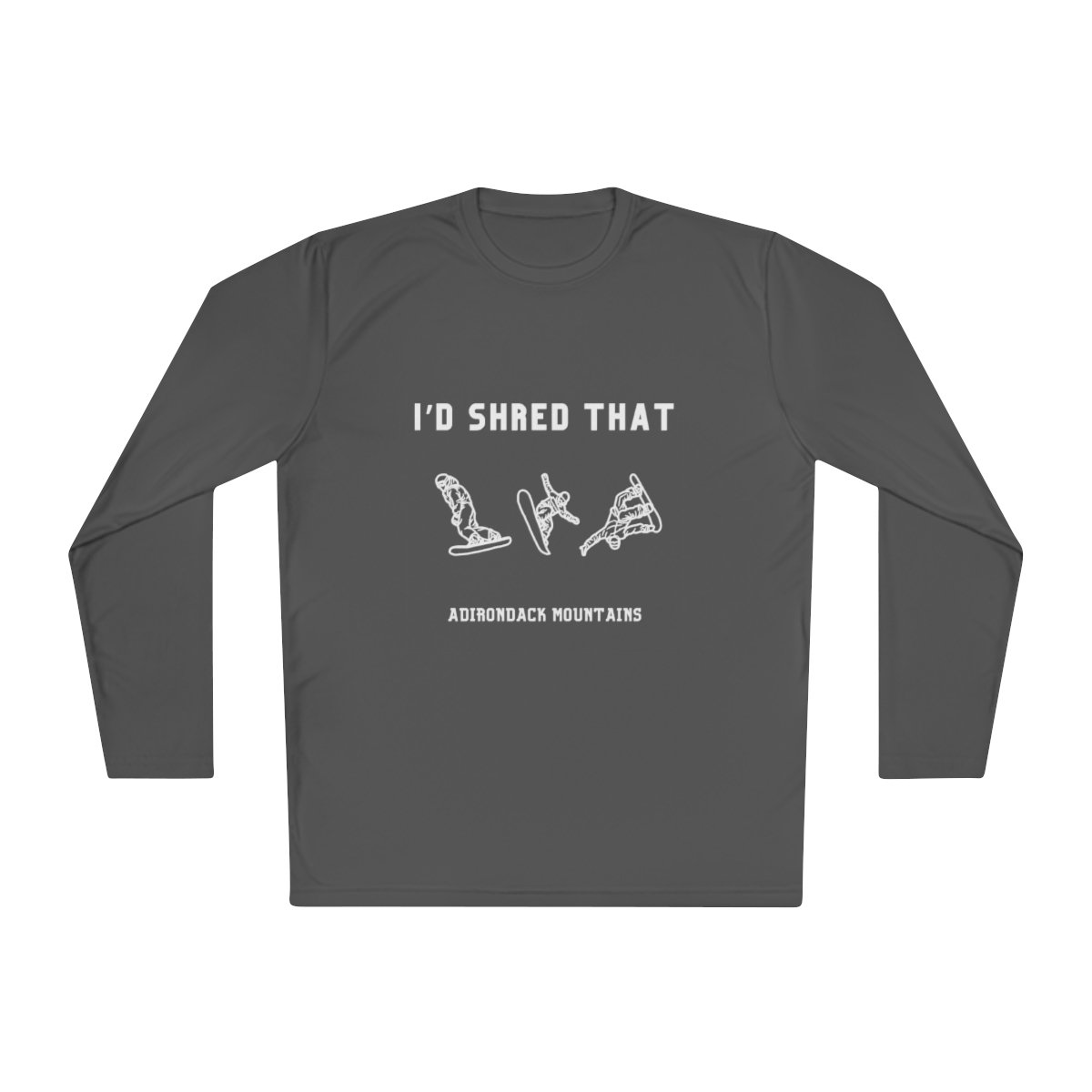
Somewhere between the crisp Adirondack air and the pristine trails of your favorite mountain, you realize: comfort is no longer negotiable. Enter the long-sleeve tee that understands the assignment.
Crafted from 100% lightweight polyester, this shirt doesn’t merely endure – it thrives. It wicks moisture away faster than you can say “powder day,” keeping you dry and ready for whatever the mountain throws at you. Quick-drying? Naturally. You’ll hardly notice the transition from the slopes to après-ski.
But this tee isn't just about comfort – it’s your barrier against the elements. Whether battling biting wind, heavy snow, or sudden sleet, the fabric creates an insulating layer that locks in warmth while allowing your skin to breathe. Wet conditions? No problem. The water-repellent material keeps the snow outside where it belongs, protecting you from the chill and keeping you warm and focused on your next run.
Durability? Consider it a non-issue. This tee will last you season after season, through epic rides and spontaneous adventures. It’s lightweight but built like a fortress – strong, unyielding, and perfectly tailored for snowboarding legends (yes, that means you).
Unisex. Available in sizes for those who carve the mountain like a masterpiece or simply enjoy the view.
Ready for the next run? We thought so.
The details:
- 100% moisture-wicking polyester
- Extra light fabric (3.8 oz/ yd² (129 g/m²))
- Athletic fit
- Tear-away label
| XS | S | M | L | XL | 2XL | 3XL | 4XL | |
|---|---|---|---|---|---|---|---|---|
| Width, in | 18.50 | 20.00 | 21.50 | 23.00 | 24.50 | 26.00 | 28.00 | 30.00 |
| Length, in | 27.00 | 28.00 | 29.00 | 30.00 | 31.00 | 32.00 | 32.50 | 33.00 |
| Sleeve length, in | 33.25 | 34.00 | 34.25 | 35.50 | 36.25 | 37.00 | 37.75 | 38.50 |

You'll find 6 million reasons for using this fashionable and highly functional tote bag.
Versatile and stylish
Never worry again about fitting everything inside your bag; The I ♥️ ADK Tote tote is roomy enough to suit any occasion -- at the Farmer's Market and grocery store, on the beach, toting stuff to work or school, picnics, carry-on travel, the list is endless.
Neutral and stylish, you'll look great carrying it in any season.
Built-to-last
I ♥️ ADK Tote is super durable. Made with spun polyester, double-stitched seams, cotton webbing straps, and nonwoven laminate lining for high-end, reliable durability.
All you need to keep it clean is warm, soapy water.
Ideal for gift-giving
Everyone can use a fabulous tote bag. It's an excellent all-occasion gift.
The I ♥️ ADK Tote is also a fantastic reusable gift container. Use it instead of non-recyclable wrapping paper and gift bags.
This tote makes a perfect welcome gift for weekend guests. Or, bring your Adirondack hostess a gift inside the I ♥️ ADK Tote (it will almost guarantee you get the lakefront bedroom).
And don't forget Valentine's Day.
Great for the environment
This goes without saying; tote bags replace the need for any other bag made from non-recyclable materials.
Help Mother Earth while still looking chic and having plenty of room for your stuff.
You can personalize the I ♥️ ADK Tote by choosing the color handle you like best - Black, red, white-beige, Navy.

Tail-Wagging Comfort for the Adirondack Wanderer
There’s a moment on an Adirondack trail when your dog pauses, ears perked, eyes gleaming with uncontainable joy. It’s the kind of unspoken understanding only a true dog lover knows. This t-shirt captures that spirit.
Crafted with 100% ring-spun cotton, this unisex soft-style tee is as dependable as your four-legged hiking partner. Lightweight yet durable, it’s designed for every adventure, whether wandering forest paths, strolling a mountain town, or simply dreaming of your next getaway.
Heather and sport grey options use a polyester blend for that extra touch of softness. The twill-taped shoulders ensure lasting durability, while a ribbed collar resists wear and curling, even after countless washes. And there are no itchy side seams—because comfort shouldn’t come with compromises.
Each shirt is ethically crafted from sustainably grown U.S. cotton, certified by Oeko-Tex for quality and safety. The manufacturer’s commitment to the U.S. Cotton Trust Protocol guarantees this is more than a T-shirt—it’s a conscious choice.
Slip it on, and you’re not just wearing a shirt; you’re carrying the memory of a wagging tail, a leash in hand, and the Adirondack breeze on your face.
Because every trail is better with a dog.
SMLXL2XL3XL4XLWidth, in18.0020.0022.0024.0026.0028.0030.00Length, in28.0029.0030.0031.0032.0033.0034.00Sleeve length, in8.238.508.749.029.259.499.72Size tolerance, in1.501.501.501.501.501.501.50
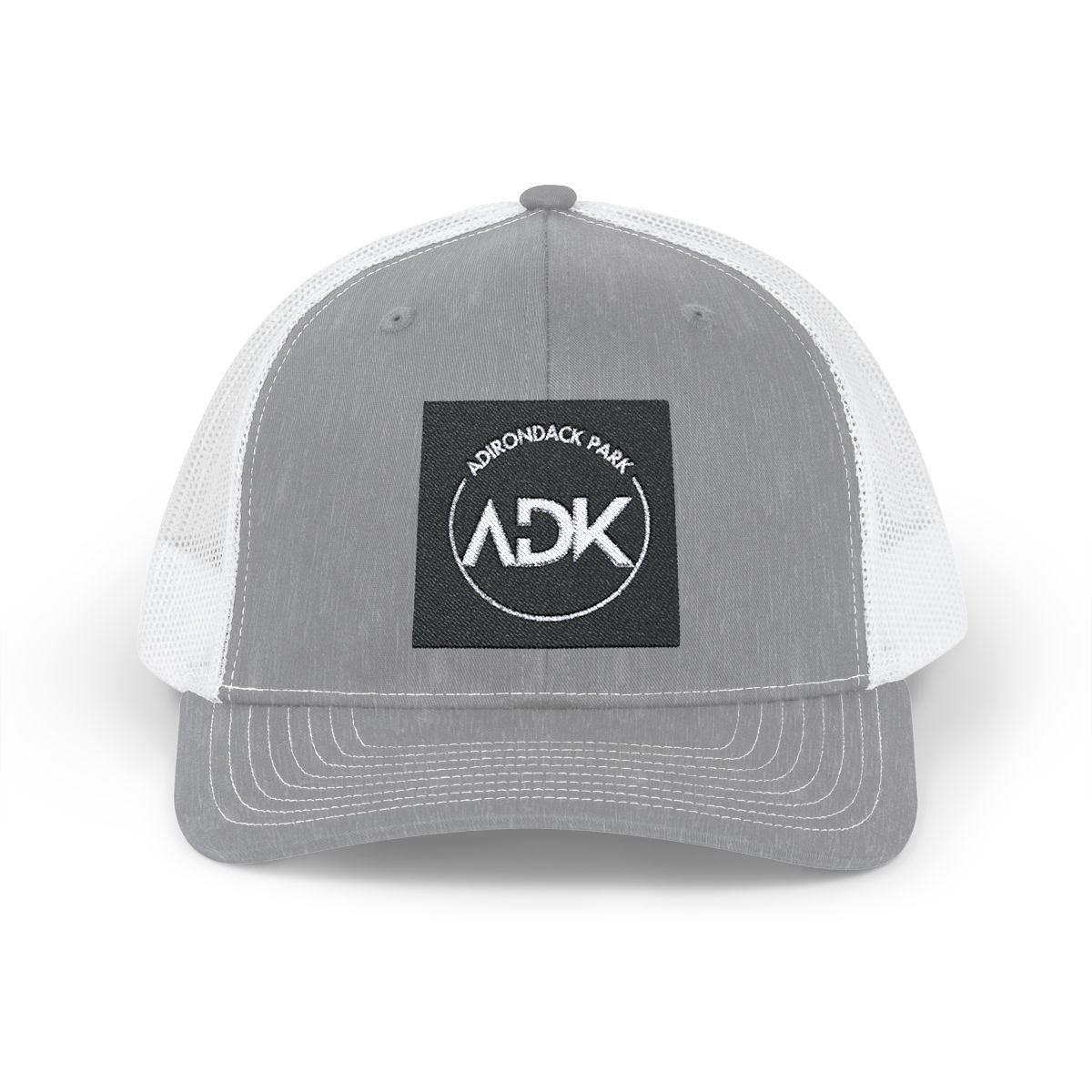
The Adirondack Park Trucker Cap exudes a casual and outdoorsy vibe, perfect for nature lovers and outdoor enthusiasts. This cap is ideal for hiking trips, camping adventures, or simply adding a touch of rugged style to any outfit. It is a great gift for those who enjoy exploring the great outdoors.
Product features:
- Comfortable mid-profile fit
- Adjustable snap closure for the perfect fit
- Pre-curved visor with matching color underbill
- 60% cotton, 40% polyester front and visor
- 100% polyester mesh back for breathability
Care instructions: Use warm water and dish soap to clean spots off your hat. It's not necessary to soak the whole item. For hard-to-clean spots, use a soft-bristled brush.
| One size | |
|---|---|
| Crown height, in | 6.50 |
| Diameter, in | 7.00 - 7.75 |
| Circumference, in | 21.65 - 23.62 |
| Visor length, in | 2.76 |

Picture yourself beneath the towering pines, sunlight filtering through as you traverse a path less traveled. The wind? It’s just right, carrying the scent of adventure. Top it off with the perfect companion—your new Adirondack trucker hat that proclaims you're ready to tackle all 46 High Peaks and more. Designed for those whose hearts beat to the rhythm of mountain streams, this hat speaks to the wanderer in you.
Crafted with a breathable mesh back for those steeper climbs and a structured front that proudly displays your unwavering love for these ancient peaks, it’s more than just a hat—it’s a badge of honor. The curved brim keeps the sun from your eyes as you conquer the next summit, while the adjustable snapback ensures a comfortable fit for every trailblazer.
Whether you're conquering Mt. Marcy or just dreaming of your next trek, this is the hat that says, "I’m always ready for the Adirondacks." Wear it well, and let the mountains come to you.
| One size | |
|---|---|
| Circumference, in | 22.80 |
| Crown height, in | 3.50 |
| Bill length, in | 3.03 |
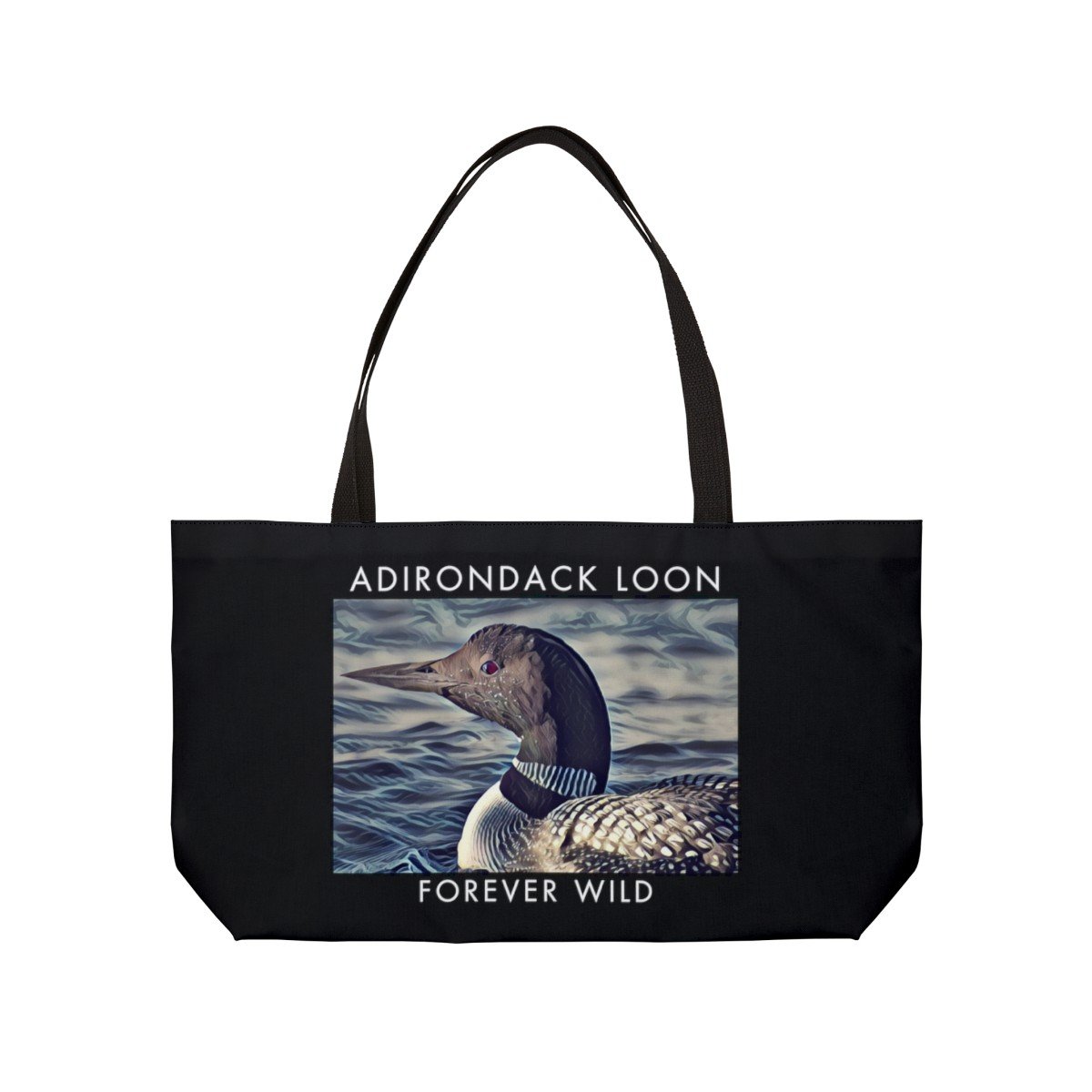
The perfect bag for your next Adirondack getaway.
Are you planning your next Adirondack getaway and looking for the perfect bag to carry all your essentials? Look no further! Our Loon Tote is the ideal bag for your next adventure. With its generous 24" x 13" size, sturdy handles, and T-bottom construction, this tote bag is spacious, practical, and stylish.
Featuring original artwork of the majestic common loon in an impressionist style, this bag is functional and a fashion statement. Its black interior lining and 100% spun polyester material make it durable and easy to keep clean. Plus, it's assembled in the USA from globally sourced parts, ensuring quality and ethical sourcing.
Whether you're planning a weekend at the lake, need a daily carry-all or want to show off your Adirondack spirit, our Loon Tote is the perfect choice. It also makes an excellent gift for anyone who shares your passion for nature and adventure.
Only available through ADK Taste.

Product features
- Made from specially spun fibers for a strong and smooth fabric
- Ribbed knit collar without seam for elasticity and shape retention
- Shoulder tape for stabilizing the garment
- Ethically made with 100% US cotton
- Certified by Oeko-Tex for safety and quality assurance
Care instructions
- Machine wash: warm (max 40C or 105F)
- Non-chlorine: bleach as needed
- Tumble dry: medium
- Do not iron
- Do not dryclean
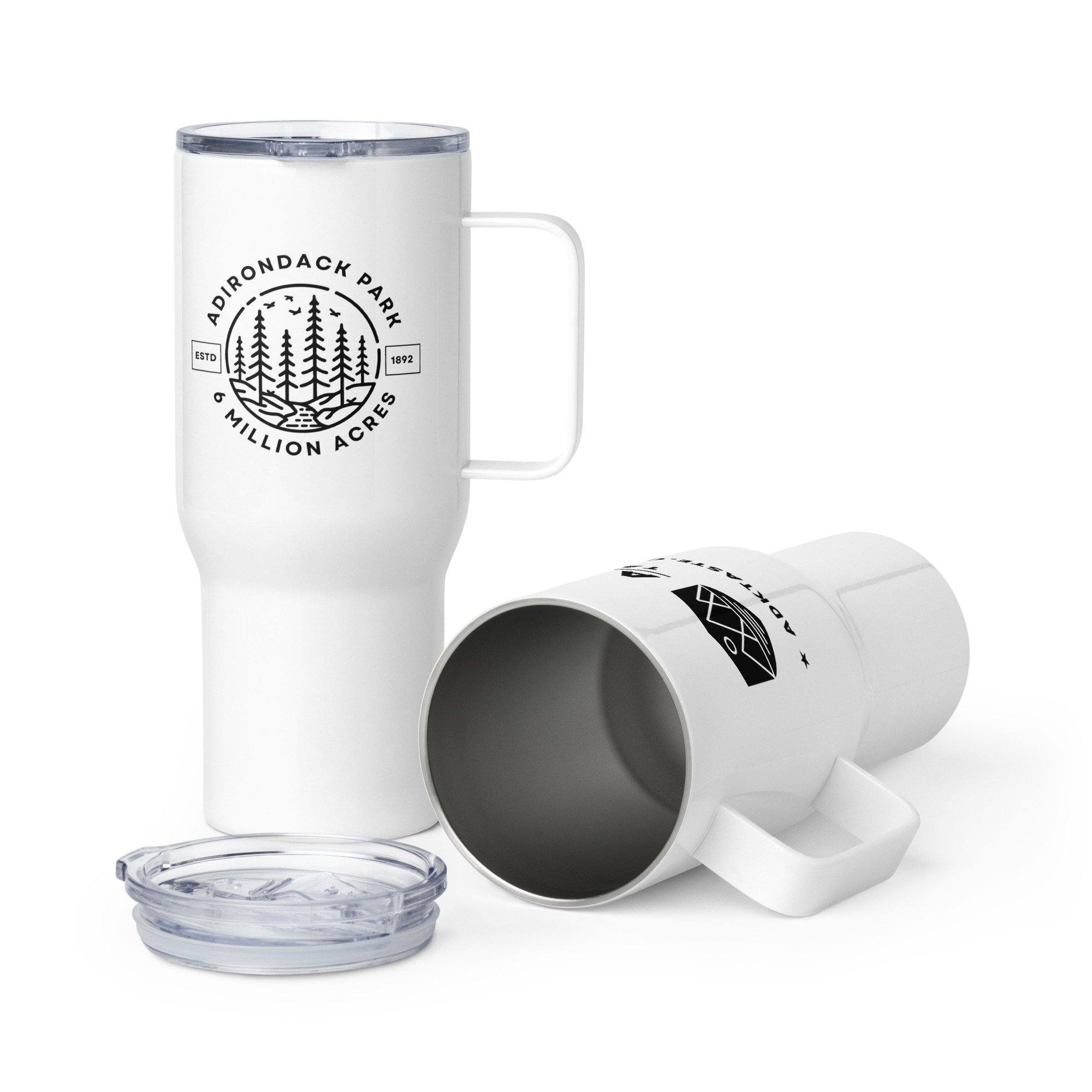
It fits into most car cup holders and has a spill-proof plastic lid. The perfect coffee travel mug for long drives. Need a good hydro flask for your next road trip? This insulated cup keeps cold beverages at the perfect temperature.
It is constructed with insulated stainless steel and can hold up to 25 oz (739 ml) of any beverage—hot or cold. This mug keeps hot beverages hot for up to 6 hours and cold drinks cold for up to 8 hours.
This mug keeps your drink safe and at the right temperature, whether on the road to work or exploring the Adirondacks. Treat yourself to the ultimate Adirondack
Hand wash only.
• Made with stainless steel and BPA-free plastic
• Capacity: 25 oz (739 ml)
• Upper diameter: 3.3″ × 6.9″ (8.4 × 20 cm)
• Bottom diameter: 2.7″ × 6.9″ (7 × 20 cm)
• Hand-wash only
Caution! To prevent steam pressure buildup, always open the lid before placing it on a hot drink.
This product is made especially for you as soon as you place an order, so it takes us a bit longer to deliver it. Making products on demand instead of in bulk helps reduce overproduction, so thank you for making thoughtful purchasing decisions!

ADK Talks Podcast
Love the Adirondacks? You’ll love our podcast. We take listeners beyond the guidebooks and into the heart of the Adirondacks. We share stories from the people behind the best places to eat, shop, stay and explore in the ADK. Find us on Apple Podcasts, Spotify or wherever you listen to podcasts.

It’s early morning, and the mist hovers above the glassy surface of your favorite Adirondack lake, undisturbed but for the rhythmic dip of your paddle. The only sound is the gentle ripple of water breaking against your canoe. The air is crisp, carrying the scent of pine and the promise of another perfect day in the Adirondacks. Your worries are left ashore, traded for the serenity that only paddling these waters can provide.
You’re not just wearing any shirt. You’re donning an invitation to adventure, to explore the thousand lakes and secret inlets of the North Country.
Our Adirondack Paddler’s Long-Sleeve Tee is made of the softest cotton. It's perfect for layering or wearing on its own. It’s designed for those who know the joy of a paddling in the Adirondacks, who’ve felt the thrill of a canoe gliding silently through mirror-still waters.
This ultra-cotton long-sleeve tee is perfect for Adirondack paddlers of all kinds—canoers, kayakers, SUPs, guide boaters and more. It is a clear comfort winner in any season.
There are no side seams for a relaxed fit. The shoulders are taped for improved durability. We love that the cotton used for these shirts is environmentally friendly.
Check the size chart; friends and family tell us this long-sleeved tee may run a little small.