
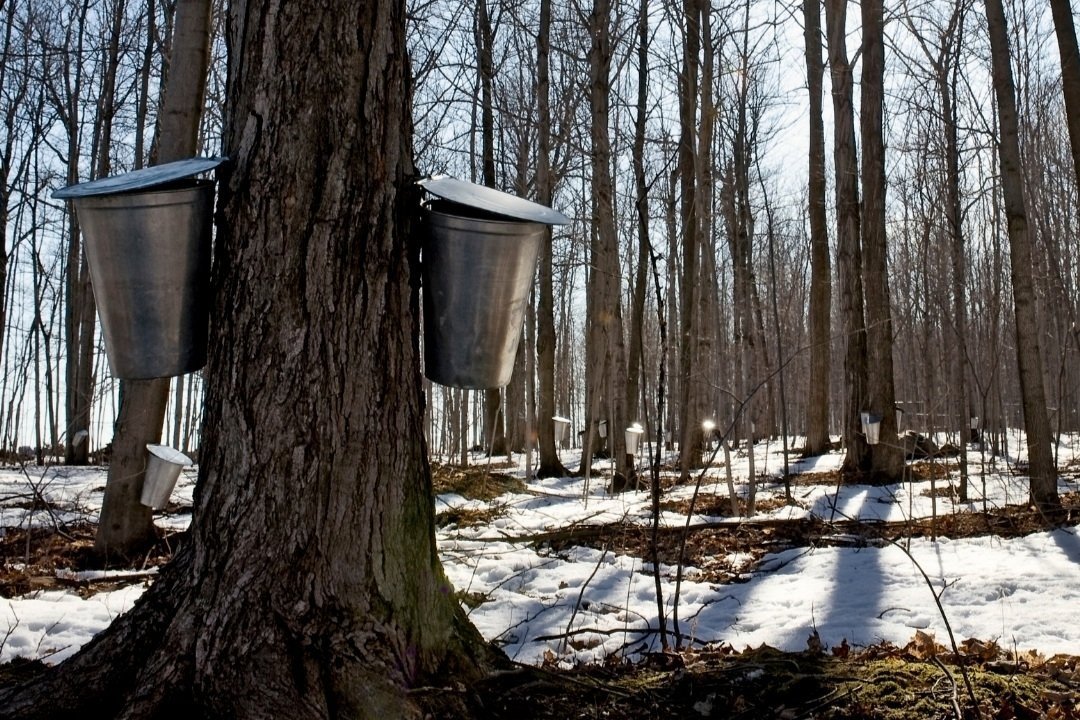
Maple buckets collecting sap to make syrup.
The morning air is crisp with late winter's bite as steam billows from sugar shacks lodged among the hardwood forests of New York's Adirondack Park. Here, a centuries-old tradition continues as maple producers tap into one of the region's sweetest natural resources.
Adirondack maple syrup production, lodged between some of the East's most impressive mountain peaks, is not just a livelihood for many locals. It's a cultural touchstone that defines the rhythm of seasons in this 6-million-acre wilderness park, a tradition passed down through generations.
The perfect climate for creating liquid gold.
The Adirondacks' unique climate creates ideal conditions for maple syrup production. Cold nights and warm days in late winter and early spring cause pressure changes that cause the sap to flow from the trees.

Making maple syrup is a time-honored tradition.
This temperature dance—freezing nights and thawing days—creates what locals call "sugar weather," the perfect conditions for harvesting nature's sweetener.
Maple sugaring in the Adirondacks isn't just about making syrup; it's about honoring a tradition that predates European settlement. The Indigenous peoples of this region taught early settlers the art of tapping trees and boiling down sap.
What makes Adirondack maple special is the terroir—that unique combination of soil, climate, and terrain that gives the syrup distinct characteristics. Many producers note that the mineral-rich soils of the Adirondacks, combined with pure mountain water and old-growth maples, create a syrup with complex flavor profiles ranging from delicate vanilla notes to robust caramel undertones.
The Indigenous roots of Adirondack maple syrup.
Long before European settlers arrived in what would become the Adirondack Park, the region's Indigenous peoples—primarily the Haudenosaunee (Iroquois) and Algonquin nations—had developed sophisticated methods for harvesting and processing maple sap.
Native Americans even have legends about the origins of maple sugar. The story has it that Chief Woksis of the Iroquois found the sweet syrup when he threw his tomahawk at a maple tree in the cold of winter. The next day, the sun warmed the sap inside the tree, and the tasty syrup flowed from the hole.

The Mohawk, Oneida, Onondaga, Cayuga, and Seneca peoples who inhabited or traveled through these mountains intimately understood the forest's rhythms.
Colonial adoption and adaptation.
When European settlers arrived in the Adirondacks in the late 18th century, they learned maple sugaring techniques from the Indigenous peoples. This knowledge transfer represents one of the most significant technological exchanges between Native Americans and European colonists.
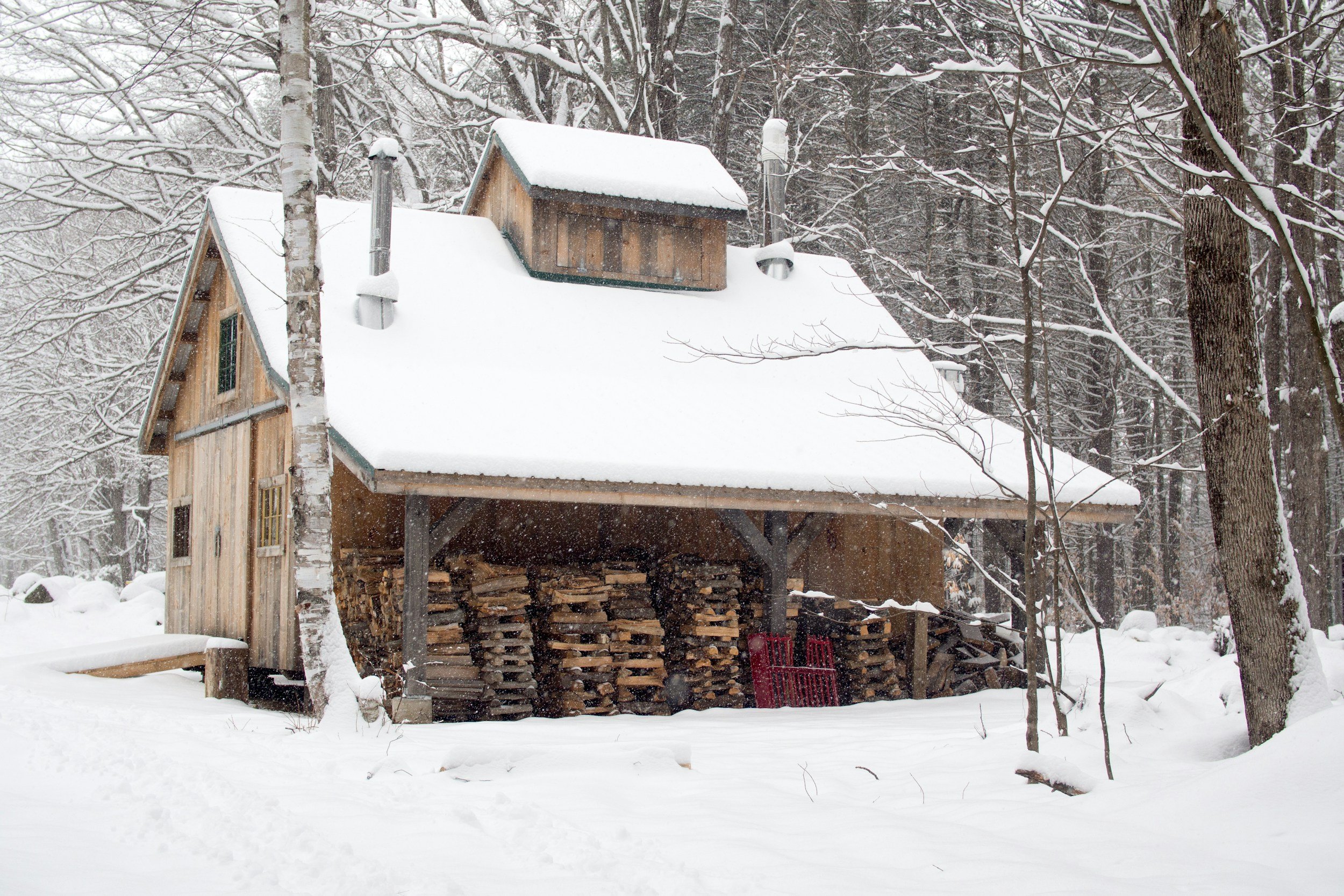
Traditional maple sugar shack in the Adirondacks.
By the early 1800s, settlers had adapted these techniques using their tools—metal buckets replaced birch bark containers, and iron kettles replaced hot stone methods. The first commercial sugar house in the Adirondacks was documented around 1810 as settlers recognized the economic potential of maple products.
Maple sugar, rather than syrup, was the primary product during this era. Before refrigeration, sugar was easier to store and transport than liquid syrup. Additionally, maple sugar provided an alternative to cane sugar, which was produced using slave labor in the Caribbean, making maple sugar particularly popular among abolitionists.
Industrial Revolution to the modern era.
The Civil War era saw advancements in maple sugaring technology, with the introduction of flat-pan evaporators in the 1860s. These replaced the deep kettles previously used and significantly improved efficiency. Around this time, the tin can was invented, making syrup storage and transport more practical. This gradually shifted production toward syrup rather than sugar.
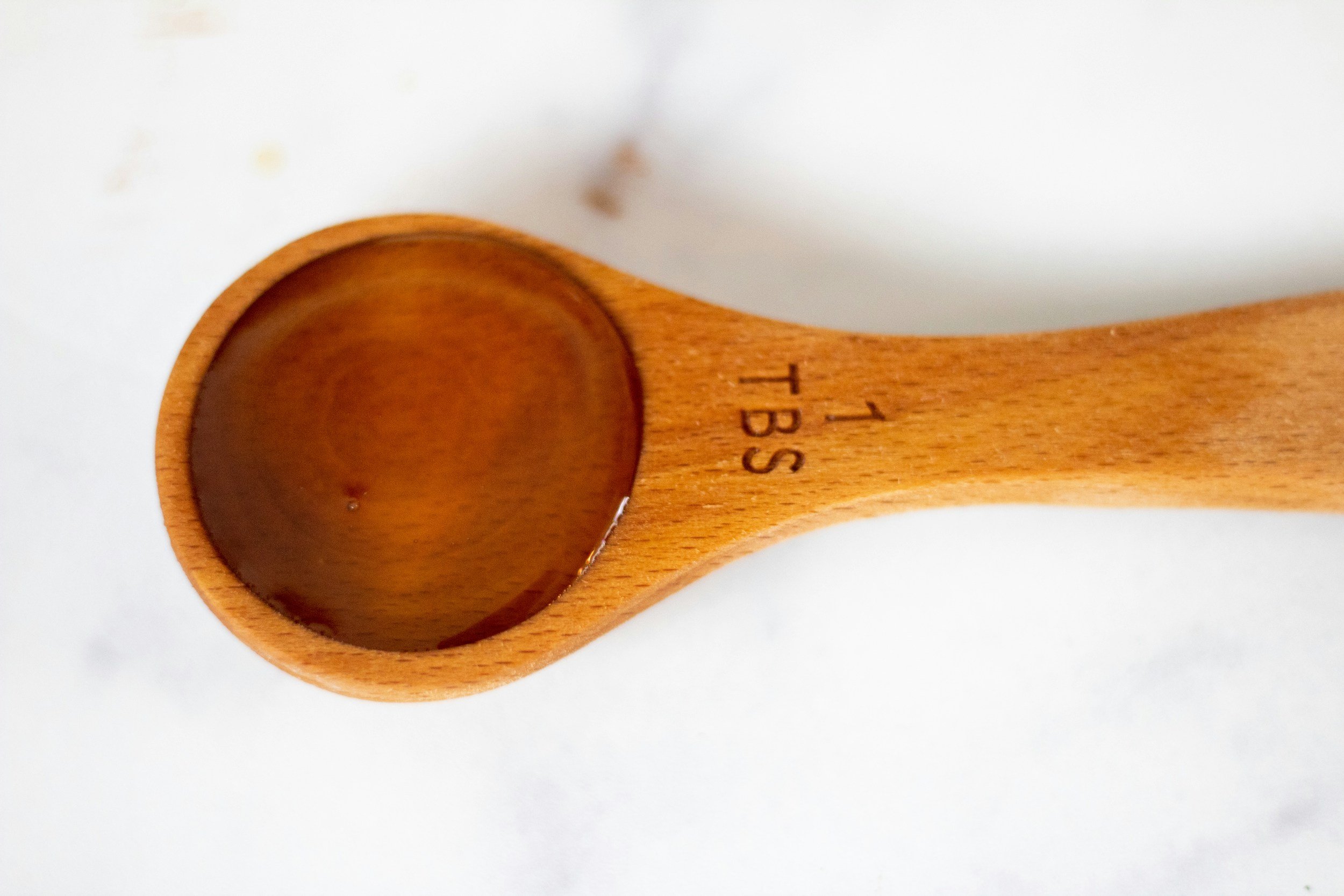
Delicious maple syrup.
By the late 19th century, as the Adirondack Park was established in 1892, many family farms throughout the region incorporated maple sugaring as part of their seasonal work cycle. Logging operations often avoided cutting sugar maples, recognizing their value for syrup production.
The early 20th century brought further innovation by developing metal spouts, covering sap buckets to keep out debris, and improving evaporator designs. The Great Depression era saw a resurgence in home production as families sought self-sufficiency during economic hardship.
Post-War transformation.
The most dramatic changes to Adirondack maple production came after World War II. In the 1950s, plastic tubing systems began to replace the labor-intensive bucket collection method. This innovation allowed producers to tap trees on steeper terrain that had previously been inaccessible.
In the 1970s, vacuum systems were added to tubing networks, significantly increasing sap yield per tap. Around the same time, reverse osmosis technology began to be applied to maple production, removing water from sap before boiling and reducing fuel consumption by up to 75%.

Maple syrup industrial machines that collect sap with tubes connected to trees for production with stainless steel equipment.
Throughout these technological changes, many Adirondack producers maintained connections to traditional methods. The region became known for its commitment to wood-fired evaporation (versus oil or gas), which many producers insist imparts a distinctive flavor to the finished syrup.
Today's Adirondack maple industry is a fascinating blend of ancient knowledge and modern innovation. It's a living cultural heritage that continues evolving, with producers maintaining connections to traditional methods while embracing technological changes that enhance production.
Several Adirondack producers have partnered with Native American communities to acknowledge this heritage. These partnerships go beyond financial contributions, often involving cultural exchanges and joint initiatives to preserve and promote Indigenous traditions. Some operations donate portions of their proceeds to Indigenous cultural preservation efforts or incorporate traditional ceremonies into their seasonal production rituals.
From tap to table: the production process.
The process begins in late February or early March when producers drill small holes into sugar maple trees and insert spiles—specialized taps that channel the sap into collection systems. Modern operations often use plastic tubing networks connecting hundreds or thousands of trees to central collection points. At the same time, some smaller, traditional producers still hang metal buckets from each tap.
It takes approximately 40 gallons of sap to produce just one gallon of maple syrup—a ratio that explains this natural sweetener's price and precious nature. After collection, the sap is boiled in evaporators, concentrating the sugar content from about 2% in raw sap to 66% in finished syrup.

Toad Hill Farm in Thurman, NY.
Where to find Adirondack maple products.
Maple products are available in most local shops, farmstands, and farmers’ markets across the Adirondacks. You can even visit the producers to see maple syrup being made. Here are some names to look out for. Always look for “Made in the Adirondacks” or “New York State” on the label.
Travelers driving through the region should look for roadside signs with buckets or maple leaves, indicating farm stores where producers sell directly to the public.

New York State is one of the top maple syrup producers in the U.S.
These small sugarhouses often offer the freshest syrup, the warmest welcome, and the opportunity to purchase maple cream, maple sugar, and maple candy.
The Adirondack maple season typically runs from late February through April, with peak production in March. Many producers participate in New York State's official Maple Weekends, when sugarhouses open doors for demonstrations, tastings, and pancake breakfasts laden with fresh syrup.
Whether you're drizzling it over pancakes at a lakeside cabin or bringing home a jug as a liquid memory of your Adirondack adventure, the region's maple syrup offers a taste of wilderness that captures the essence of these ancient mountains and the traditions they sustain.
Visit one of the largest maple syrup producers in northern New York State.
Shop for unique Adirondack apparel, gifts and merchandise.




















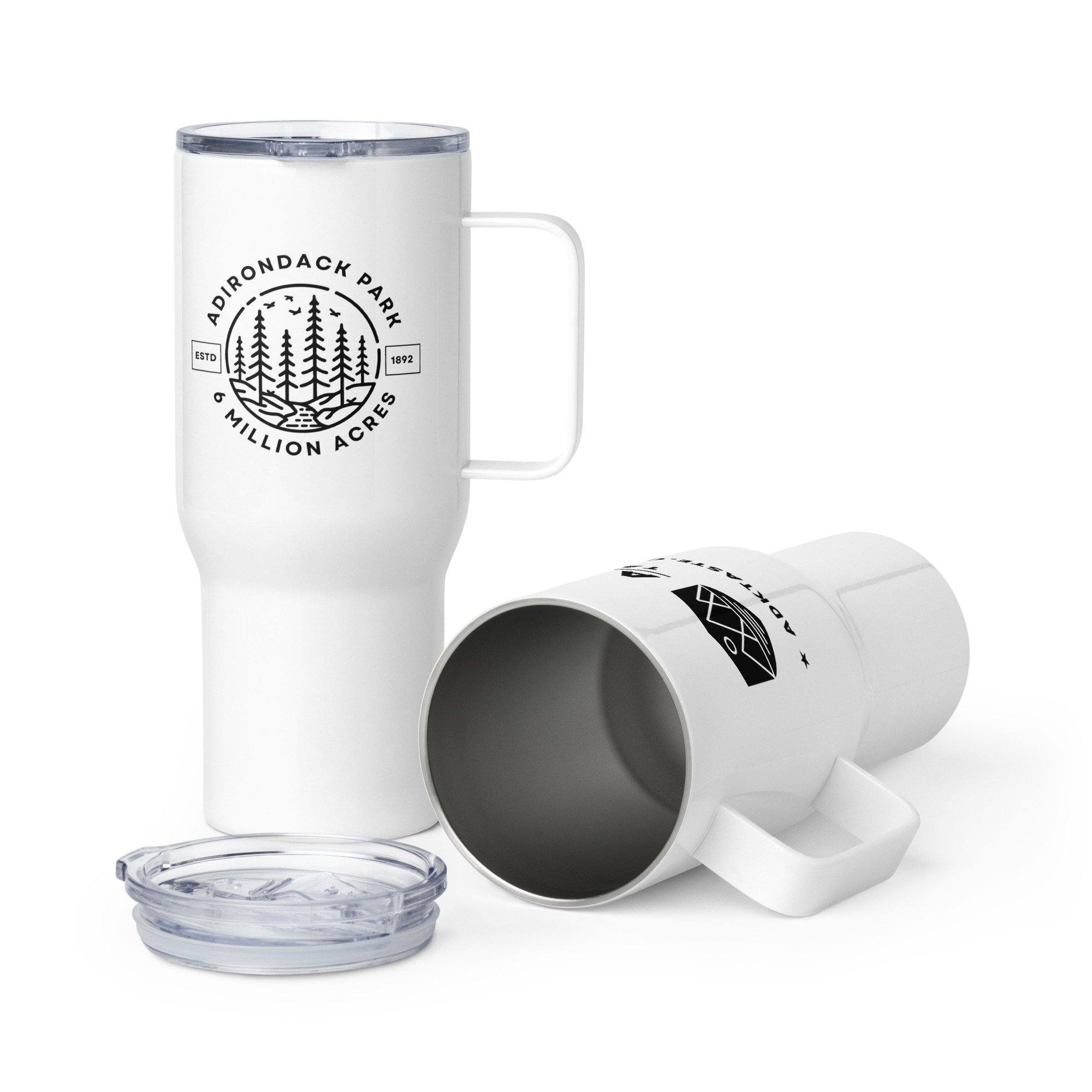
Let ADK Taste help you find what you’re looking for in the Adirondacks.

ADK Talks Podcast
Our podcast takes listeners beyond the guidebooks and into the heart of Adirondacks. We share stories from the people behind the best things in the ADK.

Show off your love for the Adirondacks in style with this Adirondack Park Unisex Heavy Blend™ Hoodie. Featuring a bold canoe-and-mountain design and “Est. 1892” tribute, this hoodie is a must-have for anyone who dreams of paddling serene Adirondack lakes or exploring rugged High Peaks.
Whether you’re relaxing by the campfire, strolling through Lake Placid, or looking for the perfect Adirondack-themed gift, this hoodie delivers warmth, comfort, and timeless style.
Crafted from a soft, durable cotton-poly blend, this item is ideal for layering year-round. The spacious kangaroo pouch pocket keeps hands warm on chilly evenings, and the adjustable drawstring hood adds a snug, cozy fit. Ethically produced with OEKO-TEX certified dyes, it’s as kind to the environment as it is to your weekend wardrobe. Extended sizes available.
This is more than just a hoodie—it’s a piece of the Adirondacks you can wear anywhere. Treat yourself or surprise the ADK enthusiast in your life—perfect for birthdays, graduations, or that next mountain getaway.
Product Highlights:
Soft & durable 50% cotton / 50% polyester blend
Spacious kangaroo pocket for warmth & convenience
Adjustable drawstring hood for the perfect fit
Ethically produced with OEKO-TEX certified dyes
Medium-heavy weight—ideal for year-round adventures
SMLXL2XL3XLWidth, in20.0822.0524.0225.9827.9929.92Length, in27.1727.9529.1329.9231.1031.89Sleeve length from center back, in33.5034.5035.5036.5037.5038.50Size tolerance, in1.501.501.501.501.501.50