
Where the Milky Way Still Shines: Stargazing in the Adirondacks
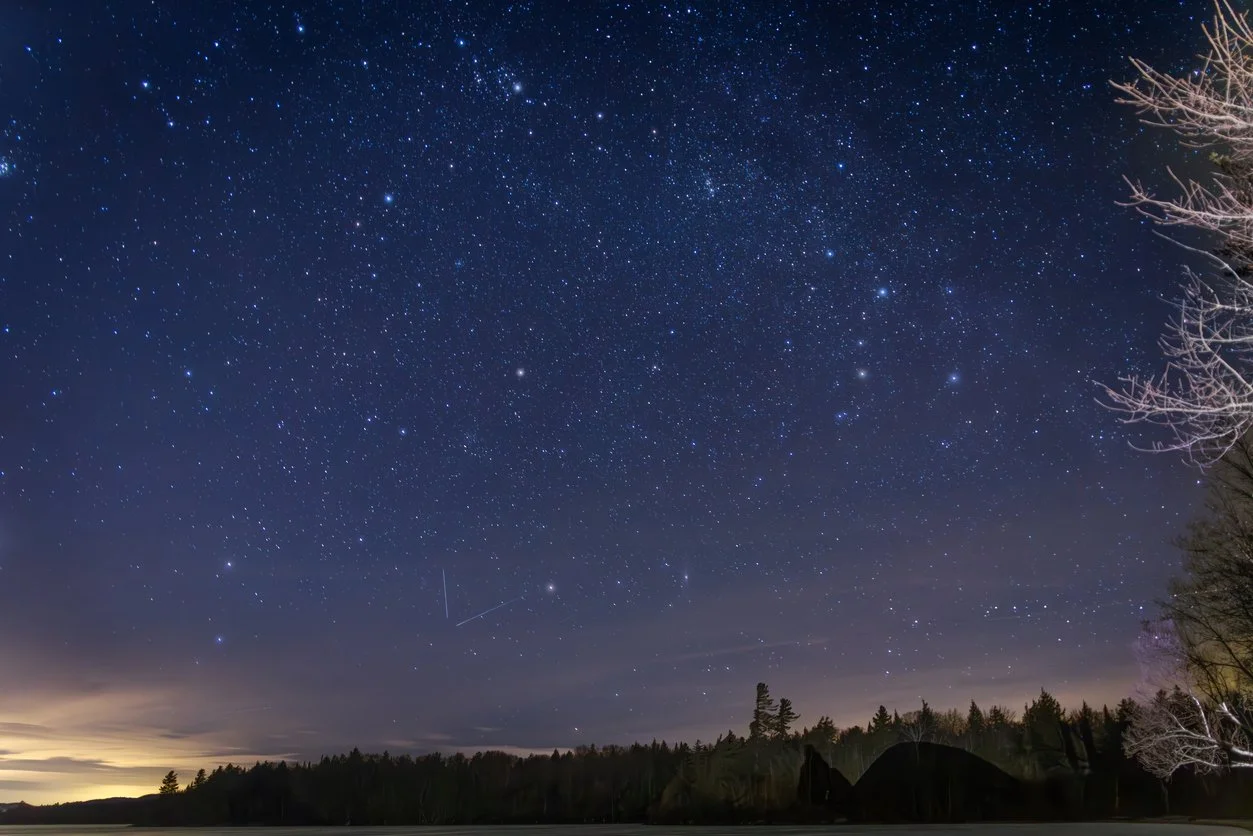
Starry night over Raquette Lake.
For millions of Americans, the night sky has quietly disappeared.
The glow of cities has erased much of the celestial show, leaving nearly 80 percent of Americans unable to see the Milky Way from where they live.
In the Adirondacks, however, darkness remains one of the region's greatest natural resources. When the sun slips behind the mountains and the campfires burn low, the stars take center stage.
Here, the night isn't simply dark. It's astonishing.
Whether standing beside a quiet mountain lake, gazing from a historic fire tower, or lying on a blanket in an open meadow, visitors quickly discover something increasingly rare in the eastern United States: a sky filled with thousands of visible stars stretching from horizon to horizon.
For many, it's the closest thing to traveling back in time.
Stay in the know. Every week, the ADK Taste newsletter delivers the Adirondacks' best stories, events, hidden gems, and local discoveries straight to your inbox. It's like having a well-connected local friend who always knows what's worth the drive.
Why the Adirondacks are one of the East's best places to see the stars.
Great stargazing isn't accidental. It depends on a delicate combination of geography, elevation, weather, and—most importantly—darkness.
The six-million-acre Adirondack Park checks every box.
Unlike much of the Northeast, the Adirondacks have remarkably little light pollution. The region's low population density means artificial light rarely overwhelms the night sky. Add relatively low humidity, higher elevations, and miles of undeveloped wilderness, and conditions become ideal for astronomy.
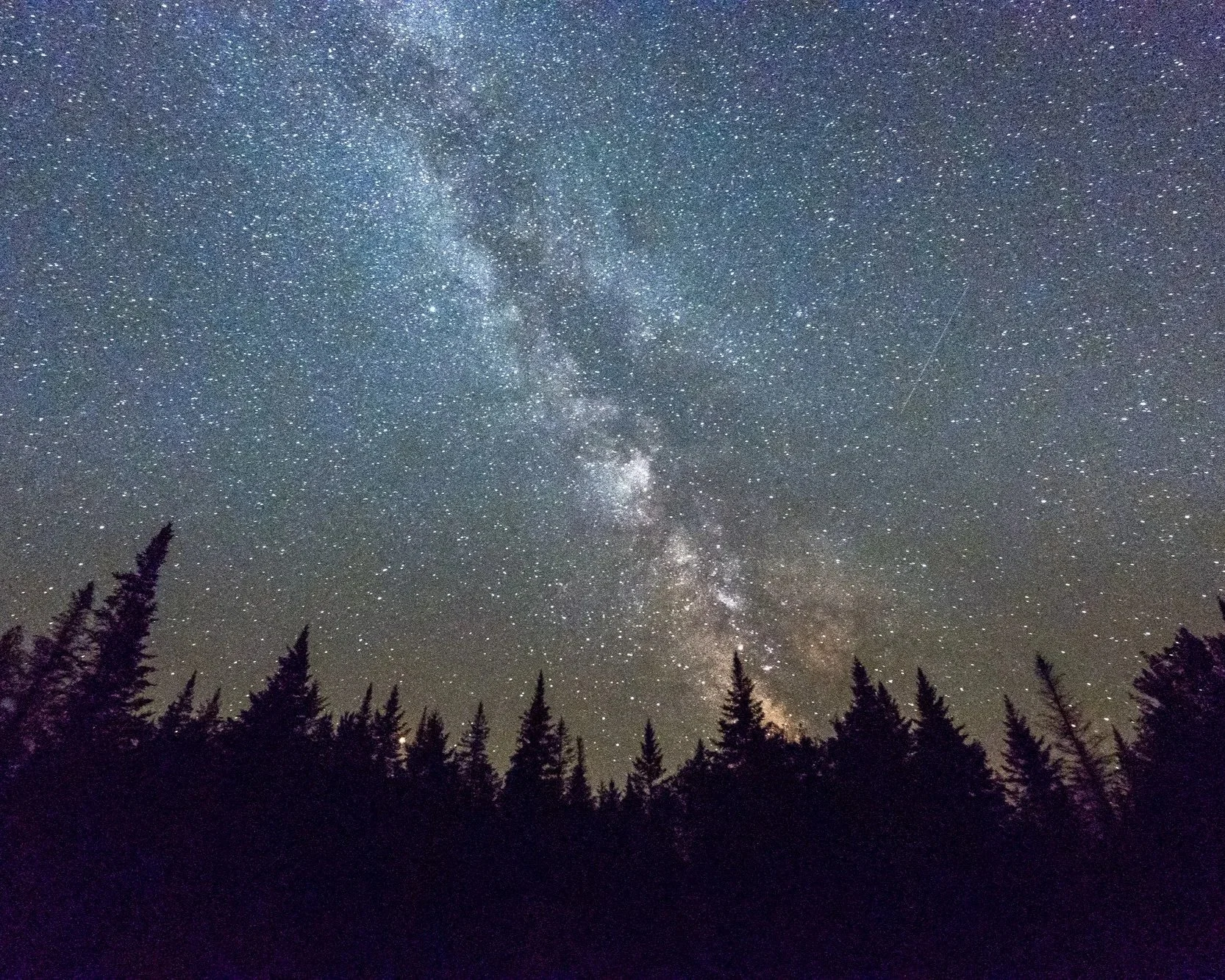
Milky Way seen from Schroon Lake.
Astronomers measure darkness using the Bortle Scale, a nine-level system that ranks night skies based on light pollution. Most of the Adirondacks earn a Class 2 rating—a "typical truly dark site." For perspective, major metropolitan areas generally rank as Class 9.
The difference is dramatic.
Instead of searching for a handful of bright stars, visitors can trace the hazy river of the Milky Way overhead, spot satellites crossing the sky, identify distant planets, and, during meteor showers, count shooting stars by the dozens.
Even those who have spent their lives camping in the Adirondacks often find themselves stopping mid-conversation simply to look up.
See why Adirondack dark skies inspire astronomers and photographers.
The Adirondacks are home to some of the darkest skies in the eastern United States, making them an exceptional destination for astronomy and night-sky photography. This short video showcases why the region has become a favorite among seasoned stargazers and first-time visitors alike.
Watch how the Adirondacks' remarkably dark skies reveal the Milky Way, constellations, and countless stars that many Americans can no longer see from home.
Whether visiting the Adirondack Sky Center, hiking to a fire tower, or simply pulling up a chair beside a quiet lake, stargazing in the Adirondacks is one of the region's most unforgettable nighttime experiences.
Darkness becomes part of the experience.
There's something wonderfully humbling about standing beneath a sky that seems almost impossibly vast. Unlike a concert or a fireworks display, stargazing rewards patience. Our eyes slowly adjust, revealing constellations one by one. A meteor streaks overhead, and the call of a loon echoes across a nearby lake while the silhouettes of the High Peaks fade into darkness.
This experience encourages visitors to slow down—a rare request in today's constantly illuminated world. The Adirondacks have always inspired reflection. During the day, that inspiration comes from the mountains, lakes, and forests. At night, it comes from the universe itself.
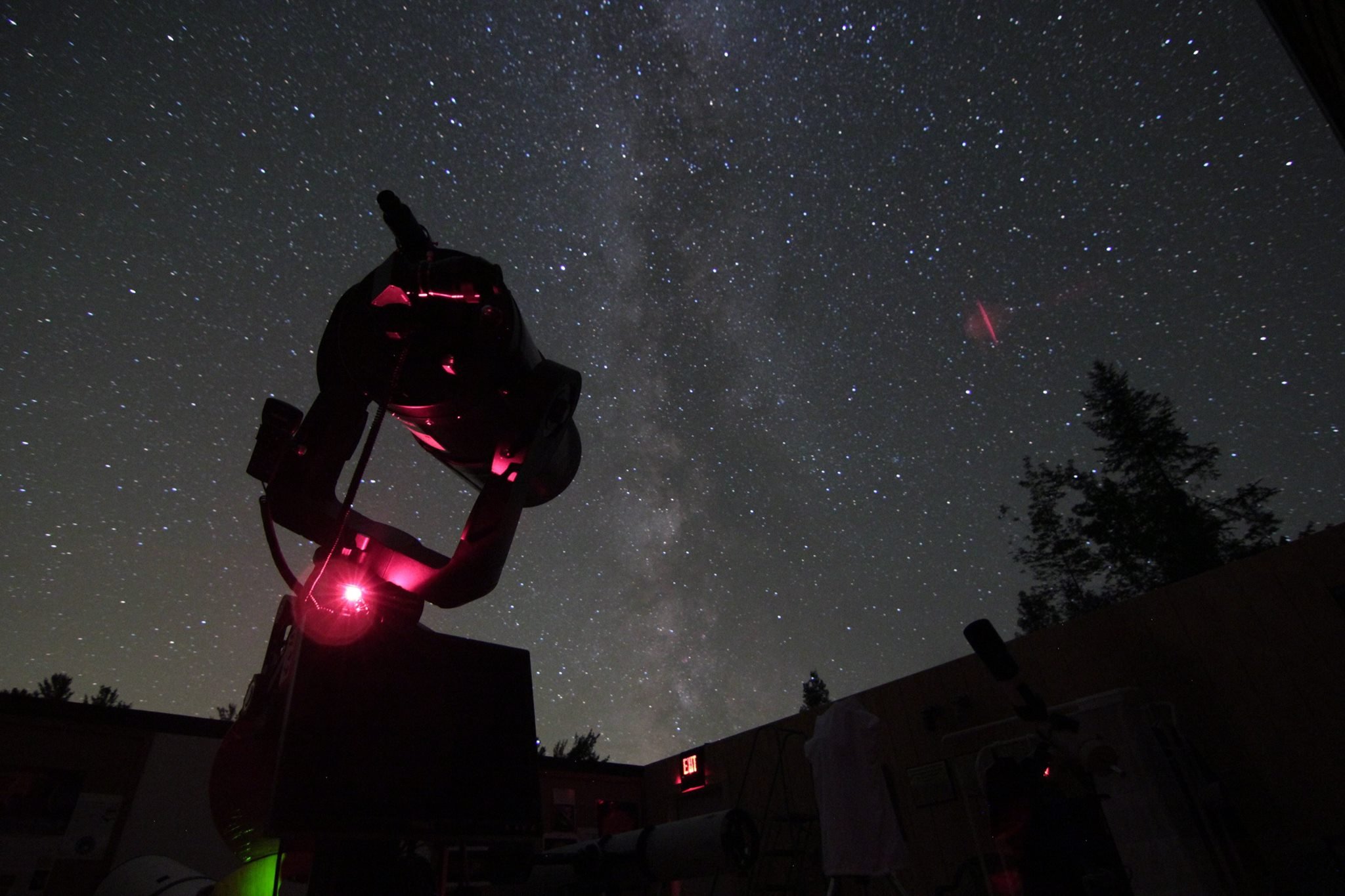
Telescope at the Adirondack Sky Center in Tupper Lake.
Among my most cherished childhood memories is from summer camp in the western foothills of the Adirondack Mountains. Camp was located on a remote peninsula on Beaver Lake, just outside the border of the Adirondack Park. On the last night of camp, we would drag our sleeping bags out onto the game field and gaze at the Milky Way until we drifted off to sleep.
Today, I feel incredibly fortunate to sit on our deck and admire the glorious night sky, no matter the season.
ADK Taste shortlist.
Some of the Adirondacks' finest stargazing locations require little more than a clear forecast and a sense of curiosity.
Marcy Field, Keene Valley
Surrounded by the High Peaks, this broad open field offers expansive views of the sky with minimal obstructions. It's an excellent place to photograph the Milky Way during the summer months.
Hamilton County
New York's least-populated county (and yet it’s the third-largest by land area) offers some of the darkest skies in the Northeast. Almost any quiet lakeshore, roadside pull-off, or open meadow can become an impromptu observatory.
Belfry Mountain Fire Tower
One of the easiest fire tower hikes in the Adirondacks rewards visitors with sweeping nighttime views toward both the Adirondack Mountains and Lake Champlain.
Lake Champlain shoreline
The broad expanse of the lake creates an unusually open horizon. On calm evenings, stars often reflect across the water, making the sky feel twice as large.
Heaven Hill near Lake Placid
The Orchard Loop provides wide-open views that have made this area a favorite among local photographers seeking dramatic night skies.
Adirondack Sky Center & Observatory
For those wanting expert guidance, telescopes, and educational programming, Tupper Lake's Adirondack Sky Center offers public observing sessions, astronomy events, and opportunities to see planets, galaxies, and nebulae through professional equipment.

Hadley Mountain fire tower.
ADK Taste recommendations.
A little preparation makes a remarkable difference.
Check the moon phase before planning a trip. A new moon provides the darkest skies.
Allow 20 to 30 minutes for eyes to fully adjust to darkness.
Bring a red-light flashlight instead of a white one to preserve night vision.
Dress warmer than expected. Even summer evenings cool quickly in the mountains.
Download a constellation app before leaving cell service behind.
Above all, respect the darkness. Keep headlights, flashlights, and campsite lighting to a minimum so everyone can enjoy the view.
ADK Taste insight.
The Adirondacks have spent generations protecting what many places have lost.
Visitors often come here seeking mountain summits, quiet paddles, or scenic drives. Increasingly, they're discovering another attraction that costs nothing, requires no reservation, and begins only after sunset.
In an era when artificial light reaches almost every corner of the country, the Adirondacks remind visitors that darkness isn't something to fear.
It's something worth preserving.
ADK Taste perspective.
Perhaps that's the Adirondacks' greatest luxury.
Not a five-star resort. Not an exclusive destination. Simply the chance to stand beneath a sky that generations before us took for granted—and remember how beautifully small we all are beneath the Milky Way.
Love discovering experiences like this? Subscribe to the free ADK Taste newsletter for hand-picked stories, events, food finds, hidden gems, and unforgettable adventures from across the Adirondacks. Every edition is carefully curated, so you'll always know what's worth exploring next.
Ultimate Guide to the Adirondacks
Your insider’s guide to exploring the Adirondacks—where to go, what to eat, and the experiences that make this place unforgettable.
Shop for unique Adirondack apparel, gifts and merchandise.

























ADK Talks Podcast
Love the Adirondacks? You’ll love our podcast. We take listeners beyond the guidebooks and into the heart of the Adirondacks. We share stories from the people behind the best places to eat, shop, stay and explore in the ADK. Find us on Apple Podcasts, Spotify or wherever you listen to podcasts.














Bring a bold splash of the Adirondack spirit wherever you roam with this vibrant, adventure-ready tote bag. Featuring a chic golden hue and a retro-style design, this tote is more than just an accessory—it’s a statement of your love for the mountains, forests, and lakes that make the Adirondacks legendary.
Crafted from durable, easy-care polyester and finished with reinforced stitching, this bag is made to go the distance—from farmers’ markets to campsites, library runs to beach days. The roomy boxed corners make packing snacks, sweaters, books, or souvenirs a breeze, while the sturdy navy or black straps sit comfortably on your shoulder no matter how full the day (or the bag).
And with the playful “Find the Good Stuff Here” message on the reverse, this tote is a nod to curiosity, good vibes, and great finds.
Perfect for:
Day trips to your favorite lake or historic site
Grocery hauls and artisan market strolls
Picnic gear, beach towels, or a cozy flannel
Commuters who love to keep it wild
Gift-givers looking for something both beautiful and useful
Product Features:
100% polyester for strength and durability
Reinforced handle stitching for everyday carry confidence
Spacious 16" x 16" design with boxed corners for easy packing
Soft yet sturdy medium-weight fabric
Stylish navy handles to complement any outfit
Go ahead—Find the Good Stuff. Carry it in style.
A perfect gift for Adirondack lovers, nature enthusiasts, and anyone who believes “Forever Wild” is more than a motto—it’s a way of life.