
Before America Was America, the Revolution Passed Through the Adirondacks
Fort Ticonderoga on Lake Champlain. Photo courtesy ROOST.
The Adirondacks are about to have a Revolutionary moment again.
This week, The New York Times published the first installment in a new travel series exploring America ahead of the 250th anniversary of the Declaration of Independence.
The opening story followed the route of Henry Knox, the unlikely Revolutionary War hero tasked by George Washington with hauling 60 tons of captured British artillery from Fort Ticonderoga to Boston during the winter of 1775.
For much of the country, the story reads like an improbable historical adventure.
For the Adirondacks and the Champlain Valley, it feels much closer to home.
Long before the Adirondack Park existed, before scenic byways and lakeside inns and leaf-peeping road trips, this region served as one of the most strategically important corridors in early America.
Armies moved through these waterways. Empires fought over them. And in one brutal winter campaign, a bookseller named Henry Knox helped alter the course of the Revolution using cannons captured at Fort Ticonderoga.
As America approaches its semiquincentennial in 2026, stories like Knox’s are poised to reshape how travelers experience the Northeast — and the Adirondacks may be one of the best places to begin.
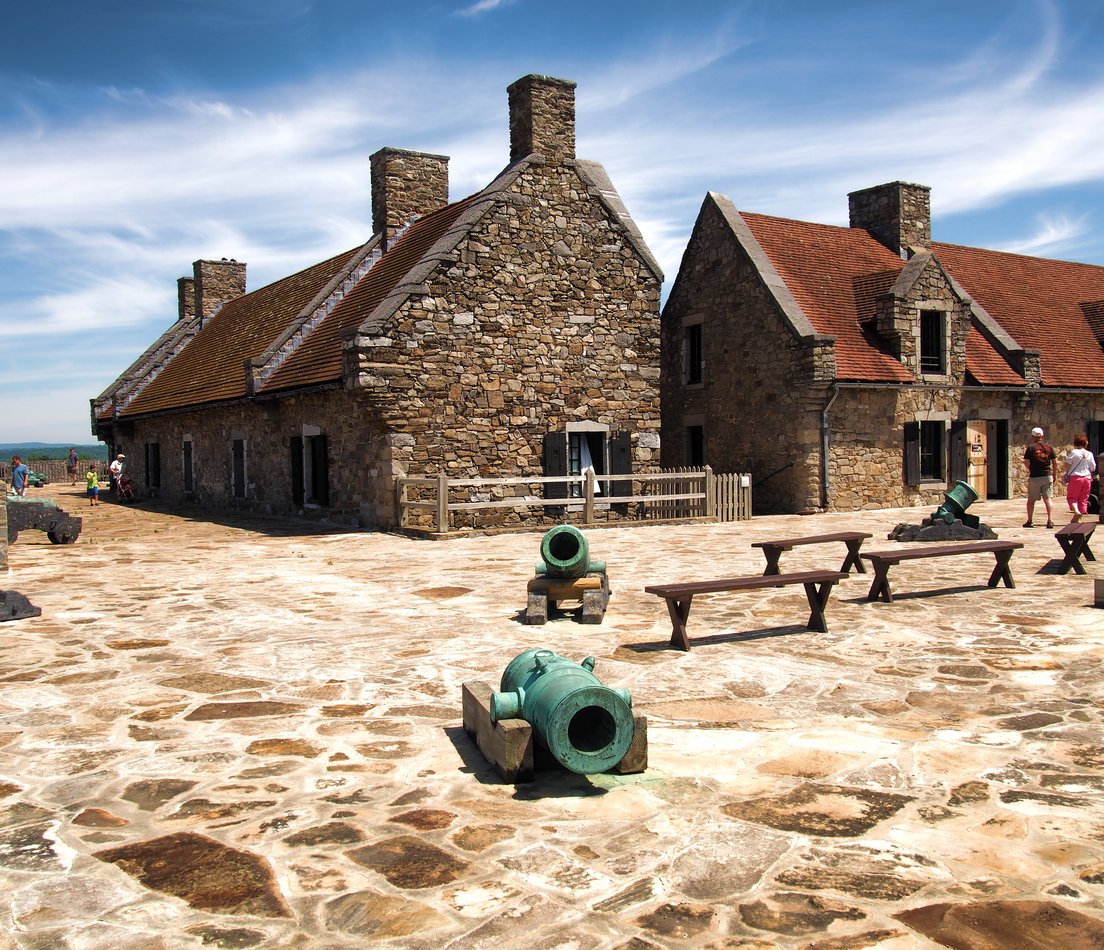
A visit to Fort Ticonderoga.
The mission that changed the Revolution.
In May 1775, colonial forces led by Ethan Allen and Benedict Arnold captured Fort Ticonderoga from the British in a surprise attack. The victory itself mattered, but the real prize was what sat inside the fort: dozens of heavy artillery pieces desperately needed by George Washington’s Continental Army outside Boston.
Washington turned to Henry Knox, then a 25-year-old bookseller with limited military experience, to retrieve them.

Ethan Allen capturing Fort Ticonderoga.
What followed became one of the most remarkable logistical feats of the Revolutionary War.
Knox and his men transported nearly 60 tons of cannons, mortars, and artillery through snow, forests, frozen rivers, and rough wilderness terrain stretching from Lake Champlain to Boston. The route crossed parts of present-day upstate New York and Massachusetts during one of the harshest times of the year imaginable.
The artillery eventually helped force the British evacuation of Boston in March 1776.
Without Fort Ticonderoga — and without Knox’s mission — the early momentum of the American Revolution might have looked very different.
Why Fort Ticonderoga still matters today.
For many travelers, Fort Ticonderoga is often associated with reenactments, school field trips, or summer demonstrations.
But approaching America 250, the fort increasingly feels less like a static museum and more like a living anchor point in a larger national story.
The location itself explains why.
Positioned between Lake Champlain and Lake George, Fort Ticonderoga occupied one of the most strategically valuable transportation corridors in North America during the 18th century. Whoever controlled these waterways controlled movement between Canada, New York, and New England.
Today, that same geography creates one of the most scenic travel corridors in the Northeast.
Modern travelers drive these roads for foliage, paddling, camping, and lakeside vacations. But beneath the beauty sits a layered landscape shaped by conflict, trade, Indigenous history, military strategy, and early American expansion.
That tension — wilderness and history occupying the same space — gives the Adirondack region a uniquely powerful connection to America’s founding story.
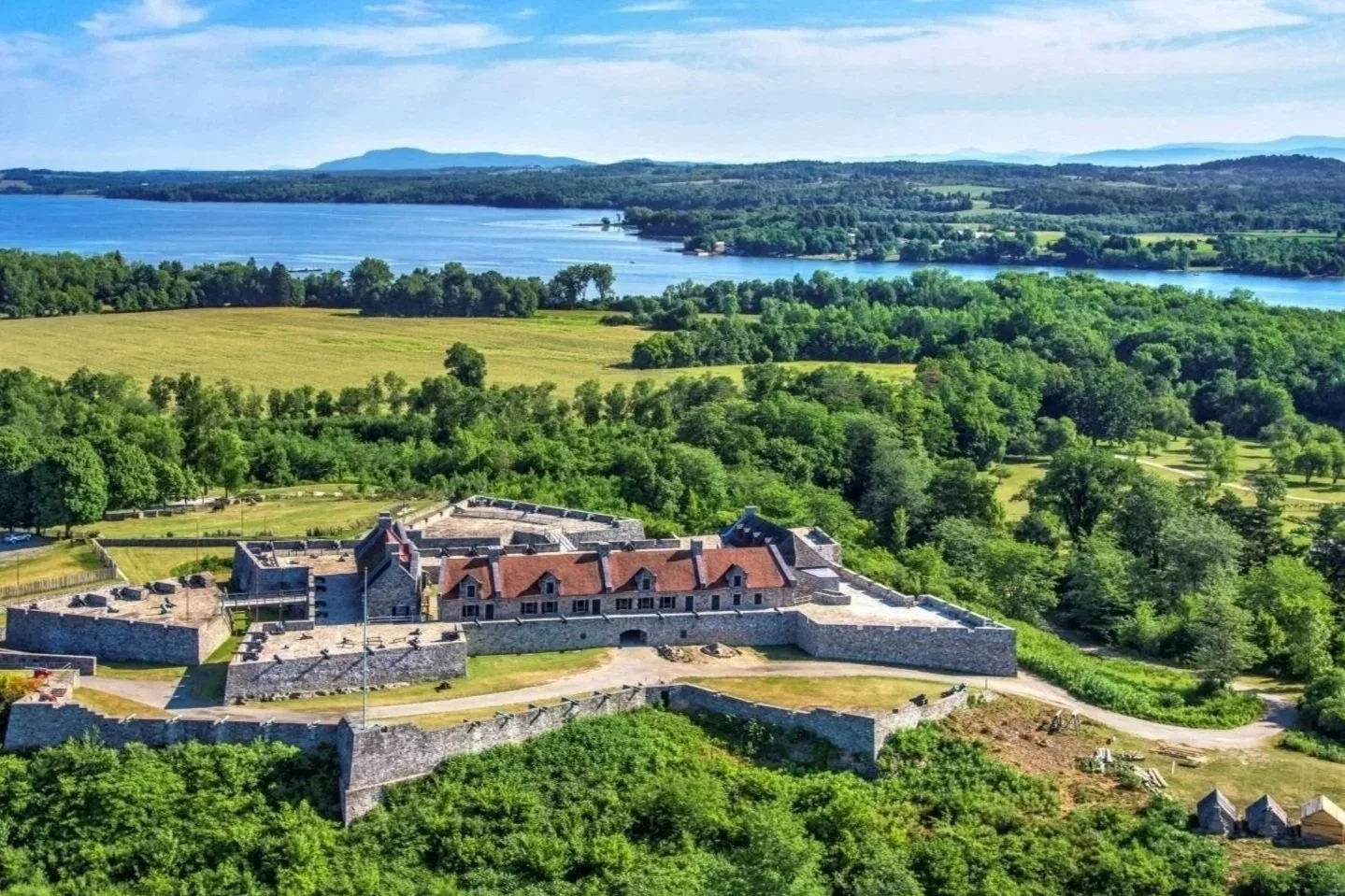
Fort Ticonderoga held a strategic position between Manhattan and Montreal.
Wilderness then. Scenic byway now.
Part of what makes the Henry Knox story resonate today is the sheer contrast between past and present.
The terrain Knox crossed in 1775 represented hardship and danger. Roads barely existed. Winter conditions turned travel into survival. Dense forests and frozen waterways formed an unpredictable frontier between settlements.
Today, travelers retrace portions of that same geography while sipping coffee in lakeside towns, stopping at breweries, or photographing mountain overlooks along routes that once challenged armies.
Lake George, in particular, offers one of the clearest examples of this transformation.
Now associated with summer tourism and vacation nostalgia, the lake once served as a critical military highway linking British and colonial strongholds. Nearby communities throughout the southern Adirondacks and the Champlain Valley still carry remnants of that era in forts, battlefields, cemeteries, museums, and historic markers, often overlooked by modern visitors rushing toward the High Peaks.
The result is an Adirondack experience that feels deeper than many travelers expect.
Not just beautiful. Significant.
America 250 could reshape Adirondack tourism.
The 250th anniversary of the Declaration of Independence is expected to drive enormous interest in heritage tourism across the United States over the next two years.
Cities like Boston, Philadelphia, and Williamsburg will naturally dominate attention. But destinations connected to lesser-known Revolutionary stories may ultimately benefit most from travelers looking for something more immersive and less crowded.
That creates a major opportunity for the Adirondacks and the Champlain Valley.
Unlike urban Revolutionary destinations, this region allows travelers to experience history within the landscapes where it actually unfolded. Visitors can stand along the shores of Lake Champlain, explore the grounds of Fort Ticonderoga, drive historic military corridors, and physically experience the terrain that shaped the Revolution itself.
That kind of tangible connection matters.
Especially in an era when travelers increasingly seek experiences that combine culture, storytelling, outdoor recreation, and authenticity.
The Adirondacks quietly offer all four.
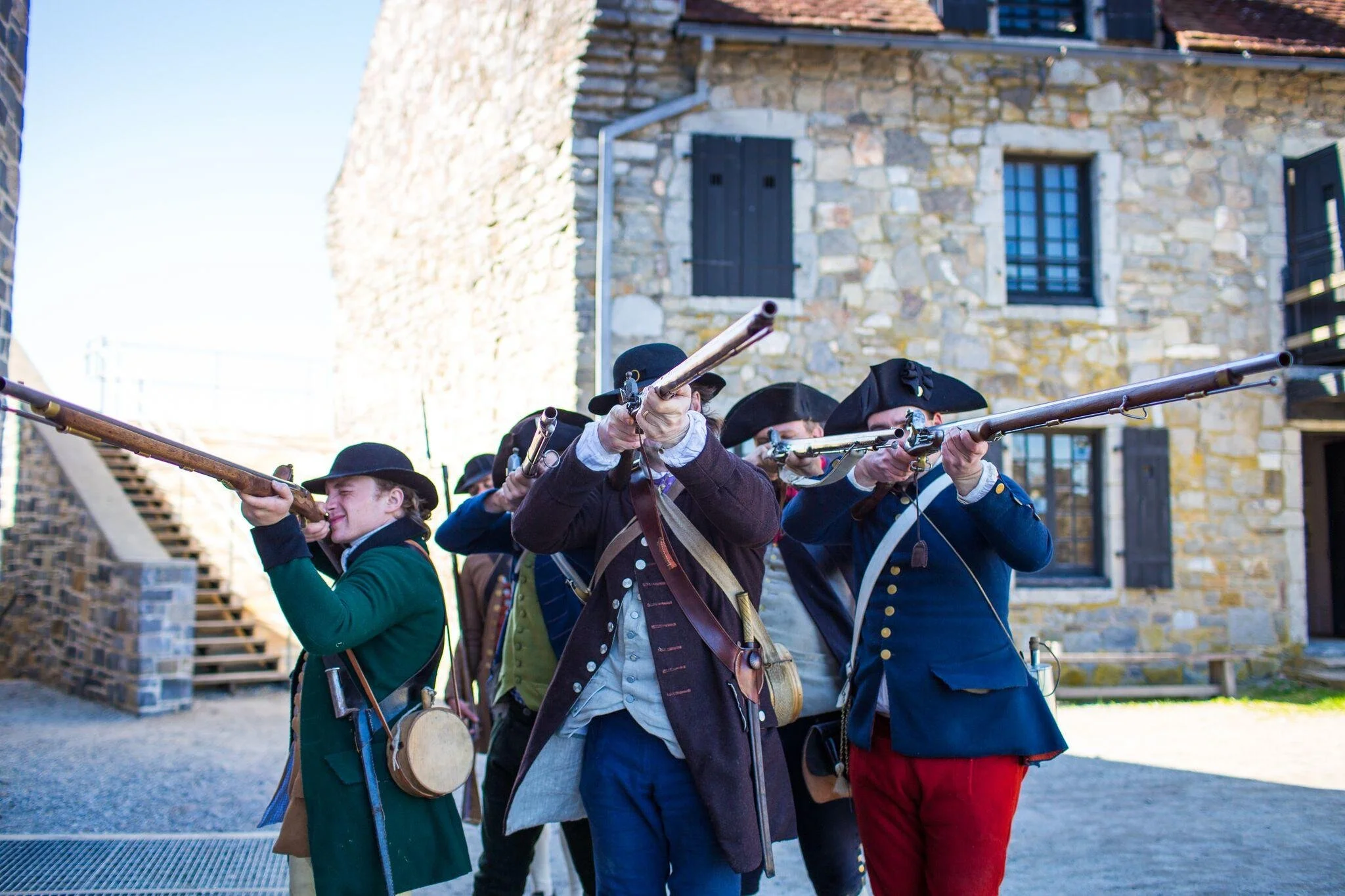
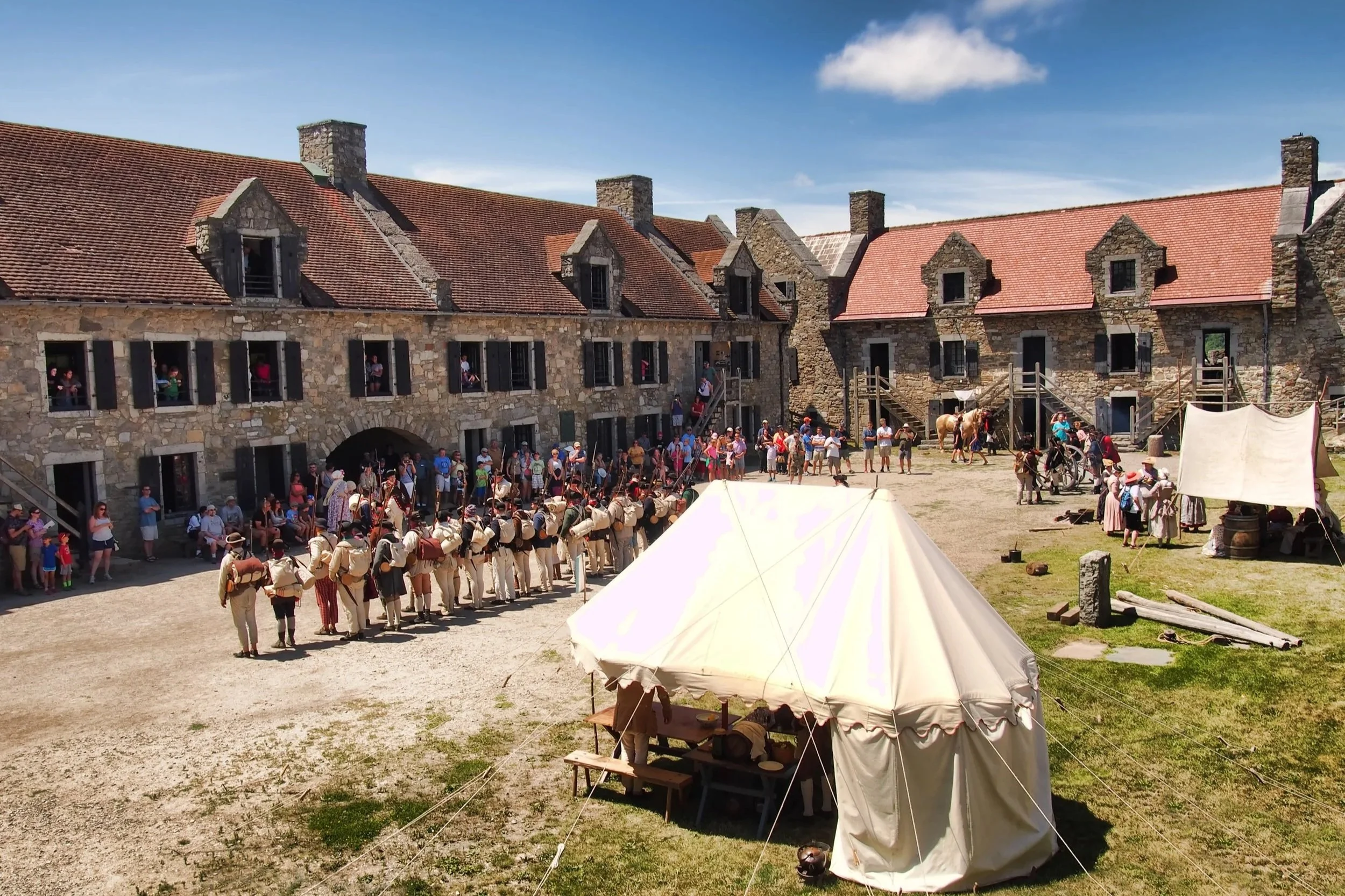
A revolutionary war reenactment at Fort Ticonderoga.
The Adirondacks’ overlooked Revolutionary story.
The Adirondacks are often marketed through wilderness imagery alone: mountains, lakes, campfires, and solitude.
Those things matter. They are central to the region’s identity.
But the Adirondacks also preserve one of the country’s richest intersections of environmental and early American history. The same waterways that now attract paddlers and vacationers once determined the fate of empires.
That broader context often surprises visitors.
And frankly, it sometimes surprises New Yorkers, too.
The renewed attention generated by stories like the Henry Knox trek may help change that.
Because while the Revolution is often framed through famous cities and iconic founding figures, much of the physical struggle behind independence unfolded in places that still feel remarkably wild today.
Places like the Adirondacks.
Places where history is not separated from the landscape, but embedded within it.
As America 250 approaches, that may become one of the Adirondacks’ most compelling stories.
Like what you’re reading?
Get the best Adirondack food, travel, events, and hidden gems delivered to your inbox every week.
📬 Subscribe to the ADK Taste Newsletter
Places to stay, shop, eat, and things to do near Ticonderoga.


















Ultimate Guide to the Adirondacks
Your insider’s guide to exploring the Adirondacks—where to go, what to eat, and the experiences that make this place unforgettable.
Shop for unique Adirondack apparel, gifts and merchandise.


























ADK Talks Podcast
Love the Adirondacks? You’ll love our podcast. We take listeners beyond the guidebooks and into the heart of the Adirondacks. We share stories from the people behind the best places to eat, shop, stay and explore in the ADK. Find us on Apple Podcasts, Spotify or wherever you listen to podcasts.


Bring a bold splash of the Adirondack spirit wherever you roam with this vibrant, adventure-ready tote bag. Featuring a chic golden hue and a retro-style design, this tote is more than just an accessory—it’s a statement of your love for the mountains, forests, and lakes that make the Adirondacks legendary.
Crafted from durable, easy-care polyester and finished with reinforced stitching, this bag is made to go the distance—from farmers’ markets to campsites, library runs to beach days. The roomy boxed corners make packing snacks, sweaters, books, or souvenirs a breeze, while the sturdy navy or black straps sit comfortably on your shoulder no matter how full the day (or the bag).
And with the playful “Find the Good Stuff Here” message on the reverse, this tote is a nod to curiosity, good vibes, and great finds.
Perfect for:
Day trips to your favorite lake or historic site
Grocery hauls and artisan market strolls
Picnic gear, beach towels, or a cozy flannel
Commuters who love to keep it wild
Gift-givers looking for something both beautiful and useful
Product Features:
100% polyester for strength and durability
Reinforced handle stitching for everyday carry confidence
Spacious 16" x 16" design with boxed corners for easy packing
Soft yet sturdy medium-weight fabric
Stylish navy handles to complement any outfit
Go ahead—Find the Good Stuff. Carry it in style.
A perfect gift for Adirondack lovers, nature enthusiasts, and anyone who believes “Forever Wild” is more than a motto—it’s a way of life.