

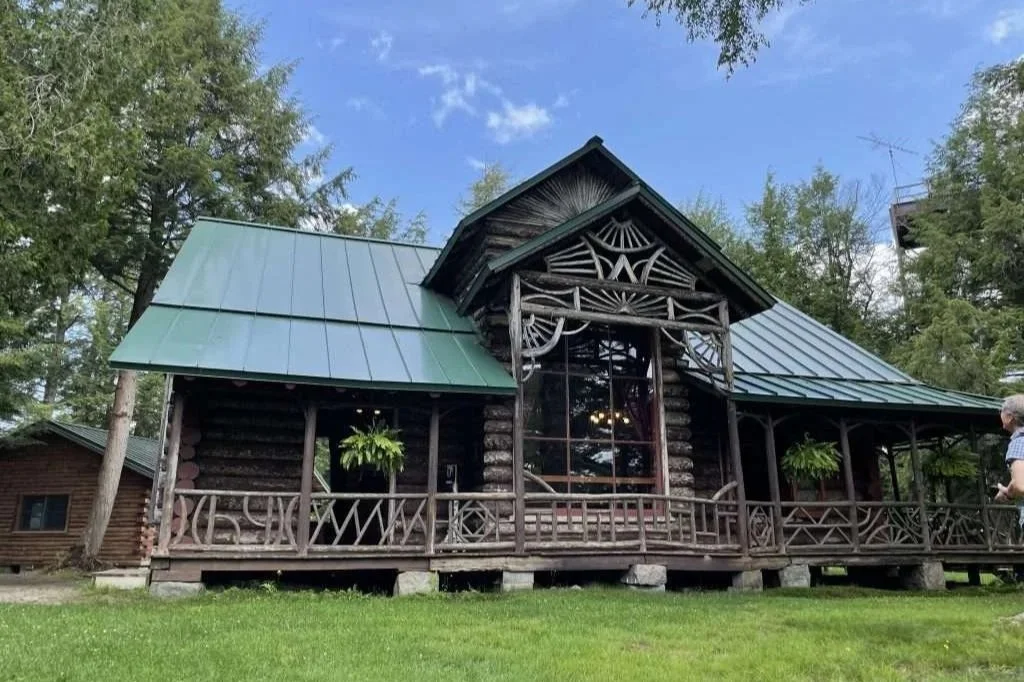
View of the Camp Sagamore campus from the Main Lodge.
During Women’s History Month, ADK Taste celebrates the women who helped shape the Adirondacks—leaders, visionaries, and trailblazers whose legacies still echo across the region’s lakes and forests. Few stories capture that spirit quite like Margaret Emerson's, the woman often remembered as the Matriarch of Great Camp Sagamore.
Great Camp Sagamore in the Adirondacks, located on Sagamore Lake near Raquette Lake in the center of the park, is one of the region’s most famous historic “Great Camps.” Originally built in the 1890s by architect William West Durant and later owned by the Vanderbilt family, the camp became a legendary wilderness retreat during the Gilded Age. Yet its longest and most influential chapter began under the stewardship of Margaret Emerson, who preserved Sagamore as a vibrant Adirondack gathering place for nearly forty years.
For nearly four decades, Emerson guided life at the sprawling Adirondack estate once owned by the Vanderbilt family. Through personal tragedy, social upheaval, and two world wars, she preserved Sagamore not merely as a retreat for the wealthy but as a living community in the wilderness.
Her story reads like a chapter from the Gilded Age—but one with a distinctly Adirondack ending.
A socialite with an Adirondack destiny.
Margaret Emerson was born into extraordinary wealth. She was the daughter of Isaac Edward Emerson, the Baltimore entrepreneur who invented Bromo-Seltzer and built a pharmaceutical empire.
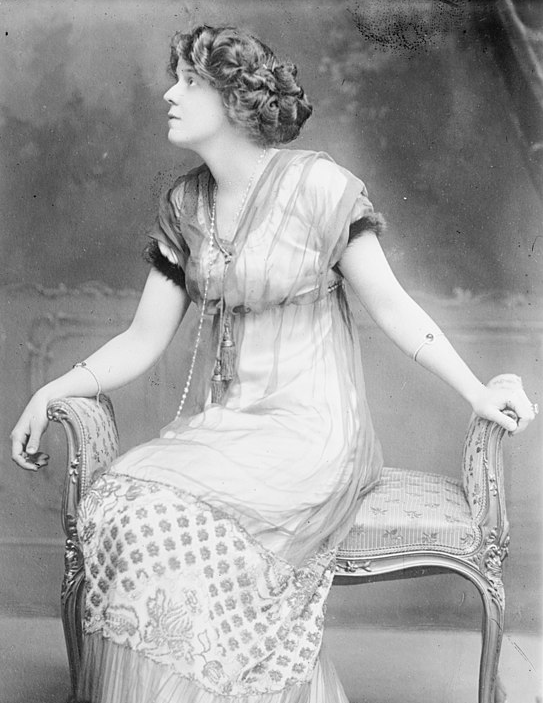
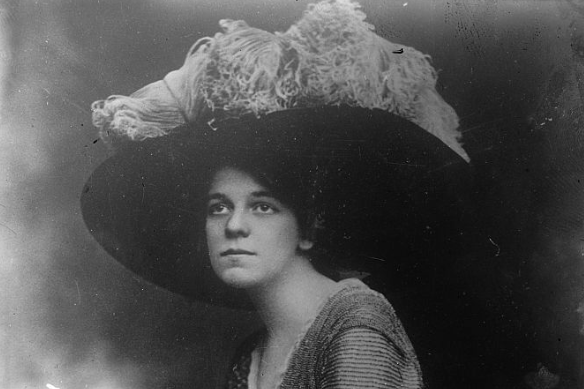
Margaret Emerson
At just 18, she married physician, Dr. Smith Hollis McKim, after meeting him aboard her father’s yacht during a round-the-world cruise.
The marriage quickly collapsed in scandal. In 1910, Margaret filed for divorce in Reno, Nevada, alleging physical abuse. The highly publicized proceedings rocked New York society and resulted in a $150,000 settlement (for McKim)—an amount worth more than $5 million today.
Despite the personal turmoil, Margaret soon found herself back in elite social circles.
In 1911, she married Alfred Gwynne Vanderbilt, one of the wealthiest men in the United States and heir to the Vanderbilt fortune.
The match would change the history of the Adirondacks.
Rewind: A great camp reborn.
Prior to his marriage to Margaret, Vanderbilt purchased Great Camp Sagamore in 1901 as a wilderness retreat on 1,500 acres near Raquette Lake in the Central Adirondacks.
Designed by legendary Adirondack developer William West Durant, the camp embodied the rustic luxury that defined the region’s famous “Great Camps.” Vanderbilt bought Sagamore as a gift to his first wife, Ellen ("Elsie") Tuck French, in 1901.
Yet Sagamore had seen limited use during Vanderbilt’s first marriage.
According to Sagamore historian Connor Williams, Vanderbilt’s first wife never embraced life in the Adirondacks. They would later divorce around 1908.
“I always equate it to buying season tickets to a hockey team as a honeymoon gift,” Williams joked during an ADK Talks interview. “If your spouse likes hockey, it’s a great gift. Otherwise… it’s really more for you.”
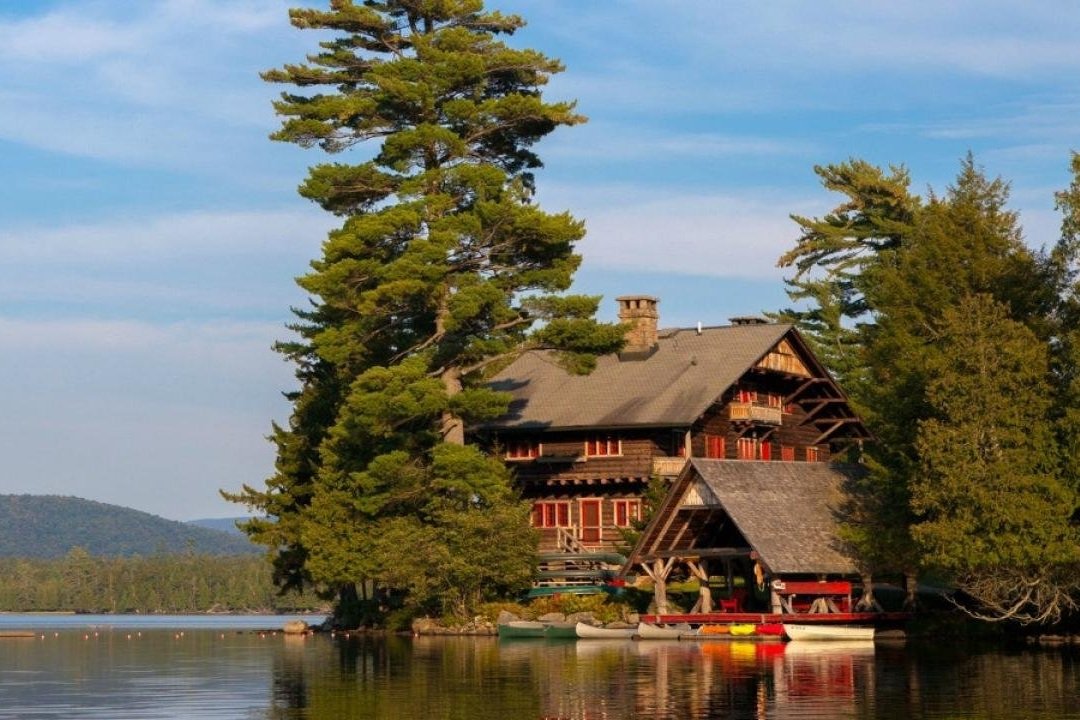
Sagamore’s Boat House
Margaret Emerson was different.
Her arrival at Sagamore after they married in 1911 sparked a renewed enthusiasm for the property. Vanderbilt expanded the estate dramatically, adding the Wigwam guest house, a bowling alley, a hunting camp, and a lakeside playhouse.
A hydroelectric plant provided electricity, and modern conveniences—from telephones to expanded service buildings—transformed Sagamore into one of the most luxurious wilderness retreats in America.
Margaret even commissioned custom china decorated with pine trees and gold leaf for the dining hall. She would tease guests by suggesting a raccoon was hidden in the design.
There never was one—but the game became part of Sagamore lore.
Listen: The Gilded Age Meets the Great Outdoors.
Before Margaret Emerson became Sagamore’s matriarch, the camp already held a fascinating place in Adirondack history. In this episode of the ADK Talks podcast, Sagamore historian Connor Williams explores the Vanderbilt era, the design of the Great Camps, and the stories that shaped this remarkable Adirondack landmark.
Learn more about Sagamore’s Vanderbilt-era history and the legacy Margaret Emerson helped preserve.
Tragedy at sea.
Margaret’s life changed forever in May 1915.
While traveling aboard the RMS Lusitania, Alfred Vanderbilt died when a German submarine torpedoed the ship during World War I. According to historical accounts, the 37-year-old millionaire—who could not swim—along with his valet, helped women and children into lifeboats before giving his life jacket to a mother holding an infant.
He did not survive the sinking.
Friends assumed Margaret would sell Sagamore after the tragedy.
Instead, she did the opposite.
Becoming Sagamore’s matriarch.
Heartbroken but resolute, Margaret Emerson made Sagamore her summer home and assumed full responsibility for the vast property.

Part of the worker’s complex at Great Camp Sagamore.
Managing 1,500 acres and dozens of buildings required strong leadership. Fortunately, Margaret possessed it in abundance.
She oversaw the completion of construction projects Vanderbilt had started and expanded the estate to nearly 60 buildings. She added cottages for her children—George, Alfred Jr., and Gloria—along with lakeside gathering spaces, gardens, and new recreational areas.
Workers at Sagamore respected her deeply. They considered her word law—but also fair.
Her grandson, Toby Topping, later recalled how effortlessly she balanced hospitality and management.
As reported in Breaking Trail: Remarkable Women of the Adirondacks, “Ever cheery, with a quick wink and a smile,” Toby said, “she could tell you what was fresh in the garden that day, when the guide boat would be fixed, who was arriving next week, and why we should take note—all while finishing a game of croquet.”
Margaret Emerson and the golden years of Great Camp Sagamore.
Under Margaret Emerson’s stewardship, Sagamore became one of the Adirondacks’ most vibrant social centers.

The bowling alley at Sagamore.
She welcomed family, politicians, artists, and celebrities to what guests affectionately called their “home in the woods.”
Visitors included composer Jerome Kern, actor Gary Cooper, Madame Chiang Kai-shek, and General George C. Marshall.
Life at camp blended elegance with outdoor adventure.
A camp alive with culture and sport.
Margaret herself embraced the Adirondack lifestyle wholeheartedly. She hunted, fished, shot skeet, and gardened extensively. Several large fish she caught still hang mounted in Sagamore’s dining hall today.
But her true sporting passion was croquet.
She played fiercely—and often for money. Her skill earned national recognition, and she was eventually inducted into the United States Croquet Hall of Fame, one of the first women ever honored.
Leadership beyond the Adirondacks.
Margaret Emerson’s influence extended far beyond Sagamore.
During World War II, she dedicated herself to humanitarian work with the Red Cross. Serving as Head of Operations in the Pacific, she organized recreational programs and therapy for wounded service members recovering from battle injuries.
She also quietly paid to send hundreds of injured soldiers home.
True to character, she preferred to keep her philanthropic efforts private.
Passing Sagamore to the next generation.
By the early 1950s, the winds of change had begun to blow through the Adirondacks.
In 1954, after a devastating windstorm and with her children less interested in maintaining the estate, Margaret decided Sagamore’s future should lie in education rather than private ownership.
She gifted the camp to Syracuse University, which transformed the property into a wilderness conference center and classroom.
Margaret Emerson died in 1960. Though she had received many honors during her lifetime, she insisted that most be kept private.
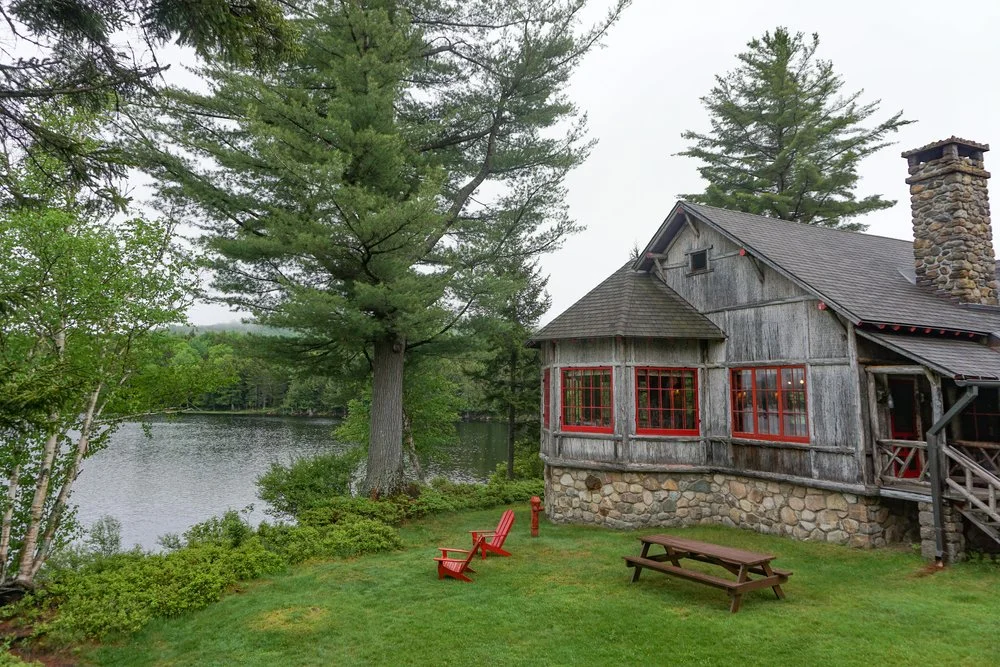
The dining building at Sagamore with lakefront views..
In a striking turn of events, the Catholic Church—after once excommunicating her during her divorce—welcomed her back. Her funeral included a solemn requiem mass at St. Patrick’s Cathedral in New York City.
Sagamore’s enduring legacy.
In the 1970s, the historic camp faced another moment of uncertainty. New York State initially planned to demolish the buildings under the Adirondack Park’s “forever wild” provisions.
Preservationists rallied to save it, resulting in the founding of the Sagamore Institute of the Adirondacks.
Their efforts succeeded. Today, the Great Camp Sagamore historic site welcomes visitors from around the world, offering tours, overnight stays, and educational programs that bring Adirondack history to life.
Guests still sleep in the same rustic buildings where Vanderbilt-era visitors once gathered.
And the spirit of Margaret Emerson—hostess, leader, and Adirondack matriarch—still lingers in the woods along Raquette Lake.
Historical details in this article were compiled from Sagamore Institute archives, the ADK Talks podcast interview with historian Conor Williams, and Breaking Trail: Remarkable Women of the Adirondacks.
Breaking Trail: Remarkable Women of the Adirondacks by Peggy Lynn and Sandra Weber
Great Camp Sagamore archives and historical materials
ADK Talks Podcast: “The Gilded Age Meets the Great Outdoors: A Deep Dive into Great Camp Sagamore featuring Connor Williams.”
The New York Times, January 3, 1960, obituary archives
Historical summaries compiled from Wikipedia and Sagamore Institute materials
More women who shaped Adirondack history.
Explore more stories from ADK Taste’s Women’s History Month series, celebrating the women who helped shape the history of the Adirondack Park.

Born and raised in a small Adirondack town, Alice Green is known as a fierce advocate for racial and social justice, serving as the Executive Director of the Center for Law and Justice in Albany, New York.

An Adirondack summer camp helped shape one of America’s best-known Supreme Court Justices, who was a trailblazer for gender equality and reshaped American law.
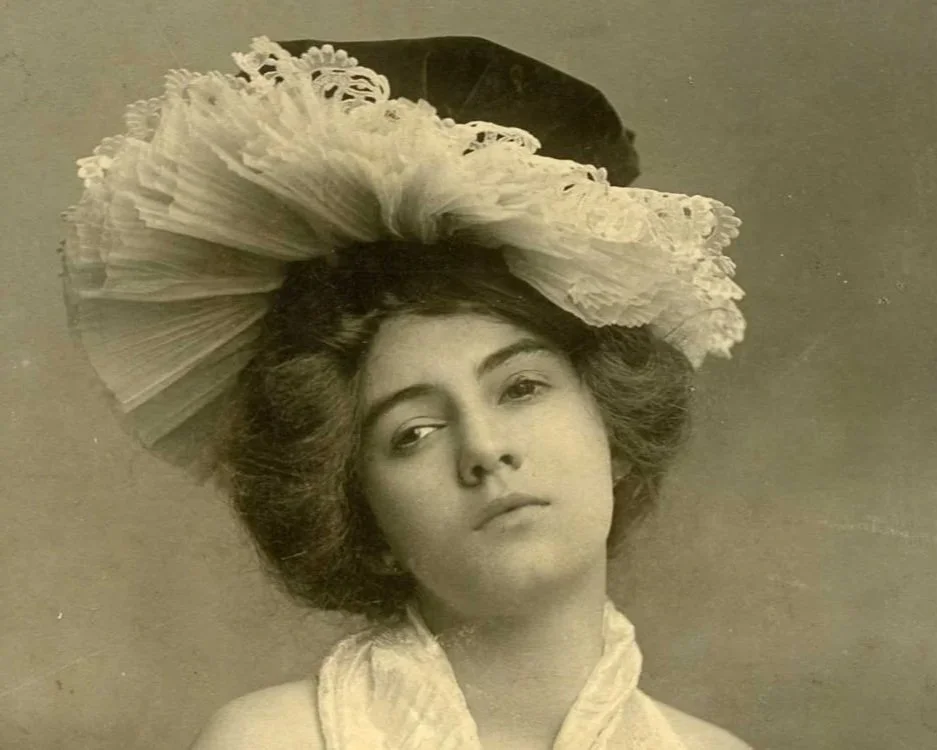
Jeanne Robert Foster, a woman whose life took her from the Adirondack wilderness to New York City, Boston, London, Paris and beyond.
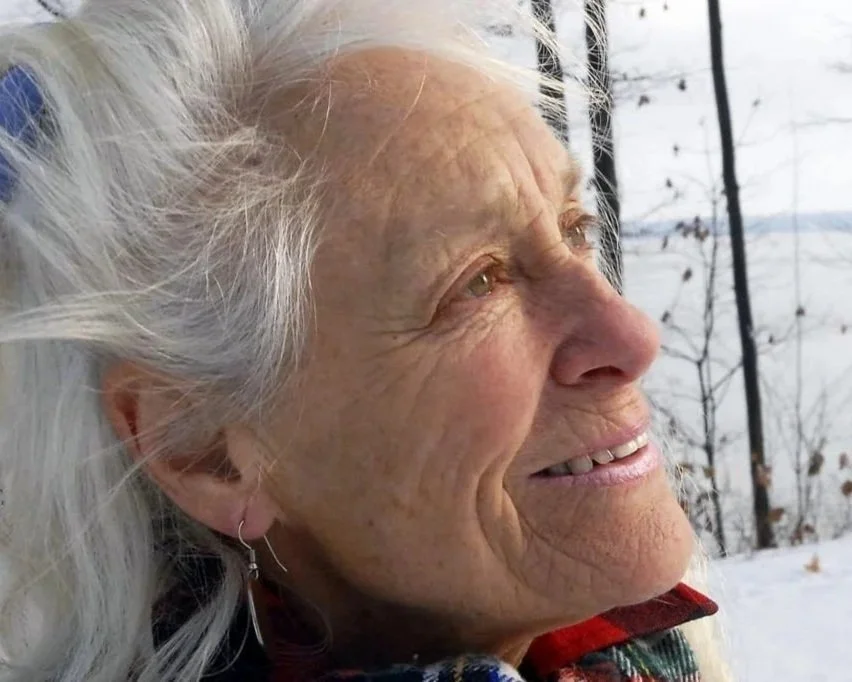
Known as "Adirondack Woodswoman," Anne's unforgettable story shows bravery, strength, and commitment to protecting the beauty of the Adirondacks.a true pioneer and advocate for environmental conservation.
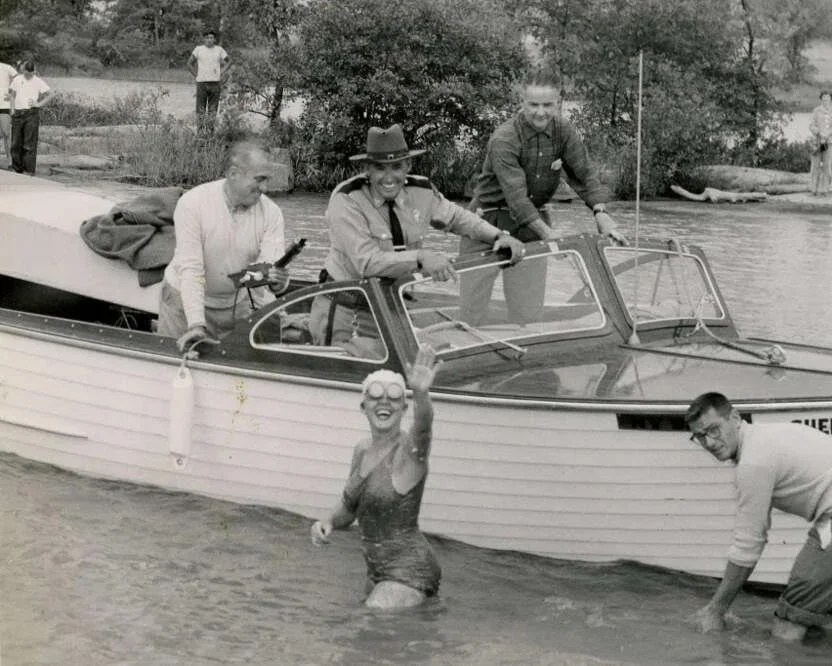
Diane Struble, a 25-year-old single mother, became the first swimmer to conquer Lake George.
The best places to experience, stay, eat and shop near Great Camp Sagamore.

















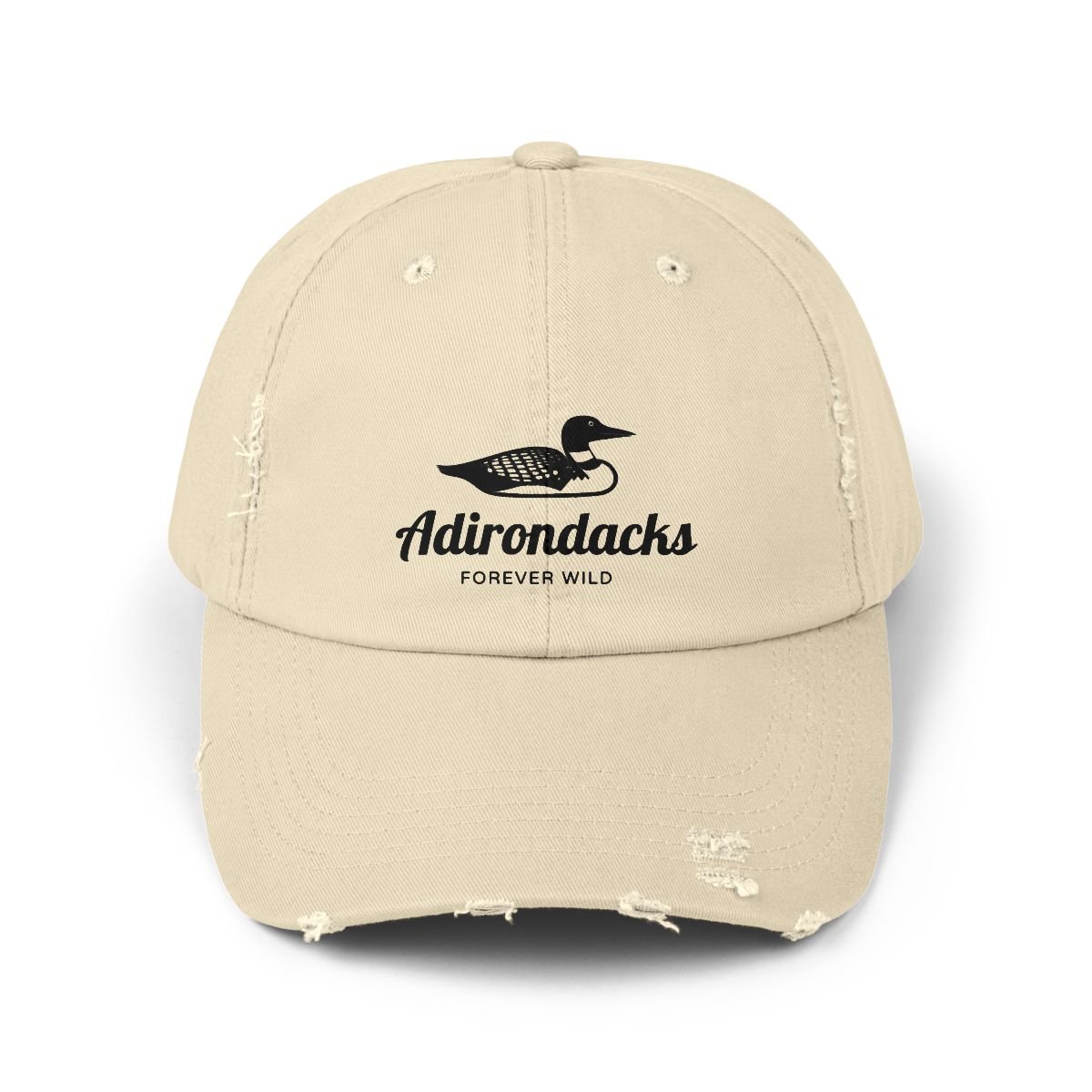
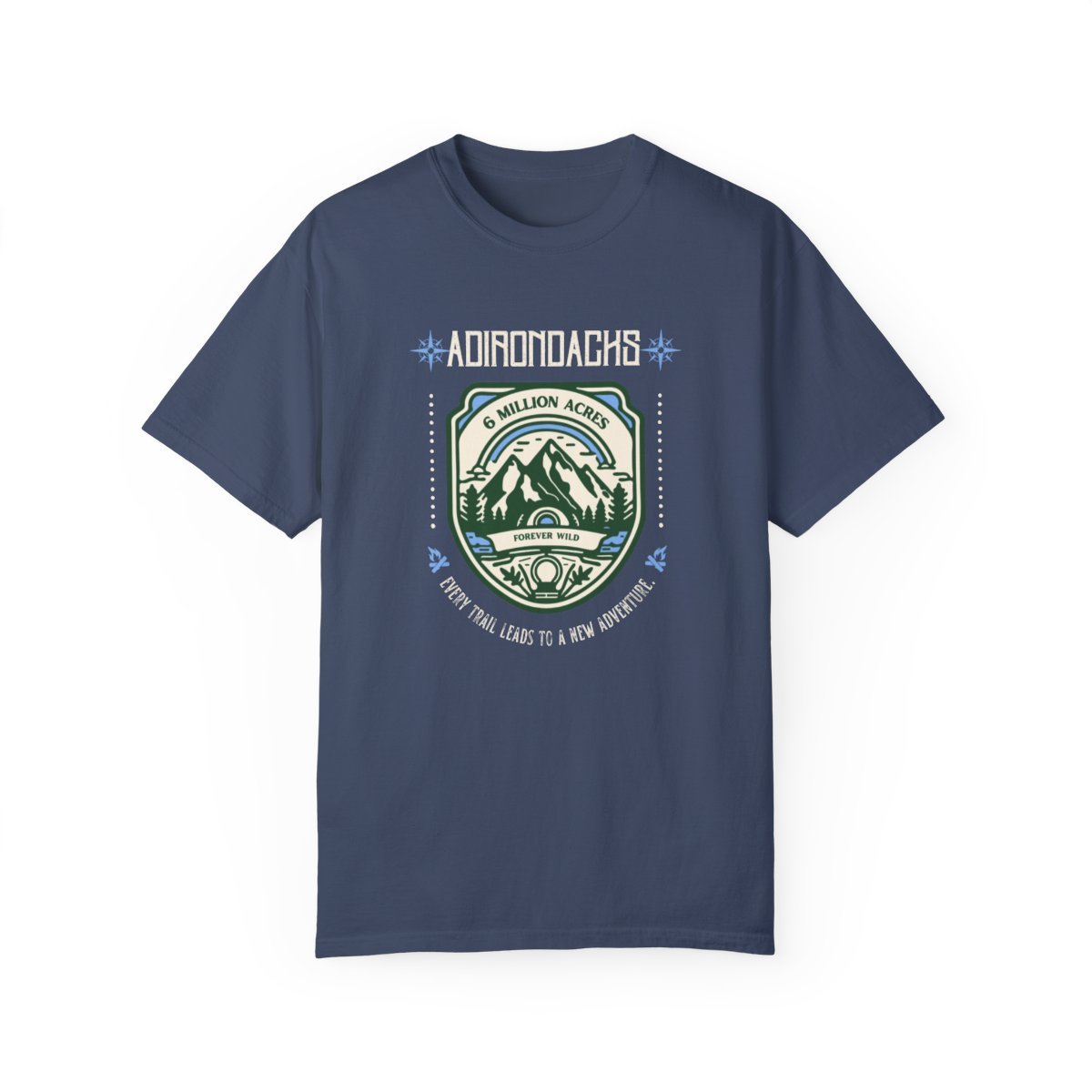
Shop for unique Adirondack apparel, gifts and merchandise.

























ADK Talks Podcast
Love the Adirondacks? You’ll love our podcast. We take listeners beyond the guidebooks and into the heart of the Adirondacks. We share stories from the people behind the best places to eat, shop, stay and explore in the ADK. Find us on Apple Podcasts, Spotify or wherever you listen to podcasts.




Show off your love for the Adirondacks in style with this Adirondack Park Unisex Heavy Blend™ Hoodie. Featuring a bold canoe-and-mountain design and “Est. 1892” tribute, this hoodie is a must-have for anyone who dreams of paddling serene Adirondack lakes or exploring rugged High Peaks.
Whether you’re relaxing by the campfire, strolling through Lake Placid, or looking for the perfect Adirondack-themed gift, this hoodie delivers warmth, comfort, and timeless style.
Crafted from a soft, durable cotton-poly blend, this item is ideal for layering year-round. The spacious kangaroo pouch pocket keeps hands warm on chilly evenings, and the adjustable drawstring hood adds a snug, cozy fit. Ethically produced with OEKO-TEX certified dyes, it’s as kind to the environment as it is to your weekend wardrobe. Extended sizes available.
This is more than just a hoodie—it’s a piece of the Adirondacks you can wear anywhere. Treat yourself or surprise the ADK enthusiast in your life—perfect for birthdays, graduations, or that next mountain getaway.
Product Highlights:
Soft & durable 50% cotton / 50% polyester blend
Spacious kangaroo pocket for warmth & convenience
Adjustable drawstring hood for the perfect fit
Ethically produced with OEKO-TEX certified dyes
Medium-heavy weight—ideal for year-round adventures
SMLXL2XL3XLWidth, in20.0822.0524.0225.9827.9929.92Length, in27.1727.9529.1329.9231.1031.89Sleeve length from center back, in33.5034.5035.5036.5037.5038.50Size tolerance, in1.501.501.501.501.501.50