
America’s Longest Inland Water Trail Starts in the Adirondacks
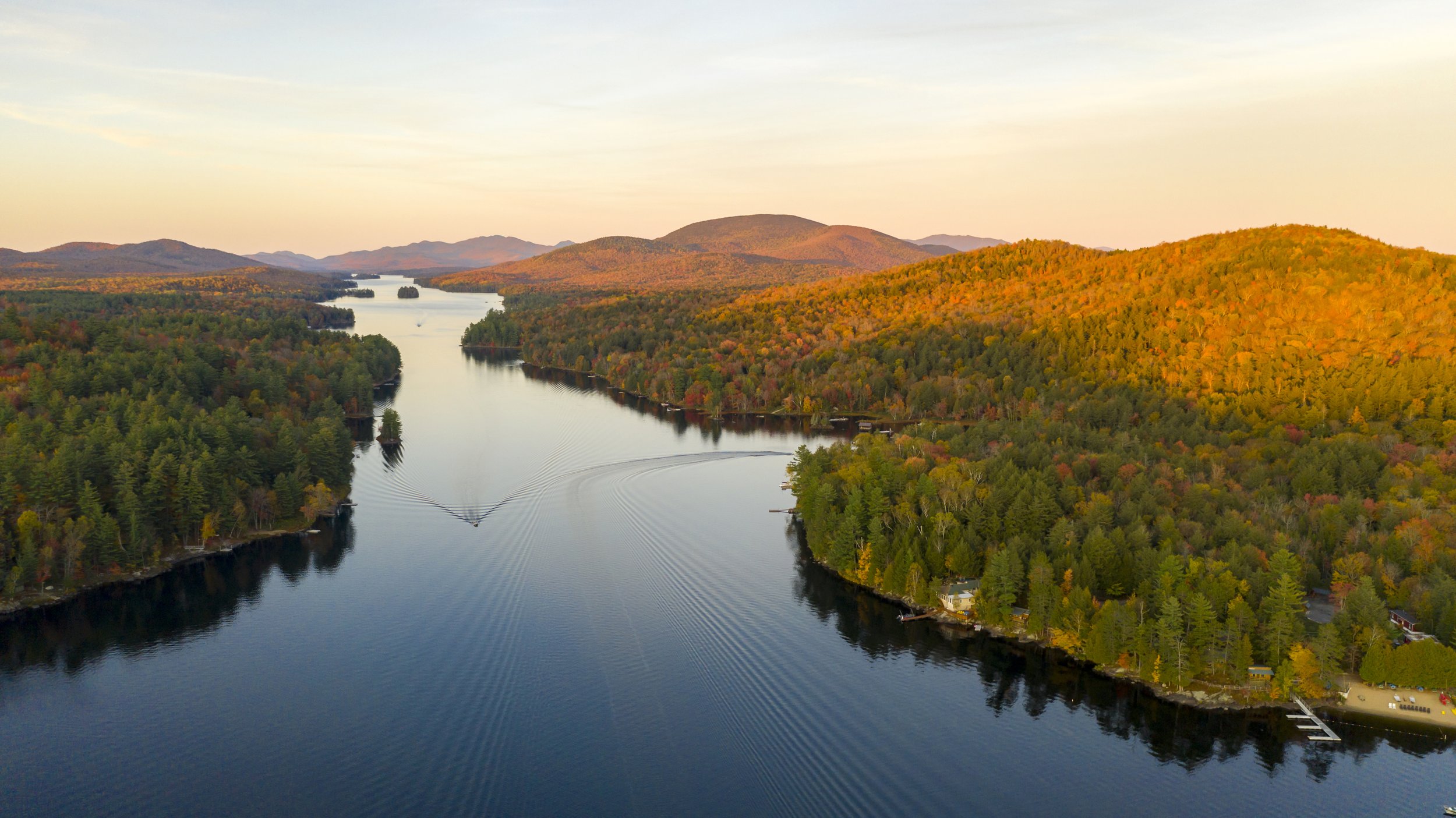
Long Lake. Photos courtesy: Regional Office of Sustainable Tourism
Plenty of Adirondack paddlers know the 90-Miler. They know the Fulton Chain, Long Lake, the Raquette River and the Saranacs.
What many may not know is that those familiar waterways are part of something much bigger: the Northern Forest Canoe Trail, a 740-mile route that begins in Old Forge and stretches across New York, Vermont, Québec and New Hampshire before ending in Fort Kent, Maine.
In other words, someone can paddle a quiet Adirondack lake for an afternoon and technically dip a paddle into America’s longest inland water trail.
No 740-mile commitment required.
A 740-mile trail hiding in plain sight.
Completed in 2006, the Northern Forest Canoe Trail or NFCT, connects 23 rivers and streams, 59 lakes and ponds and 45 communities, with 65 portages totaling more than 70 miles.
Its first 147 miles run through New York.
The western terminus is in Old Forge. From there, the route travels through the Fulton Chain of Lakes toward Raquette Lake, Long Lake and the Raquette River, crosses the Saranac Chain and eventually follows the Saranac River toward Lake Champlain.
For Adirondack paddlers, much of that list sounds strikingly familiar.
That is part of the fun.
Many people may already know pieces of the NFCT without realizing those pieces belong to a continuous historic water route across the Northeast.
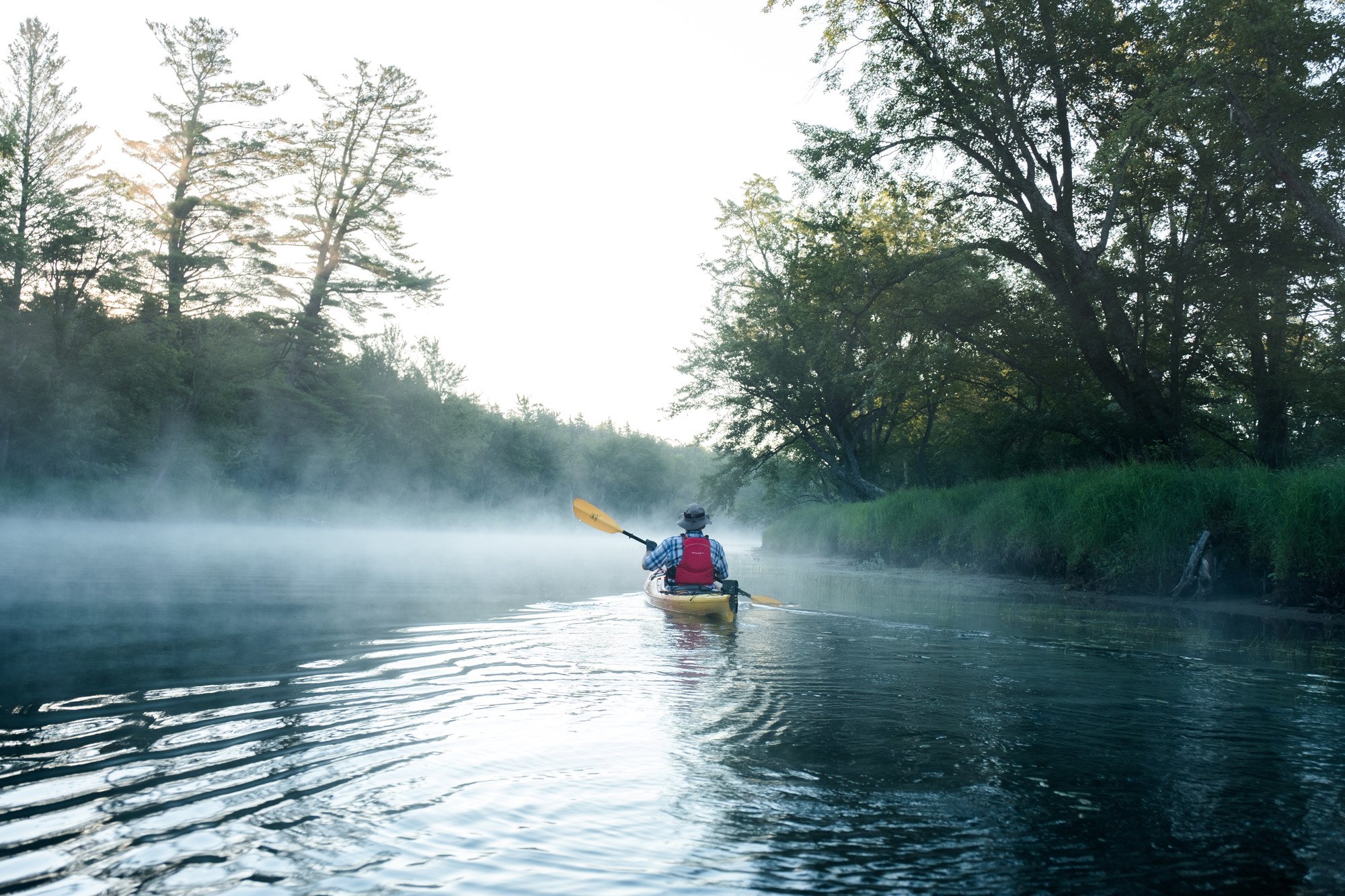
Paddling on the Raquette River.
The trail follows waterways people traveled long before roads stitched the region together. Indigenous people used these corridors for travel and trade; later came settlers, loggers and guides. Today, paddlers follow many of those same natural connections—albeit with considerably lighter boats and better dry bags.
Yes, the 90-Miler is part of it.
The Adirondack Canoe Classic—better known as the 90-Miler—may be the most famous Adirondack expression of the NFCT.
The three-day race starts in Old Forge and ends in Saranac Lake, following roughly the first 90 miles of the larger route.
But NFCT Executive Director Karrie Thomas is quick to point out that the race is only one way to experience the trail.
In a conversation with ADK Talks, Thomas described the Adirondack section as an unusually welcoming introduction to paddle tripping. It can feel remote, yet communities, outfitters and support are often relatively close.
After Saranac Lake, she noted with a laugh, “things get spicy pretty quickly.”
The trail begins encountering more moving water, significant rapids, dams, Lake Champlain and, farther east, long stretches where river levels play a much bigger role.
The Adirondacks, by comparison, offer an appealing place to get one’s feet wet. Preferably figuratively.
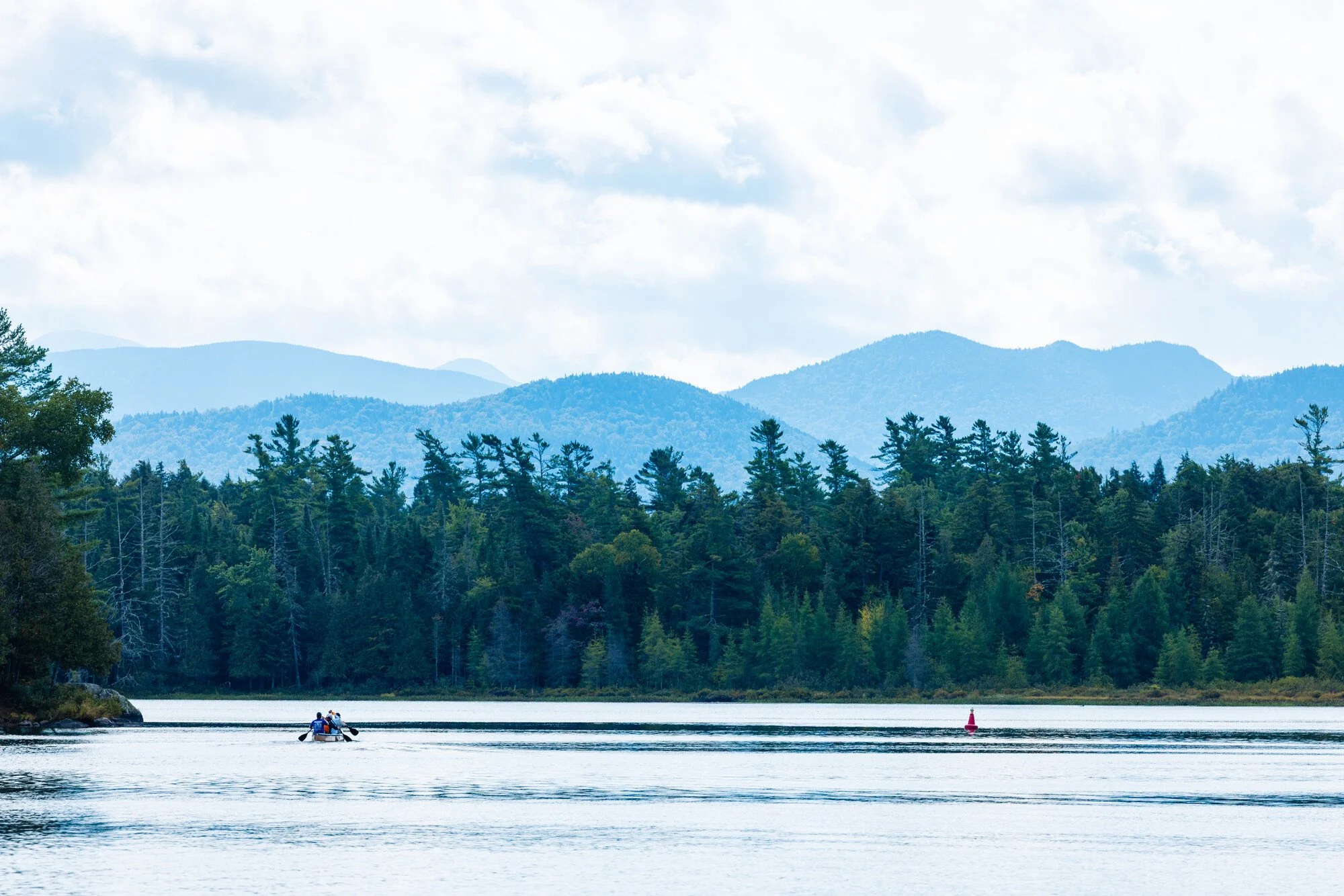
Saranac Lake
See where the Northern Forest Canoe Trail begins.
The NFCT doesn't ease into the Adirondacks—it starts here.
Segment 1 travels from Old Forge through the Fulton Chain of Lakes and Raquette Lake toward Long Lake, following the waterways that form the opening stretch of the 740-mile trail.
For paddlers considering their first NFCT adventure, the video below offers a chance to see the terrain before loading the canoe: broad lakes, connecting waterways, carries and the unmistakably Adirondack landscape that makes the New York section such an appealing introduction to the trail.
Follow Segment 1 of the Northern Forest Canoe Trail from Old Forge toward Long Lake through the lakes and waterways of the central Adirondacks.
And that's only the beginning. From Long Lake, the NFCT continues along the Raquette River toward Tupper Lake and through the Saranac waterways before eventually leaving the Adirondacks—and continuing hundreds of miles toward Maine.
Hear the story behind the trail.
On ADK Talks, Thomas joins Jane and Steve to share the surprising story behind the Northern Forest Canoe Trail, the 90-Miler, stewardship along the route and why the people paddlers meet may be as memorable as the water itself.
Karrie also explains why paddling offers something different from standing on a summit: from the bottom of a river valley, the landscape can make a person feel every bit as small—and awed—as looking out from a mountaintop.
You don't have to paddle 740 miles.
One misconception worth dispensing with immediately: experiencing the NFCT ’t require becoming a through-paddler.
A few hours count.
So does a weekend.
So does a week.
For a classic Adirondack multiday experience, Thomas recommends Long Lake through the Raquette River toward Tupper Lake. The broader journey can stretch to roughly 50 miles, with camping along the way and a carry around Raquette Falls.
Paddlers looking for something quieter should put Forked Lake on the list.
“Mist rising in the morning on Forked Lake is one of those beautiful things that not as many people see,” Thomas told ADK Talks.
And then there are the Saranacs.
Upper, Middle and Lower Saranac Lakes offer everything from relatively approachable day paddles to multi-day camping trips. Thomas considers Saranac Lake an especially good jumping-off point because paddlers can spend a day, a week or considerably longer exploring interconnected waterways.
The lesson?
Don't start by asking how much of the 740-mile NFCT you can conquer.
Start by asking how you'd like to spend a day on the water.
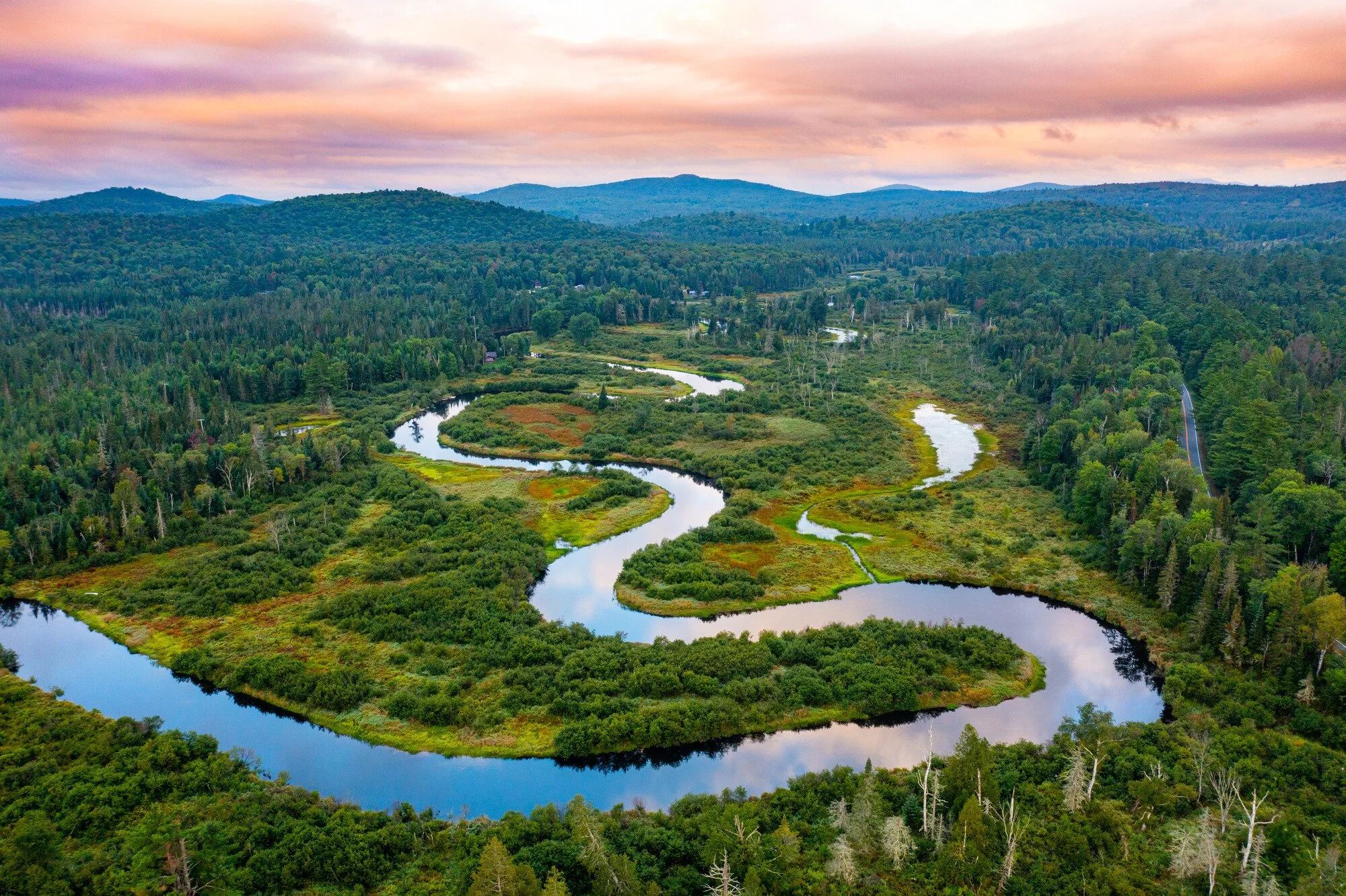
Saranac River.
No canoe? No shuttle? No problem.
Point-to-point paddling introduces a logistical question that doesn't arise when hiking back to the same trailhead:
What happens to the car?
Fortunately, Adirondack outfitters have been solving that problem for years.
St. Regis Canoe Outfitters in Saranac Lake sits directly on the Northern Forest Canoe Trail and offers canoe and kayak rentals, guided and self-guided trips, trip-planning assistance and transportation for paddlers, boats and gear.
Its shuttle network serves numerous Adirondack destinations along and near the NFCT, including Old Forge, Raquette Lake, Long Lake, Tupper Lake and the Saranac Lakes.
The NFCT also maintains an online Trip Planner that identifies access points, campsites, portages and services along the route and publishes maps and guidebooks for paddlers planning anything from an afternoon excursion to a through-paddle.
For someone intrigued by the trail but unsure how to turn that interest into an actual trip, those resources are a considerably better starting point than buying a canoe and hoping for the best.
Paddle one day. Pedal the next.
There's now another interesting way to explore this part of the Adirondacks.
The 34-mile Adirondack Rail Trail connects Tupper Lake, Saranac Lake and Lake Placid—putting two major recreational corridors within reach of one another.
Thomas sees particular potential around Saranac Lake, where visitors can paddle portions of the NFCT and then trade the boat for a bicycle to explore the Rail Trail.
That doesn't make the two trails interchangeable. It makes the region more interesting.
A traveler could spend one day exploring the Adirondacks at water level and the next following the old rail corridor through forests, wetlands and communities.
For couples, families or groups whose enthusiasm for sitting in a canoe varies considerably, that's not a bad compromise.
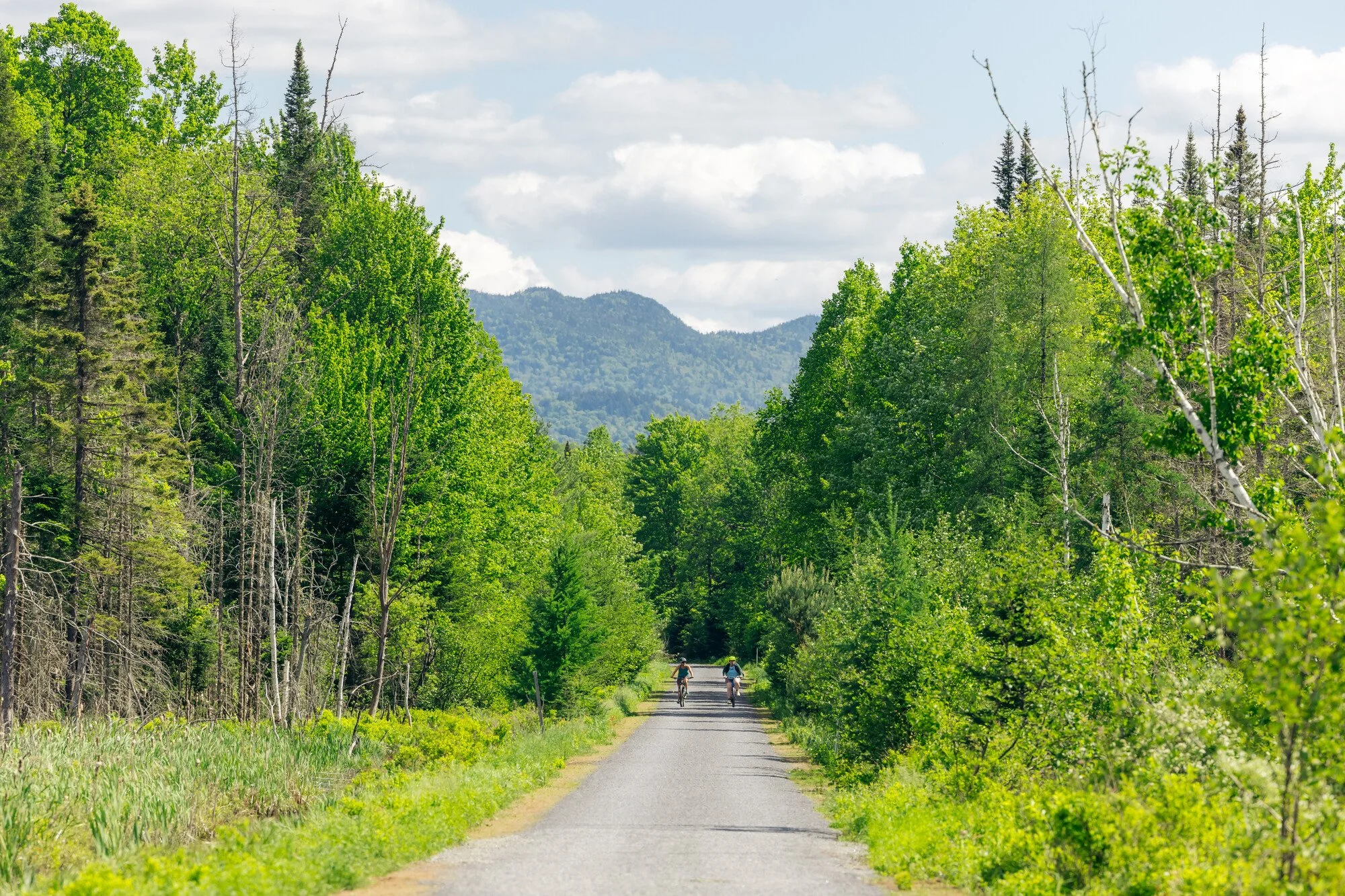
The Adirondack Rail Trail extends from Lake Placid, through Saranac Lake to Tupper Lake.
Stewardship is part of the story.
The NFCT isn't simply drawing a blue line across a map and encouraging people to follow it.
The nonprofit organization maintains and improves access along the trail, builds and repairs campsites, clears carries, works with landowners and communities and increasingly focuses on making paddling more accessible to people with different physical abilities.
Its stewardship crews also respond to something anyone who spends time outdoors understands: trails don't maintain themselves.
Flooding, erosion, downed trees and changing water conditions continually reshape the route.
And sometimes improving access means recognizing that not everyone experiences a carry the same way.
Thomas describes work ranging from smoothing rough sections of trail to creating adaptive access that allows more paddlers to reach the water.
The goal isn't to tame the Northern Forest.
It's to help more people experience it responsibly.
Safety is part of the adventure.
Thomas' first advice to paddlers is delightfully unglamorous:
Wear the PFD.
Then check the weather. Know the put-in and takeout. Understand the expected water conditions. Tell someone where you're going and when you expect to return.
That advice becomes even more important in fall, when the Adirondacks can deliver spectacular September paddling and dangerously cold water at exactly the same time.
September happens to be one of Thomas' favorite times on the trail.
“The water's warm and the air is crisp,” she said.
There's also a sweet spot after Labor Day when crowds thin, but many seasonal businesses and services remain open.
Check conditions before setting out.
The NFCT is a living trail, and access can change from year to year.
One particularly important note for 2026: traditional access at the Old Forge Visitor Center near the western terminus is closed during dam reconstruction, with temporary boat access available nearby.
Before any trip, paddlers should check the NFCT's current Trail Updates and Trip Planner rather than assuming last year's route information still applies.
It's good advice anywhere in the Adirondacks.
From a mountaintop, the Adirondacks can make a person feel small.
Thomas says paddling through the bottom of a river valley can do exactly the same thing.

Lake Champlain.
The real trail may be the connections.
People undertaking long NFCT trips expect difficult days, unpredictable weather and physical challenges.
What surprises them is often something else.
The people.
A homeowner leaving cold drinks for through-paddlers. Someone offering a ride into town. Another paddler sharing food or stopping to help when something goes wrong.
“The trail was made by people,” Thomas said. “It's of people, it's for people, and it's the people that make it so special.”
Which may explain why the Northern Forest Canoe Trail feels so quintessentially Adirondack, even after continuing another 593 miles beyond New York.
The water connects the wilderness.
The people connect everything else.
Want more unexpected Adirondack finds? Subscribe to the ADK Taste newsletter for our hand-picked guide to the best things to do, eat, see and experience across the Adirondacks—delivered weekly.
Ultimate Guide to the Adirondacks
Your insider’s guide to exploring the Adirondacks—where to go, what to eat, and the experiences that make this place unforgettable.
Shop for unique Adirondack apparel, gifts and merchandise.





















ADK Talks Podcast
Love the Adirondacks? You’ll love our podcast. We take listeners beyond the guidebooks and into the heart of the Adirondacks. We share stories from the people behind the best places to eat, shop, stay and explore in the ADK. Find us on Apple Podcasts, Spotify or wherever you listen to podcasts.



















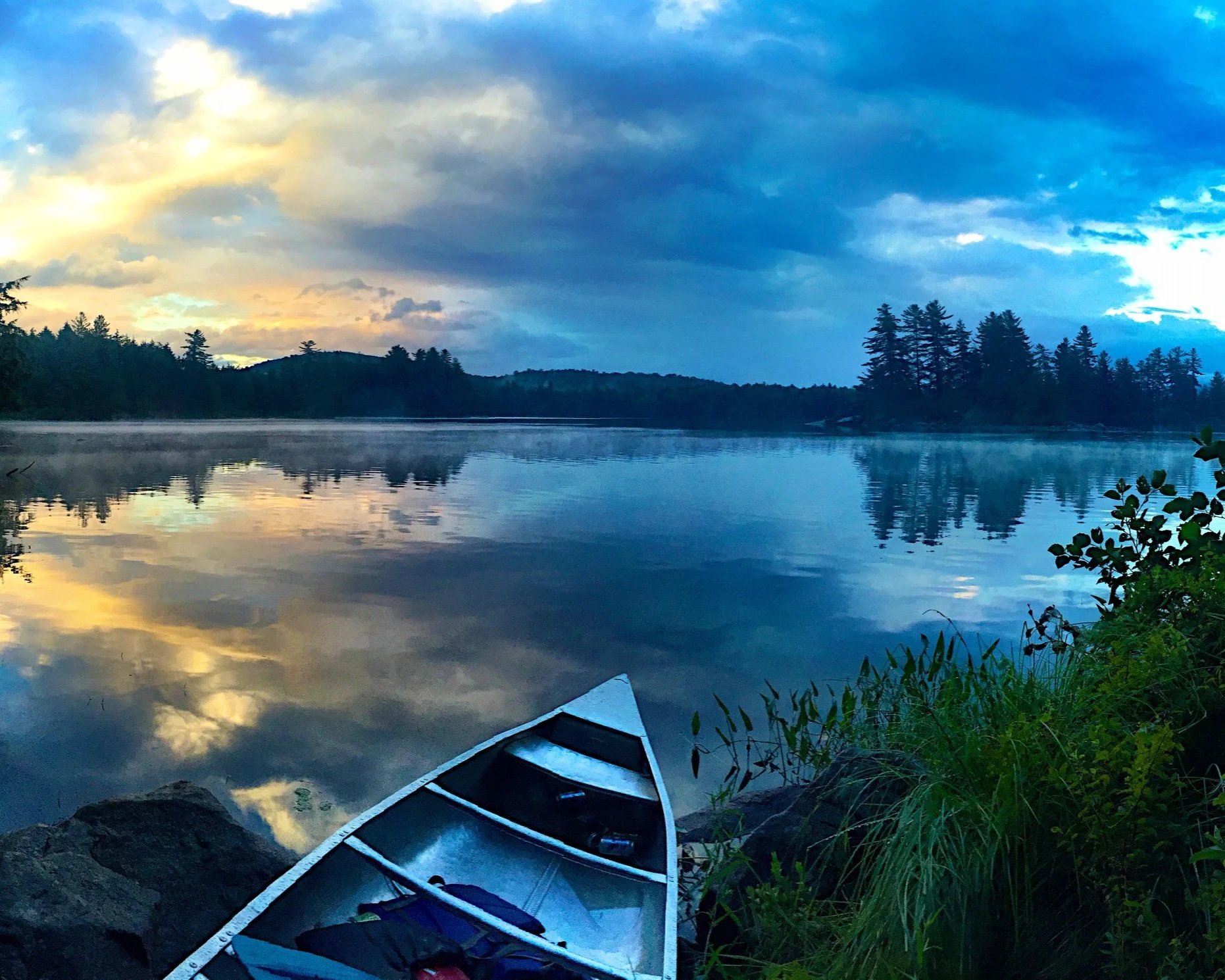
It’s early morning, and the mist hovers above the glassy surface of your favorite Adirondack lake, undisturbed but for the rhythmic dip of your paddle. The only sound is the gentle ripple of water breaking against your canoe. The air is crisp, carrying the scent of pine and the promise of another perfect day in the Adirondacks. Your worries are left ashore, traded for the serenity that only paddling these waters can provide.
You’re not just wearing any shirt. You’re donning an invitation to adventure, to explore the thousand lakes and secret inlets of the North Country.
Our Adirondack Paddler’s Long-Sleeve Tee is made of the softest cotton. It's perfect for layering or wearing on its own. It’s designed for those who know the joy of a paddling in the Adirondacks, who’ve felt the thrill of a canoe gliding silently through mirror-still waters.
This ultra-cotton long-sleeve tee is perfect for Adirondack paddlers of all kinds—canoers, kayakers, SUPs, guide boaters and more. It is a clear comfort winner in any season.
There are no side seams for a relaxed fit. The shoulders are taped for improved durability. We love that the cotton used for these shirts is environmentally friendly.
Check the size chart; friends and family tell us this long-sleeved tee may run a little small.