
Maple Sugaring Season in the Adirondacks is the Sweetest Cure For Cabin Fever
Why March belongs to maple.
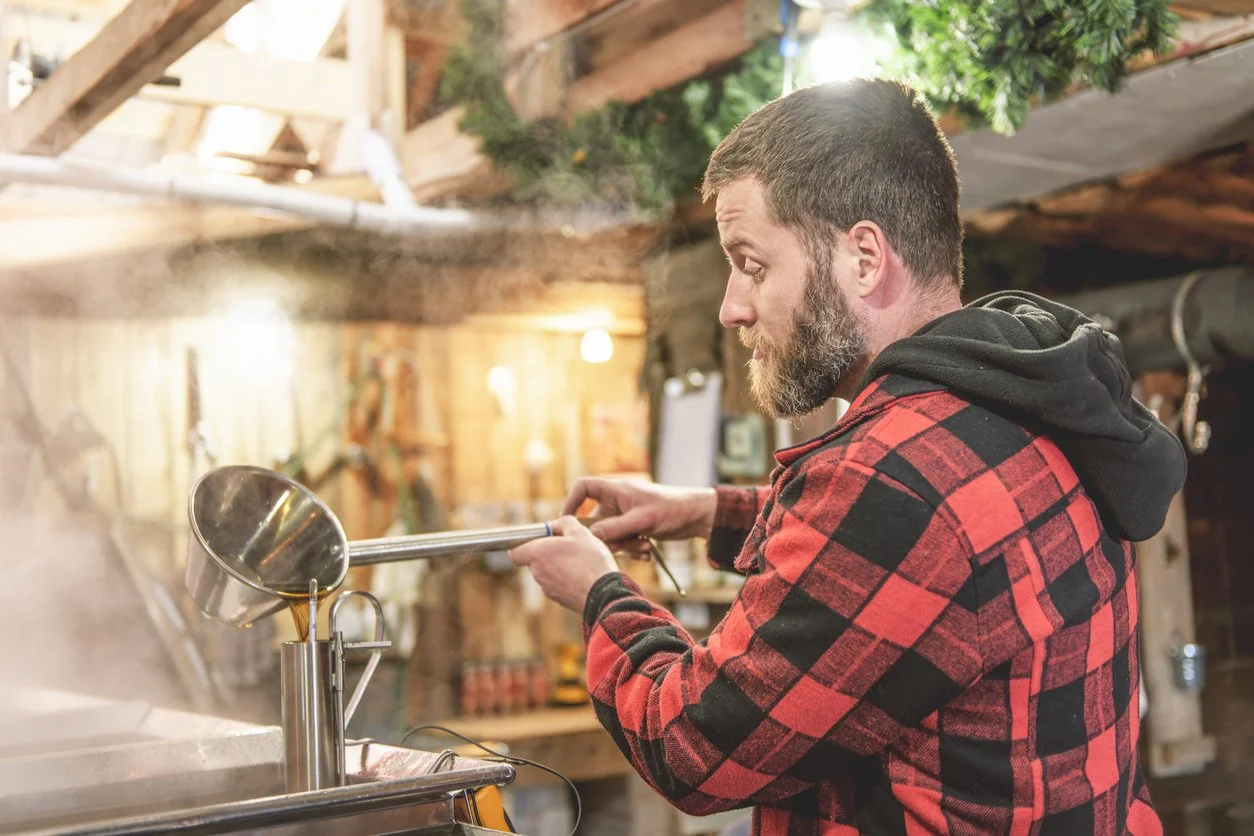
Maple syrup production is a time-honored tradition in the Adirondacks.
By the time March rolls around, even the hardiest Adirondackers feel it: cabin fever. Snowbanks slump. Skis lean tiredly by the door. The mud threatens.
Then the nights dip below freezing, the days climb above 40 degrees, and the sugar maples wake up.
Welcome to maple season in the Adirondacks — a fleeting, six-week window (typically February through March) when cold nights and warm days create the perfect freeze-thaw rhythm to push sap through the trees. It’s nature’s version of a grand reopening.
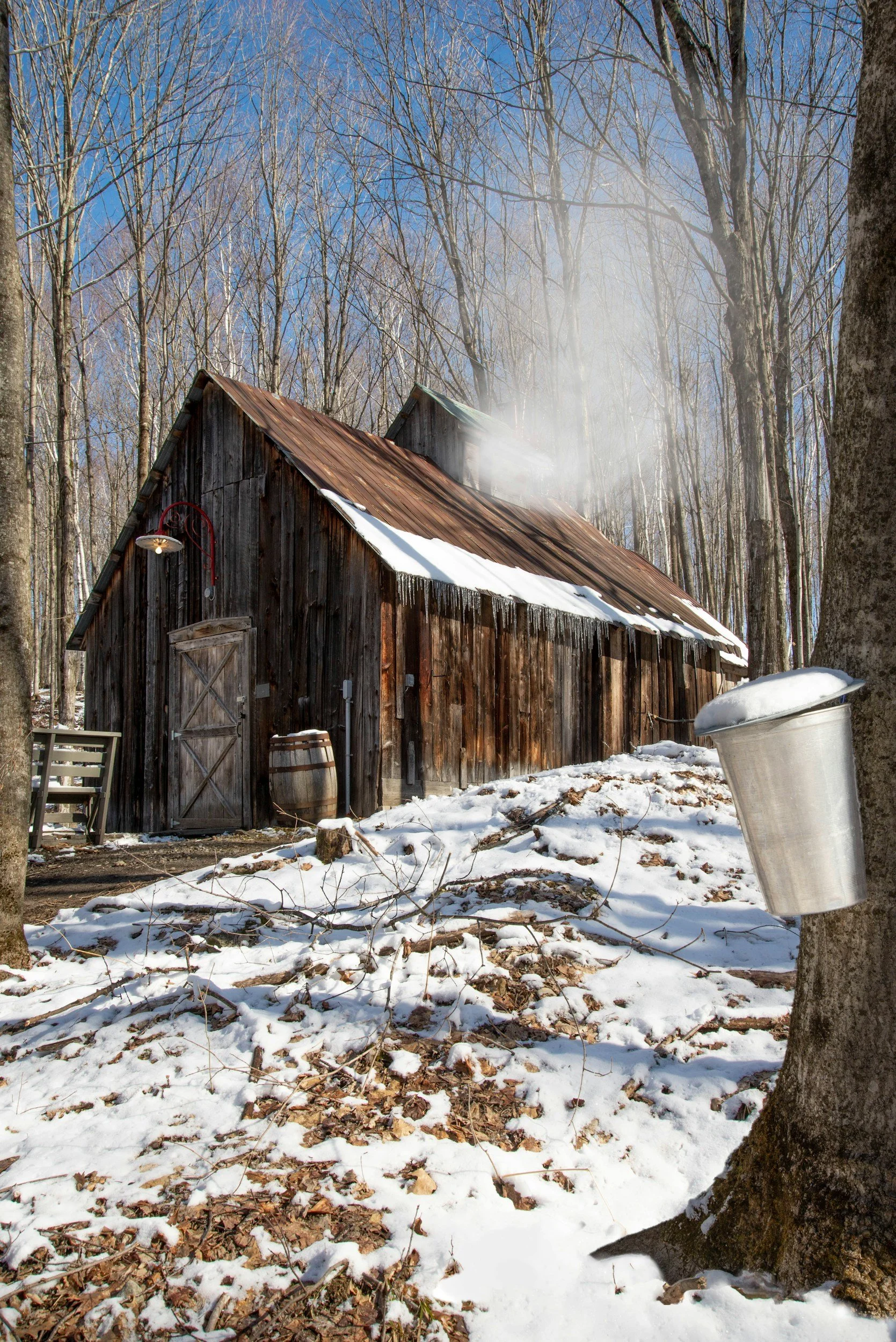
Maple sugar shack.
And here’s the kicker: New York State is home to the largest resource of tappable maple trees in the United States and more than 2,000 maple producers. The Adirondacks account for nearly a third of the state’s maple production.
New York ranks second in the U.S. and third in the world, producing more than 820,000 gallons of maple syrup annually. (Only Canada and Vermont edge us out.)
In other words, this isn’t just a drizzle-on-your-pancakes moment. It’s an industry. A tradition. A reason to put on boots and get outside.
The first stewards of maple.
Long before stainless steel evaporators and tubing lines threaded through Adirondack forests, Indigenous peoples of the Northeast understood the gift of the sugar maple. Tribes, including the Haudenosaunee (Iroquois Confederacy) and Algonquin peoples, were the first to tap trees, collect sap, and reduce it into syrup and maple sugar.
For many Indigenous communities, maple season was — and remains — a sacred and communal time marking the end of winter. Oral histories describe collecting sap in birch bark containers and using heated stones to concentrate it.
Maple sugar became a vital trade good and an essential source of calories after long winters. European settlers later adopted and adapted these practices, building on knowledge that had already flourished for generations.
Acknowledging this history reminds visitors that maple season is not just an agricultural event. It is part of a much older cultural story rooted in stewardship, seasonal rhythms, and respect for the forest.

Indigenous tribes, including the Haudenosaunee (Iroquois Confederacy) and Algonquin peoples, were the first to tap trees, collect sap, and reduce it into syrup and maple sugar.
What’s actually happening inside the tree.
Maple sap is about 2% sugar water — a clear liquid the tree produces to fuel spring growth and leaf production. When temperatures fluctuate — below 32°F at night and above 40°F during the day — pressure changes inside the tree push sap outward.
Producers collect that sap and boil it down. And boil it. And boil it.
It takes roughly 40 gallons of sap to make a single gallon of syrup.
That’s not a typo.
Once leaf buds begin to swell, the sap changes flavor and collection stops. The season ends as abruptly as it begins, which makes it all the more delicious.
The Adirondacks: maple heaven.
Sugar maples thrive in the Northeast’s hardwood forests, and the Adirondacks deliver ideal late-winter conditions for sap flow. Snow still carpets the woods. Steam billows from sugarhouses. Woodsmoke lingers in the air.
This is not a factory-floor experience. It’s boots-in-the-snow, kids-running-between-trees, syrup-tasting-on-a-wooden-spoon magic.

Toad Hill Maple Farm’s production facility in Thurman.
Many small, independently owned sugar shacks dot the region. Some sell commercially. Others produce syrup for friends, family, and loyal locals.
ADK Taste-approved producers include Black Rooster Maple in Keene (near Lake Placid) and Toad Hill Maple Farm, Thurman
Thurman, by the way, proudly calls itself the “Maple Capital of NY.” It backs up the claim with three full weekends of Thurman Maple Days (March 14–15, 21–22, and 28–29, 2026), featuring open houses at farms like Toad Hill Maple Farm, Hidden Hollow Maple Farm, and Candy Mountain Maple Farm.
Expect tours, tastings, and pancake breakfasts worth the drive.
Statewide Maple weekends and Adirondack highlights.
New York’s official Maple Weekends take place March 21–22 and March 28–29, 2026. Across the state and in around the Adirondacks, sugarhouses open their doors for tours and samples.
Notable participants include:
Bechard’s Sugar House (West Chazy)
Brandy Brook Maple Farm (Ellenburg Center)
Brick Chapel Maple (Canton)
Brower Road Sugarhouse (Gloversville)
Closer to the central Adirondacks, Valley Road Maple Farm in Thurman hosts extensive pancake breakfasts — a strategic move when you consider how well syrup pairs with cabin fever.
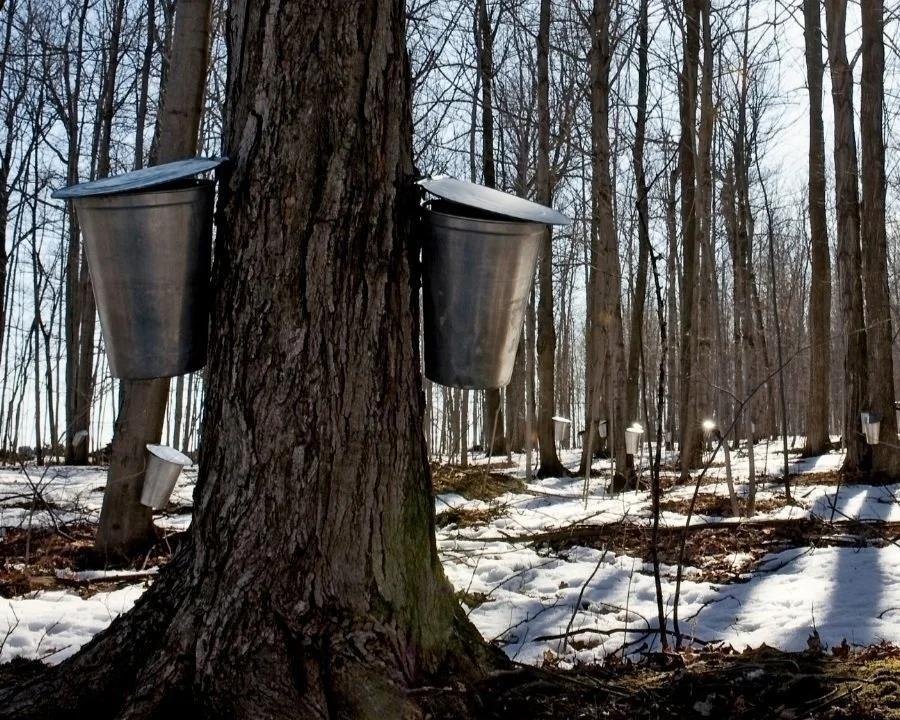
Metal buckets collecting maple sap.
The Wild Center’s Community Maple Project.
In Tupper Lake, The Wild Center transforms maple season into both science and celebration.
Every weekend in March, visitors can tour the sugar shack, watch sap boil into liquid gold, and sample maple treats in the café. Pancake brunch returns March 21, just in time for peak flow.
But here’s where it gets interesting: The Wild Center’s Community Maple Project invites residents within a five-mile radius to tap trees in their own yards. The Center provides equipment and guidance. Participants return collected sap for processing and receive 70% of the finished syrup.
It’s hyper-local food at its finest.
Science behind the sweetness.
The Cornell Maple Program operates its 200-acre Uihlein Maple Research Forest in Lake Placid as an outdoor laboratory dedicated to maple production, forest management, and innovation. Researchers study improved collection techniques, partner with food scientists to develop new products, and share findings with producers statewide.
Maple syrup may taste nostalgic, but the science behind it remains cutting-edge.
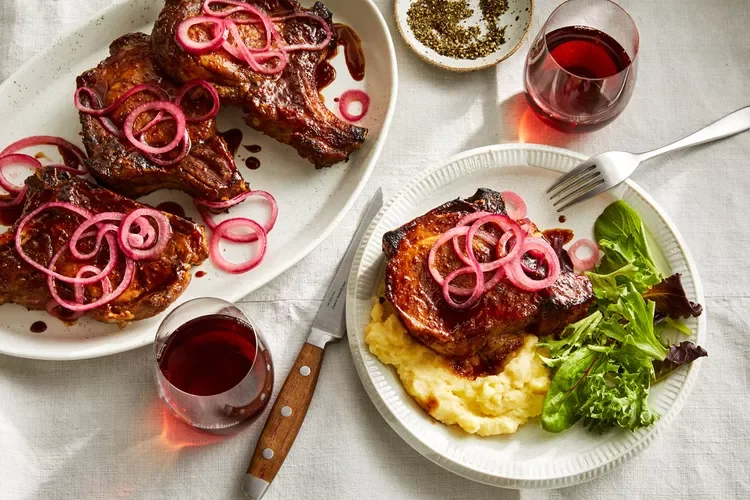
Air Fryer Pork Chops with Maple-Soy Glaze. Photo by Antonis Achilleos, courtesy Food & Wine magazine: Prop Styling by Christina Daley : Food Styling by Ali Ramee. Food & Wine Magazine.
And yes, maple syrup comes with bragging rights. In 2011, researchers at the University of Rhode Island identified 54 beneficial compounds in maple syrup. Compared to honey, it contains fewer calories and a higher mineral content.
No, it’s not kale. But it’s not just sugar either.
How sustainable maple syrup production protects Adirondack forests.
Today’s maple producers balance tradition with innovation. Sustainable forestry practices ensure sugar maples thrive for generations to come — protecting soil health, biodiversity, and long-term sap production. The video below offers a closer look at how responsible producers care for both the trees and the future of maple syrup.
Sustainable Maple Syrup Production in the Adirondacks
Sustainable maple production protects more than syrup — it safeguards forests, wildlife habitat, and a centuries-old Adirondack tradition.
Maple beyond pancakes.
If maple season inspires more than breakfast, Food & Wine recently compiled a list of 32 Sweet and Savory Maple Syrup Recipes — from maple-glazed salmon to maple vinaigrettes and even maple-infused cocktails.
Consider this your nudge to think beyond waffles.
Maple plays beautifully with pork, root vegetables, bourbon, and yes, Adirondack craft beer.
Plan your Maple road trip.
For those who prefer structure with their syrup, Adirondack Wayfinder offers a curated Maple Trail connecting local producers and points of interest. Adirondack Harvest’s website lists additional farms and distributors throughout the region.
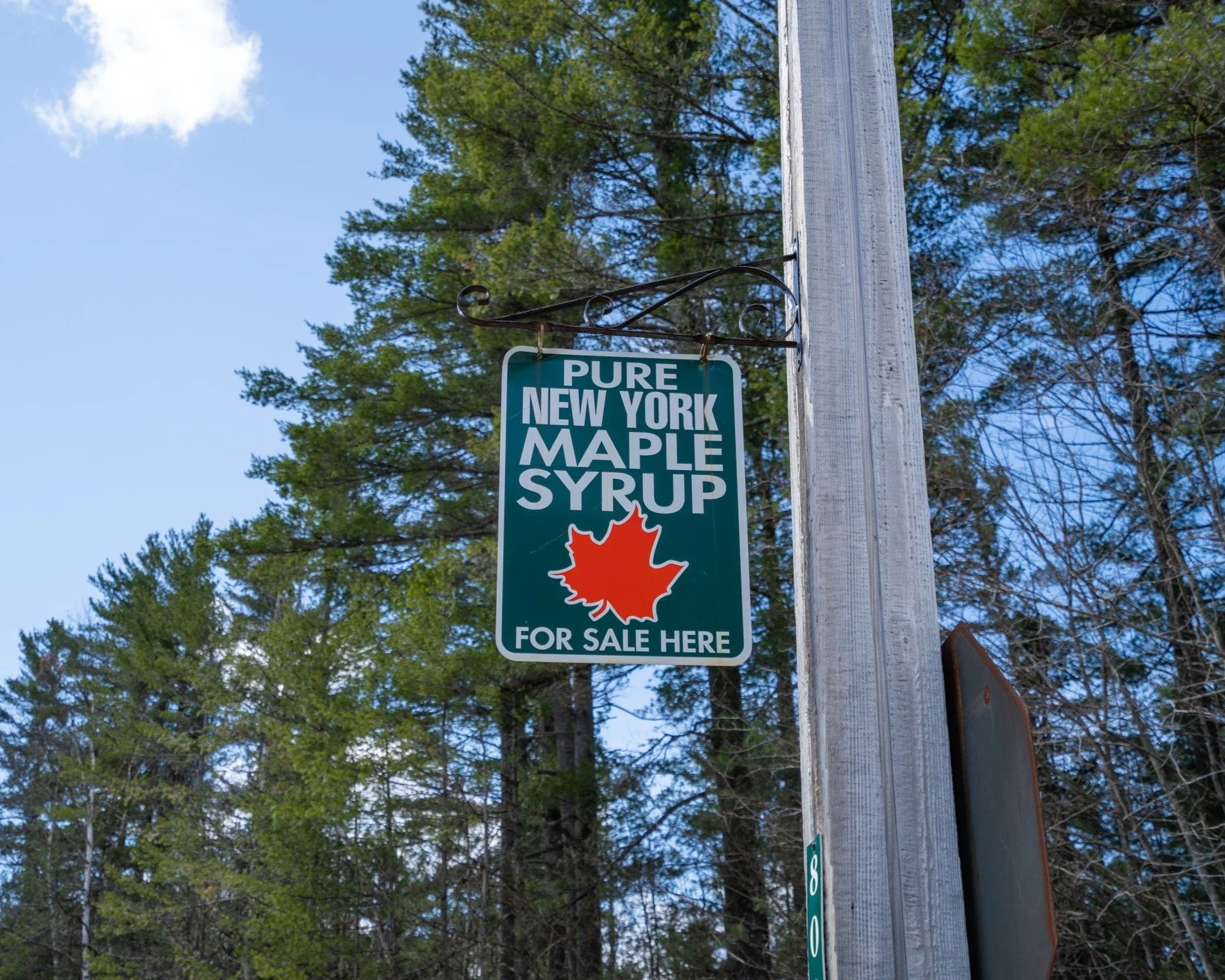
Look for this sign for 100% pure NYS maple syrup.
Build a weekend around it. Pair a sugarhouse visit with a snowshoe hike. Stop for pancakes. Stock up for the year.
March in the Adirondacks doesn’t have to be gray and restless. It can be golden and steaming.
Maple season reminds us that winter always loosens its grip. The sap flows. The woods wake up. And there’s always something worth stepping outside for.
Recent news and insights.












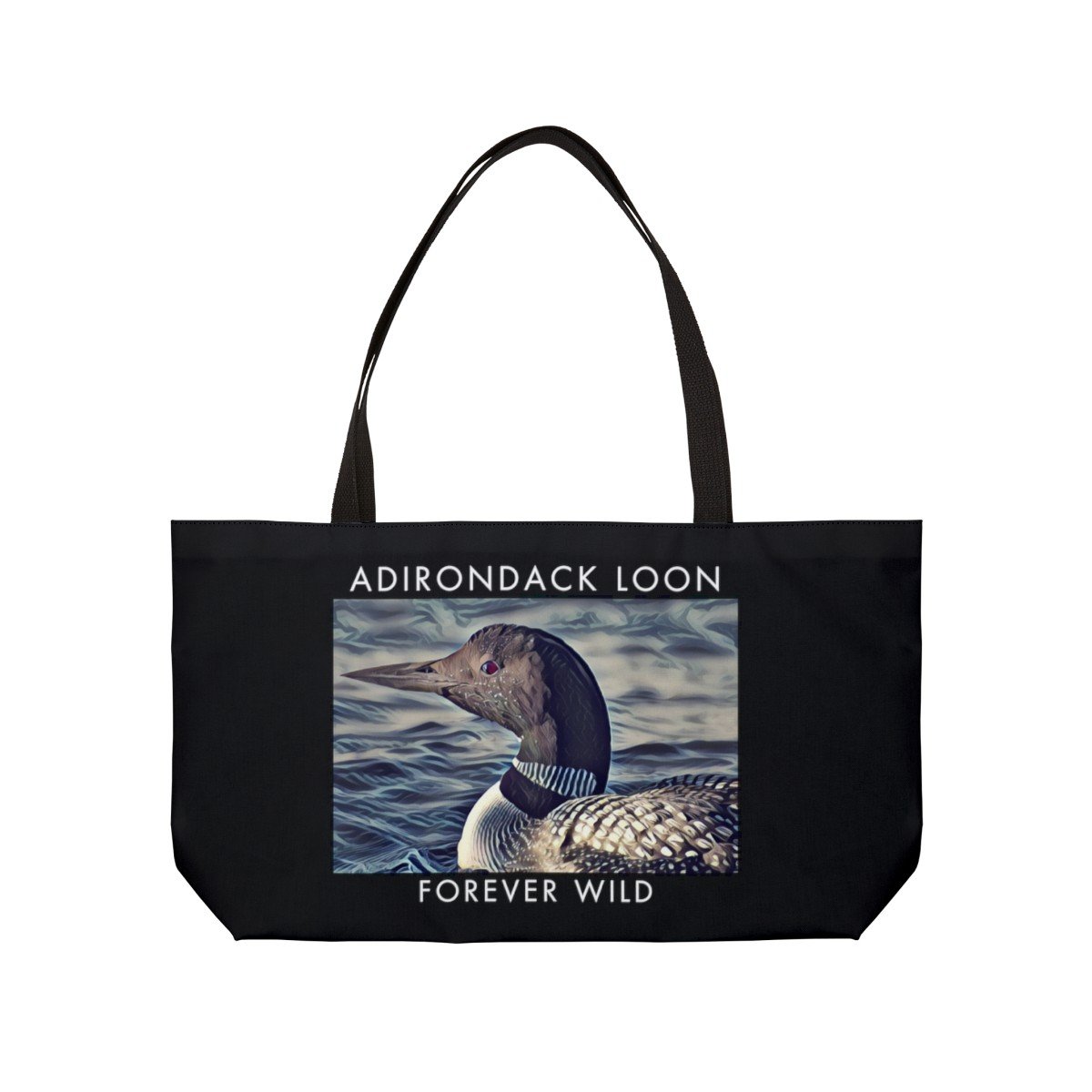
Shop for unique Adirondack apparel, gifts and merchandise.
















ADK Talks Podcast
Love the Adirondacks? You’ll love our podcast. We take listeners beyond the guidebooks and into the heart of the Adirondacks. We share stories from the people behind the best places to eat, shop, stay and explore in the ADK. Find us on Apple Podcasts, Spotify or wherever you listen to podcasts.











Bring a bold splash of the Adirondack spirit wherever you roam with this vibrant, adventure-ready tote bag. Featuring a chic golden hue and a retro-style design, this tote is more than just an accessory—it’s a statement of your love for the mountains, forests, and lakes that make the Adirondacks legendary.
Crafted from durable, easy-care polyester and finished with reinforced stitching, this bag is made to go the distance—from farmers’ markets to campsites, library runs to beach days. The roomy boxed corners make packing snacks, sweaters, books, or souvenirs a breeze, while the sturdy navy or black straps sit comfortably on your shoulder no matter how full the day (or the bag).
And with the playful “Find the Good Stuff Here” message on the reverse, this tote is a nod to curiosity, good vibes, and great finds.
Perfect for:
Day trips to your favorite lake or historic site
Grocery hauls and artisan market strolls
Picnic gear, beach towels, or a cozy flannel
Commuters who love to keep it wild
Gift-givers looking for something both beautiful and useful
Product Features:
100% polyester for strength and durability
Reinforced handle stitching for everyday carry confidence
Spacious 16" x 16" design with boxed corners for easy packing
Soft yet sturdy medium-weight fabric
Stylish navy handles to complement any outfit
Go ahead—Find the Good Stuff. Carry it in style.
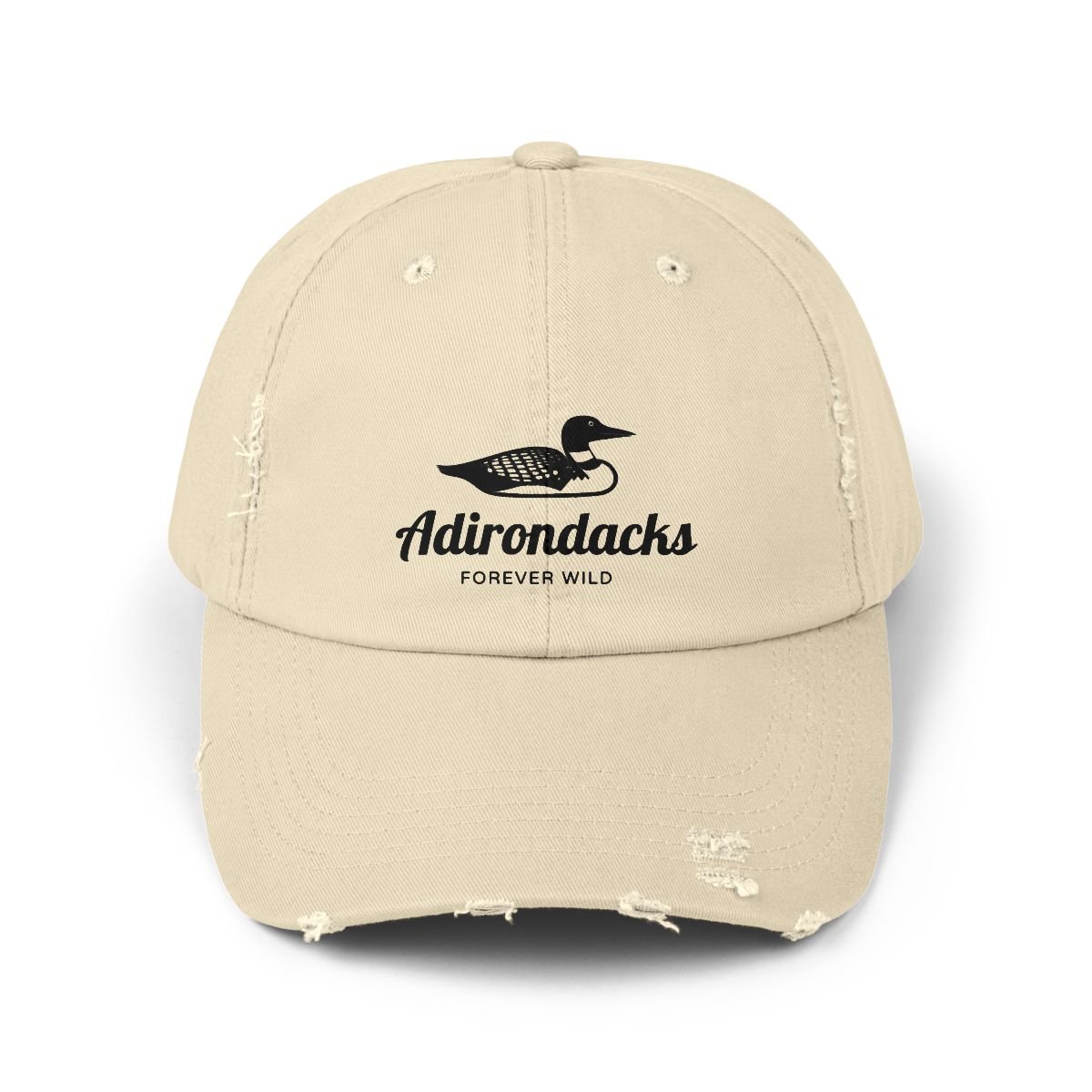
A perfect gift for Adirondack lovers, nature enthusiasts, and anyone who believes “Forever Wild” is more than a motto—it’s a way of life.