
Anne LaBastille: The Woman Behind “Woodswoman”

Anne Labastille on Twitchell Lake.
Fifty years after Woodswoman introduced readers to a fiercely independent woman living in a hand-built cabin deep in the Adirondacks, Anne LaBastille still fascinates us.
But the woman behind Woodswoman was far more complicated — and far more accomplished — than the familiar image of a solitary writer tucked away in the wilderness.
In this episode of ADK Talks, Jane and Steve sit down with Penny Harr, author of the new Anne LaBastille: A Biography of the Woodswoman, to discover the scientist, conservationist, writer and sometimes controversial Adirondack figure behind the legend.
Love discovering the people, places and stories that make the Adirondacks different? Sign up for In Good Taste, our weekly guide to what’s worth eating, seeing, doing and discovering around the Adirondacks.
Listen: Anne LaBastille — The Woman Behind Woodswoman.
Anne LaBastille may be best remembered for the small cabin she built on Twitchell Lake and chronicled in Woodswoman, published in 1976.
Yet as Penny Harr discovered while researching LaBastille's first full biography, that cabin represents only one piece of an extraordinary life.
LaBastille earned advanced degrees in wildlife management and wildlife ecology at a time when few women entered those fields. She worked as a scientist and ecological consultant, became a licensed New York State outdoor guide and served for 17 years as a commissioner of the Adirondack Park Agency.
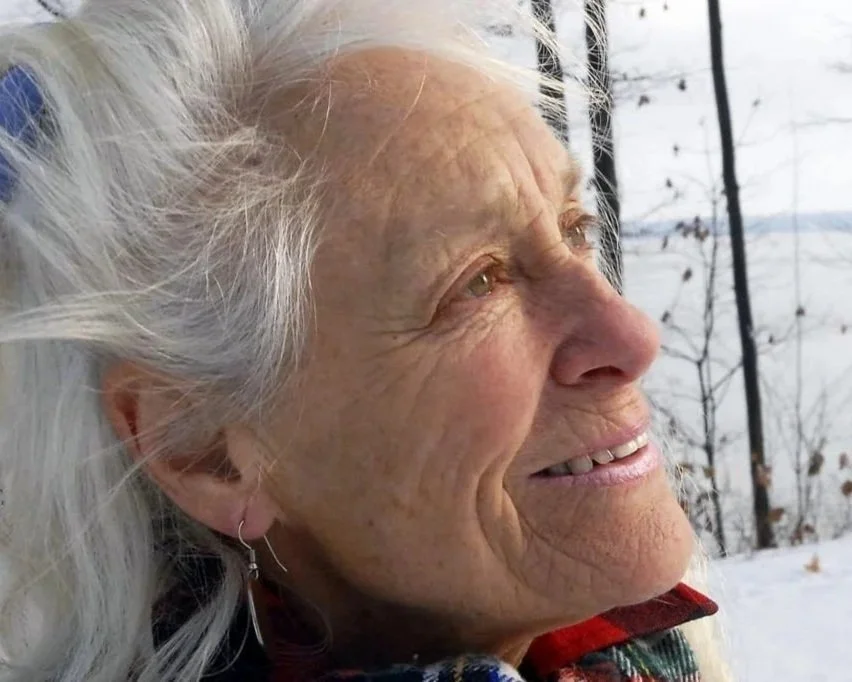
Anne LaBastille
Her environmental work also took her far beyond the Adirondacks, including decades in Guatemala and other parts of Central America.
And then there was Anne herself.
“She does not sit still in my mind,” Harr tells ADK Talks when asked the deceptively simple question: Who was Anne LaBastille?
That complexity is what makes her story so compelling 50 years after Woodswoman was published.
What you’ll hear.
How a young woman from suburban New Jersey discovered the Adirondacks — and eventually built a life here on her own terms.
Why Anne called herself a “half hermit,” and what Woodswoman fame meant for someone who treasured solitude.
The lesser-known story of LaBastille the scientist, including the obstacles she encountered as a woman working in male-dominated fields.
What the romantic image of living alone in an Adirondack cabin leaves out.
Pink lipstick, painted toenails and a few Anne LaBastille stories that didn’t make Penny Harr’s book.
Before there was a Woodswoman.
LaBastille’s path to the Adirondacks was hardly predictable.
Growing up in Montclair, New Jersey, she loved the outdoors despite being told that hiking and camping weren’t things girls did. While studying at the University of Miami, she met C.V. “Major” Bowes, owner of an Adirondack lodge, and took a job in the region.
She fell in love with both the Adirondacks and Bowes. They married, and he later encouraged her to continue her education.
The marriage eventually ended, but LaBastille emerged from it knowing what she wanted: to live in the woods, observe wildlife and write.
In 1964, she began building the remote cabin that would eventually become synonymous with her name.
Getting building materials there alone was an undertaking. The property had no road access, requiring supplies to travel across the lake by boat and then uphill to the building site. LaBastille did much of the work herself, although, as Harr points out, friends and experienced woodsmen also helped.
That distinction matters.
The real Anne LaBastille may be even more interesting than the mythology surrounding her.
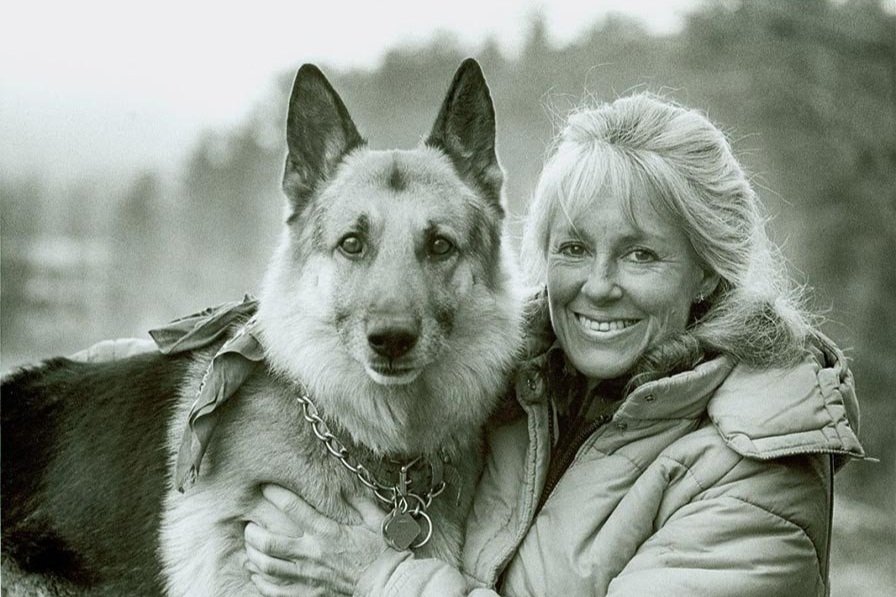
Anne LaBastille
The “half hermit” who traveled the world.
LaBastille did not disappear into the woods after building her cabin.
She called herself a “half hermit,” Harr explains. The cabin gave her something she needed deeply: privacy, silence and a place to write and recharge.
But LaBastille repeatedly left that solitude to teach, conduct field research, consult on environmental issues, lecture and advocate for conservation.
Her work took her to Central America and the Caribbean. In Guatemala, she devoted years to studying and trying to save an endangered bird from extinction. Back home, she became an outspoken voice on environmental issues including acid rain and land-use protections in the Adirondack Park.
That work also put her into rooms where women scientists were still treated as anomalies.
Harr recounts one environmental conference in India where men entering the meeting wanted to know whose wife LaBastille was.
She had come as a scientist.
When the Woodswoman became bigger than Anne.
Published in 1976, Woodswoman transformed LaBastille from a writer and scientist into a recognizable public figure.
That fame gave her something powerful: a platform.
LaBastille encouraged women to hike, paddle and experience the outdoors independently. She urged readers to protect the natural world. She lectured widely and used her increasingly public profile to advance the causes that mattered to her.
But notoriety came at a cost.

Anne LaBastille
The cabin that had provided refuge and solitude became an object of fascination. And the “Woodswoman” persona threatened to overshadow the scientist, environmentalist and complicated human being behind it.
Harr’s biography deliberately looks beyond that familiar image.
The cabin wasn't quite the fantasy.
There is undeniable romance in the thought of escaping modern life for a tiny cabin on an Adirondack lake.
Reality meant hauling everything by boat, living without electricity or plumbing, heating with wood and walking outside to an outhouse in the middle of the night.
LaBastille was extraordinarily capable, but Harr also pushes back on another piece of the mythology: she did not do everything alone.
She learned from people around her and accepted help when she needed it.
That doesn't diminish the Woodswoman story. It makes it more human.
And perhaps more relevant.
What would Anne make of us now?
One of LaBastille’s concerns feels particularly striking in 2026.
Silence.
Harr says LaBastille worried that true silence was disappearing beneath engines, machinery and the constant noise of modern life. She believed silence itself was worth protecting.
Half a century after Woodswoman, that idea may resonate even more strongly.
So do LaBastille’s beliefs that women could choose lives that didn't conform to expectations, her insistence that wilderness deserved protection, and her willingness to be unpopular when she believed something important was at stake.
There were contradictions, too. LaBastille fiercely protected her independence while also depending on friends and mentors. She treasured solitude but lived a remarkably public and international life. She became an icon of simple living while relentlessly pursuing ambitious professional goals.
Those contradictions are part of what makes her worth rediscovering.
And then there was the pink lipstick.
For all the big questions surrounding LaBastille's legacy, one of the episode's most memorable moments is delightfully small.
Harr shares stories that didn't fit neatly into the biography — including LaBastille's fondness for pink lipstick and her habit of painting her toenails.
Why the toenail polish?
LaBastille frequently went barefoot. According to a story shared with Harr, the polish helped disguise her dirty feet.
It's a tiny detail. But suddenly the Adirondack icon becomes a person.
And that may be the best reason to listen to this conversation.
Fifty years after Woodswoman, Anne LaBastille remains a symbol of independence, conservation and life lived deliberately. Penny Harr introduces us to someone even more interesting: the woman behind it.
Ready to discover more Adirondack stories? Listen to this episode of ADK Talks, then follow the podcast wherever you listen so you don't miss what's next. And sign up for In Good Taste, our weekly guide to the people, places and experiences worth discovering across the Adirondacks.
The latest news and insights from ADK Taste.










Ultimate Guide to the Adirondacks
Your insider’s guide to exploring the Adirondacks—where to go, what to eat, and the experiences that make this place unforgettable.
Shop for unique Adirondack apparel, gifts and merchandise.


















ADK Talks Podcast
Love the Adirondacks? You’ll love our podcast. We take listeners beyond the guidebooks and into the heart of the Adirondacks. We share stories from the people behind the best places to eat, shop, stay and explore in the ADK. Find us on Apple Podcasts, Spotify or wherever you listen to podcasts.









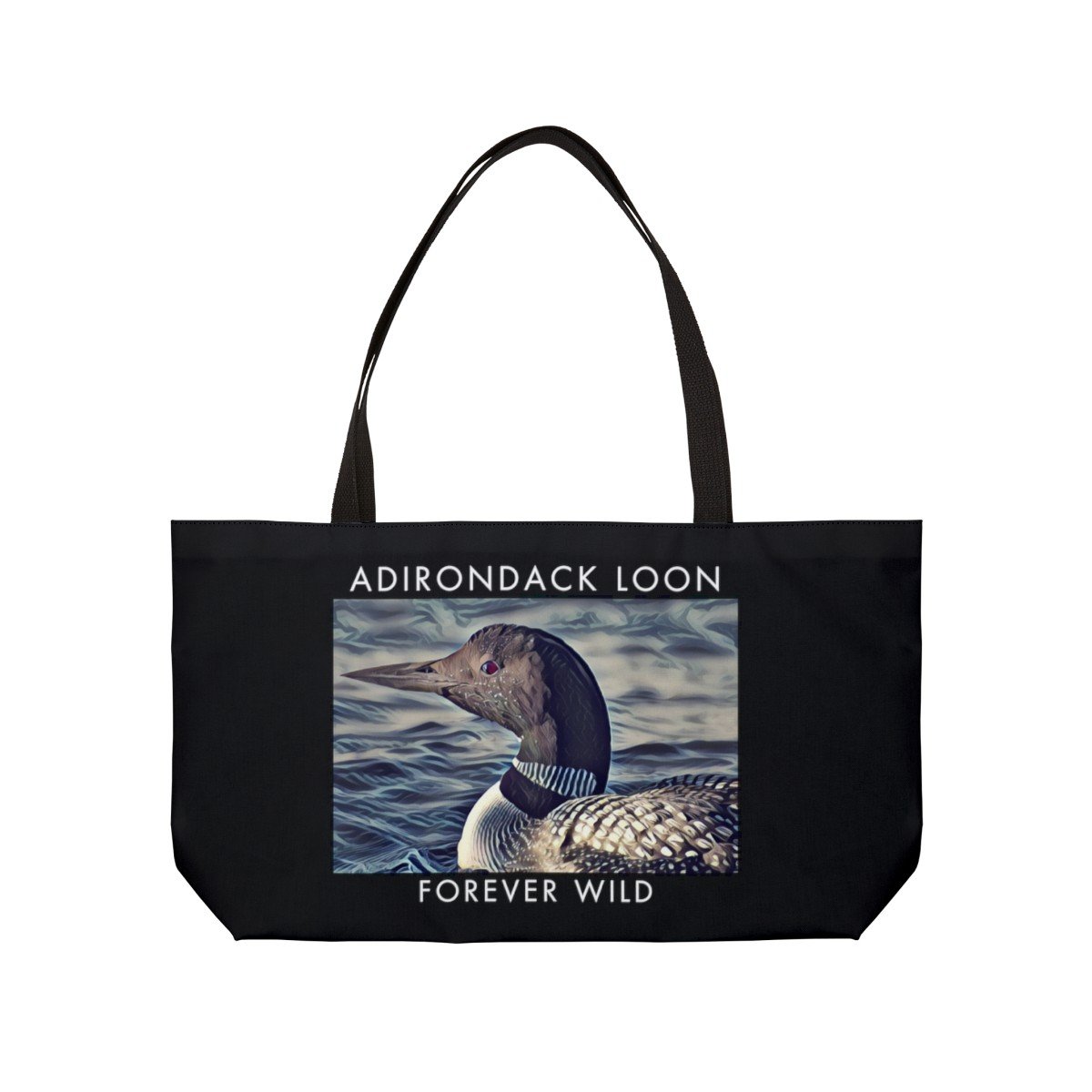
Bring a bold splash of the Adirondack spirit wherever you roam with this vibrant, adventure-ready tote bag. Featuring a chic golden hue and a retro-style design, this tote is more than just an accessory—it’s a statement of your love for the mountains, forests, and lakes that make the Adirondacks legendary.
Crafted from durable, easy-care polyester and finished with reinforced stitching, this bag is made to go the distance—from farmers’ markets to campsites, library runs to beach days. The roomy boxed corners make packing snacks, sweaters, books, or souvenirs a breeze, while the sturdy navy or black straps sit comfortably on your shoulder no matter how full the day (or the bag).
And with the playful “Find the Good Stuff Here” message on the reverse, this tote is a nod to curiosity, good vibes, and great finds.
Perfect for:
Day trips to your favorite lake or historic site
Grocery hauls and artisan market strolls
Picnic gear, beach towels, or a cozy flannel
Commuters who love to keep it wild
Gift-givers looking for something both beautiful and useful
Product Features:
100% polyester for strength and durability
Reinforced handle stitching for everyday carry confidence
Spacious 16" x 16" design with boxed corners for easy packing
Soft yet sturdy medium-weight fabric
Stylish navy handles to complement any outfit
Go ahead—Find the Good Stuff. Carry it in style.
A perfect gift for Adirondack lovers, nature enthusiasts, and anyone who believes “Forever Wild” is more than a motto—it’s a way of life.