
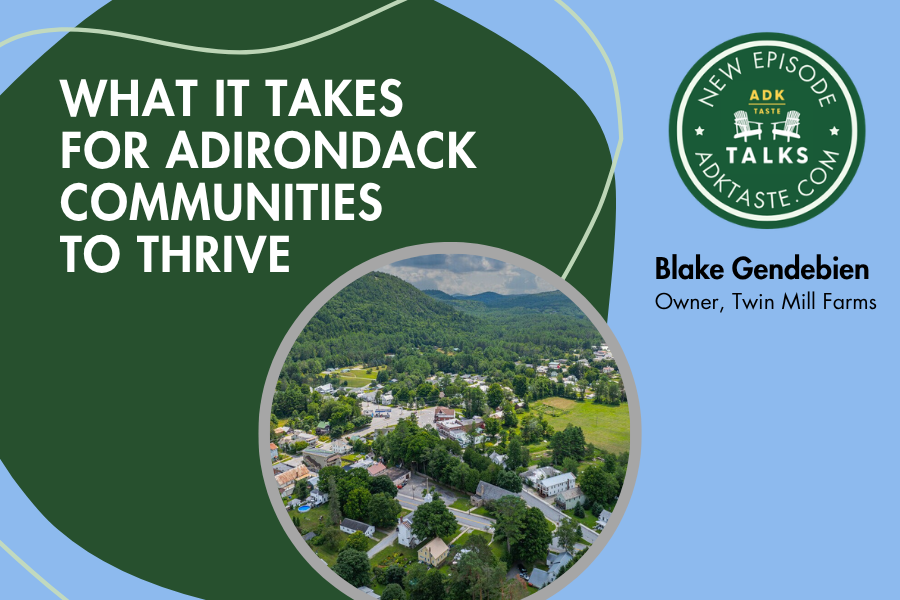
What It Takes for Adirondack Communities to Thrive with Blake Gendebien
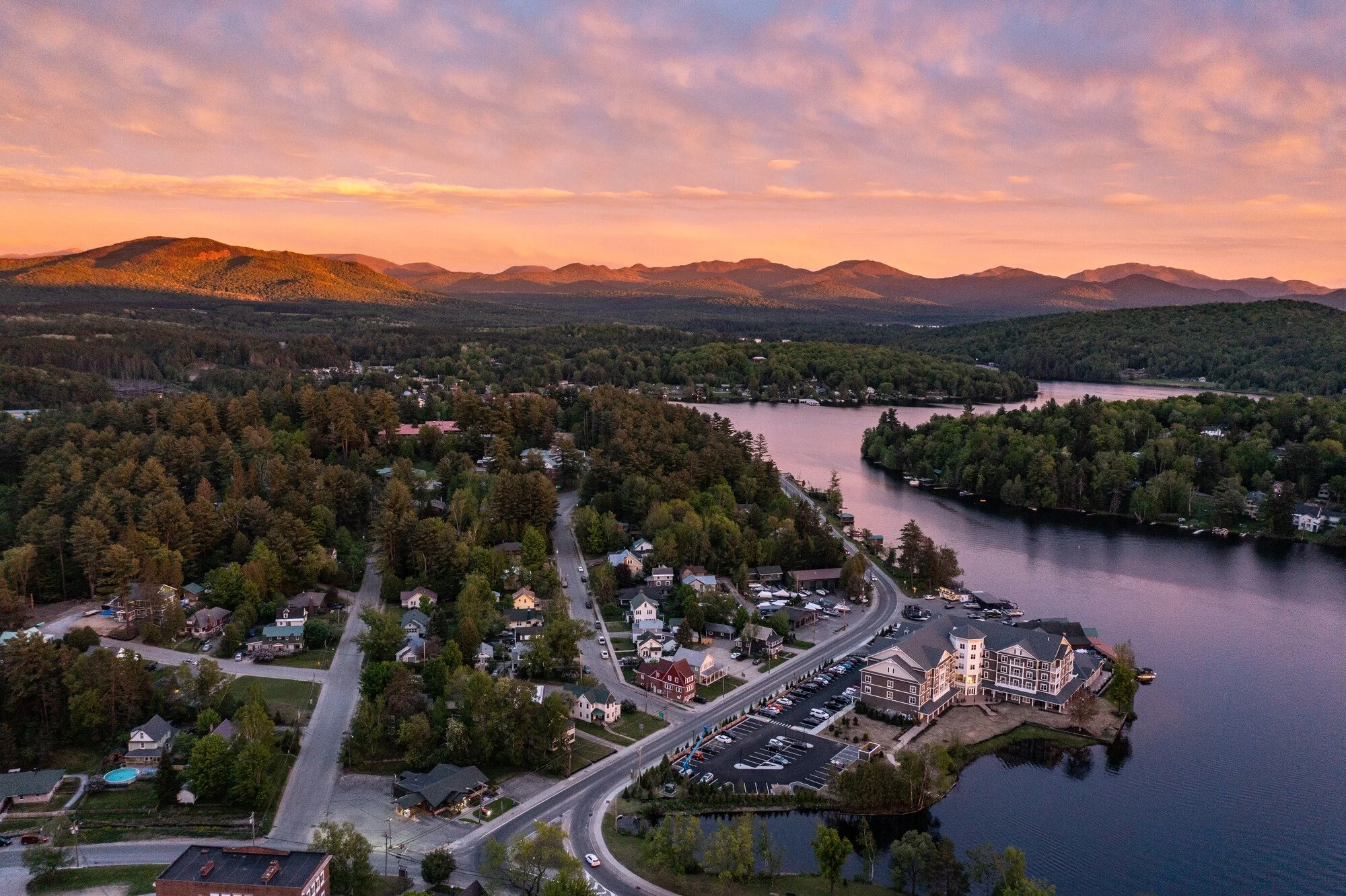
The village of Saranac Lake in the Adirondacks.
What happens to the Adirondacks when the people who make the region work can no longer afford to live there?
Behind the lakes, mountains, restaurants, farms, and small towns that draw millions of visitors is a network of year-round communities facing challenges that aren't always apparent to someone spending a weekend or a summer in the region.
A favorite restaurant cuts its hours. A local business struggles to find employees. A family drives hours for specialized medical care. Young people wonder whether they'll ever afford a home in the community where they grew up.
These are not isolated problems. They're connected—and their consequences extend well beyond year-round residents of the Adirondacks.
In this episode of ADK Talks, hosts Jane and Steve sit down with Blake Gendebien, a second-generation dairy farmer, owner of Twin Mill Farms, and Democratic candidate for Congress in New York's 21st Congressional District, to explore what he's learned from traveling across the North Country and listening to the people who call it home.
Read on for highlights from the conversation, including the challenges facing rural businesses, housing and healthcare, the future of farming, and the changing North Country economy.
Enjoy conversations that go beyond the usual Adirondack travel stories? Subscribe to In Good Taste, the free ADK Taste newsletter, for updates on new podcast episodes, local discoveries, and stories about the people and places shaping the Adirondacks.
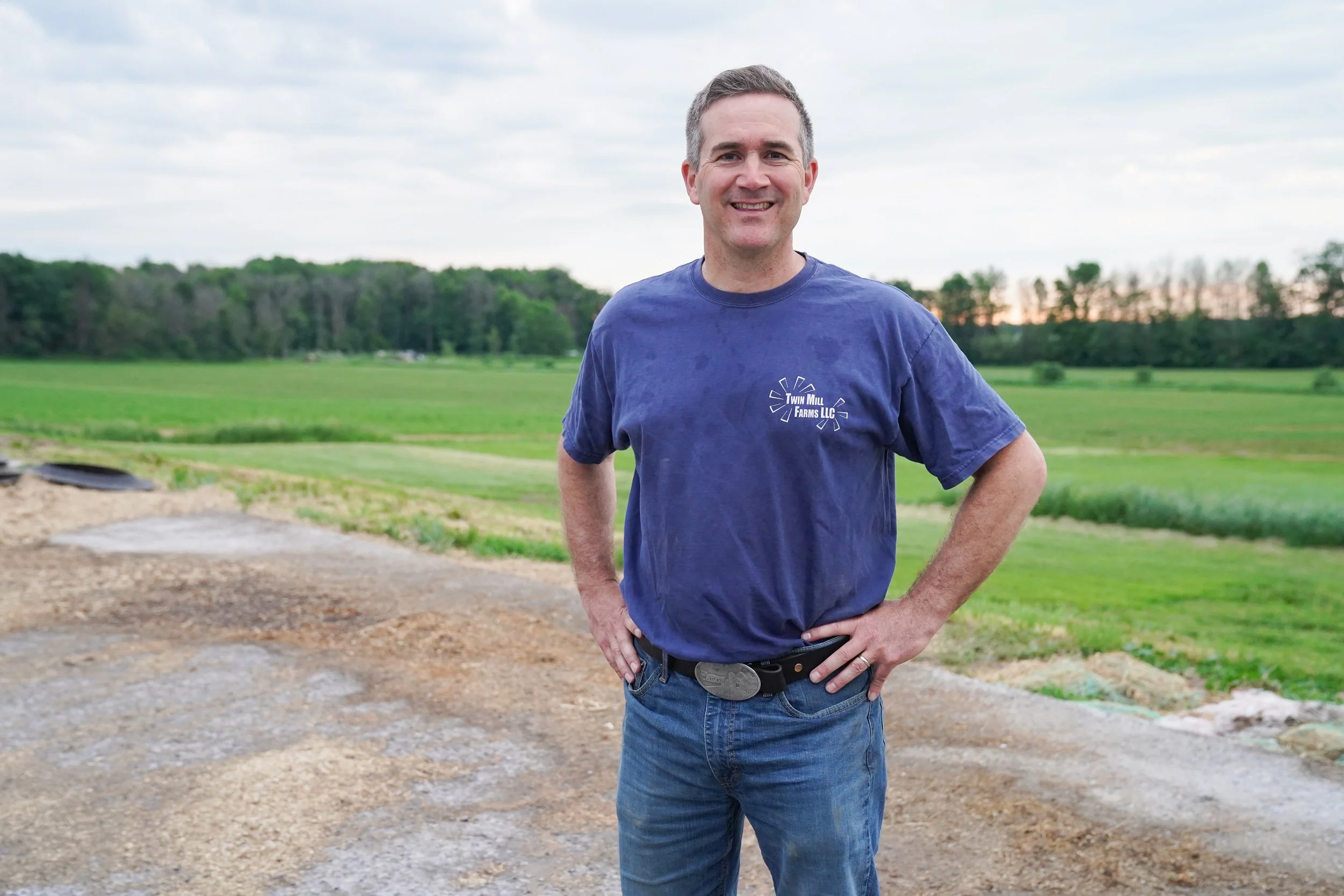
Dairy farmer Blake Gendebien.
A congressional district larger than several states.
New York's 21st Congressional District covers roughly 16,000 square miles, including all of Adirondack Park. Its communities stretch from the St. Lawrence River and the Canadian border through the Champlain Valley, Adirondacks, Glens Falls area, and Mohawk Valley.
For perspective, that's bigger than Maryland, Massachusetts, Vermont, New Hampshire, New Jersey, or Connecticut.
It's a remarkable geographical and economic landscape. Dairy farms and manufacturing plants share a congressional district with mountain communities, college towns, military families, tourism destinations, and small villages.
Gendebien has spent nearly two years traveling throughout the district. When Jane asks whether he's discovered one North Country or many, he takes listeners on a verbal journey through the region, from the Thousand Islands to Lake Champlain, Lake George, Rome, and Fort Drum.
He acknowledges that the NY-21 communities are different, but many of the people he meets share fundamental concerns: making a living, raising a family, finding affordable healthcare, and building a future close to home.

Fort Ticonderoga overlooking Lake Champlain in the eastern Adirondacks.
For listeners who know the Adirondacks primarily through vacations, that broader perspective offers a different way of understanding the region.
From the family farm to the North Country.
Before entering politics, Gendebien built his career in agriculture.
He grew up on a family farm in Lisbon, New York, studied at Penn State University, and worked in the agricultural equipment industry, including an assignment in Germany. His path eventually brought him back to the North Country when his father called with an unexpected opportunity: the neighboring farm was for sale.

Gendebien and his wife, Carmen, decided to return and build their future there.
Today, their dairy operation includes approximately 500 cows and 1,200 acres. Their three sons grew up on the farm, and the next generation is already helping shape its future.
Farming, Gendebien explains, demands far more than agricultural knowledge. Farmers must understand finances, employee management, animal nutrition, soil health, equipment, weather, and succession planning.
Unlike most businesses, farms also operate under a roof that is largely open to the elements.
That experience informs his perspective on economic uncertainty, long-term investment, and the pressures small businesses face throughout rural America.
A look inside Twin Mill Farms.
What does running a North Country dairy farm look like beyond the daily demands of milking cows? In this video from approximately 2018, Blake Gendebien discusses environmental stewardship, animal care, and the use of antibiotics at Twin Mill Farms in Lisbon, New York.
An earlier look at Twin Mill Farms, featuring Blake Gendebien discussing dairy farming, animal welfare, and environmental stewardship.
The video provides additional context for Gendebien's agricultural background and the firsthand experience he brings to the ADK Talks conversation about the future of Adirondack and North Country communities.
Why rural challenges matter to visitors.
For many Adirondack visitors, the signs of economic strain are easy to notice but harder to explain.
A restaurant that once served dinner seven nights a week now opens only three. Finding a plumber, electrician, or contractor takes longer than expected. A favorite business closes, and no one steps forward to replace it.
But what's happening beneath the surface?
Gendebien discusses how long commutes, transportation expenses, workforce shortages, housing availability, and the cost of doing business can affect families and employers across the North Country.
Healthcare presents another challenge. In rural communities, accessing specialized care may mean traveling long distances, affecting both residents and visitors who depend on regional medical services.
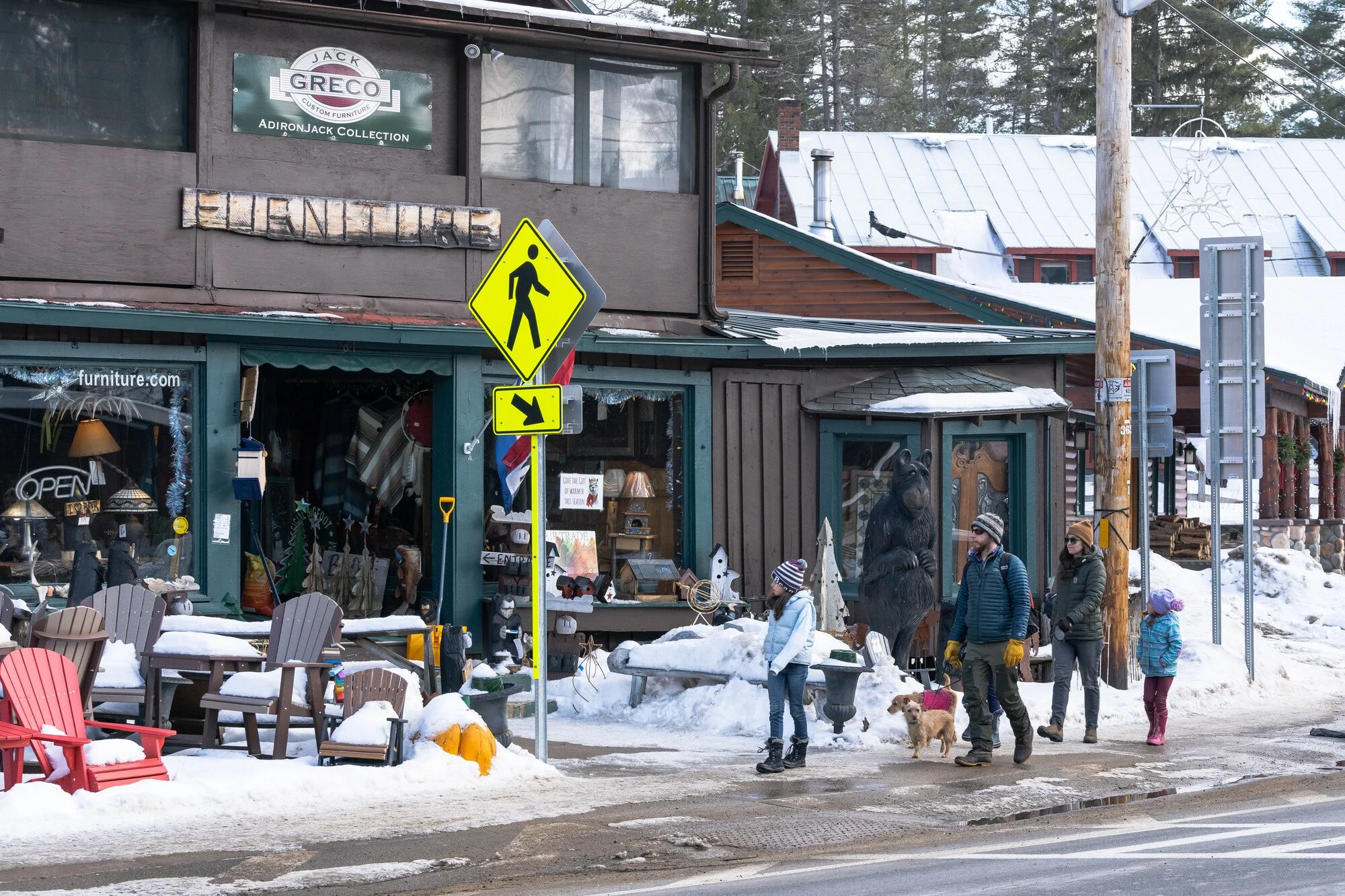
A family on Main St. in Inlet, NY.
The conversation also examines the importance of the skilled trades. Gendebien argues that discussions about educational opportunity often focus on college while overlooking young people entering careers that require expensive tools, equipment, and vehicles.
Those workers are essential to the region's future. They're the electricians, plumbers, technicians, and entrepreneurs who keep homes, businesses, and communities functioning.
The Canadian connection.
The Adirondacks and the North Country have deep economic and cultural ties to Canada.
For generations, communities along the northern border have depended on trade, tourism, agricultural supplies, and relationships with neighboring Ontario and Quebec.
Gendebien describes how important those connections are to his farm and to businesses throughout the region. He also discusses his concerns about tariffs, cross-border travel, and the economic consequences of changing trade relationships.
For Adirondack tourism businesses, fewer Canadian visitors can mean fewer customers. For farmers, higher input costs can eventually influence the price consumers pay for food.
The discussion reminds us that the Adirondack economy doesn't stop at the park boundary—or the international border.

Lake George.
Artificial intelligence, data centers, and the next generation.
What does artificial intelligence have to do with the Adirondacks?
Potentially quite a bit.
As AI changes the economy, communities are considering what new technologies and large-scale data centers could mean for jobs, energy costs, natural resources, and local infrastructure.
Gendebien says communities need a meaningful voice in development decisions, including proposals in the district's northern part. He argues that economic growth should deliver tangible benefits to the places hosting new investments.
The conversation also turns to the next generation.
As a father of three young men, Gendebien sees how technology, career uncertainty, and housing affordability are influencing young people's decisions about where they want to live and work.
Can they build the lives they imagine in the North Country? Will there be rewarding jobs, affordable homes, and opportunities to start businesses?
Those questions will help shape the Adirondacks for decades to come.
Finding common ground in a divided country.
The conversation also explores what it means to represent a geographically enormous and politically diverse district.
Gendebien reflects on his experience serving on a local school board and in agricultural cooperative leadership, where working with people holding different political views was part of getting things done.
He discusses his willingness to work across party lines and his belief that representatives should put their constituents' interests ahead of party loyalty.
The episode isn't a candidate debate or an endorsement. Instead, it gives listeners an opportunity to hear one candidate's perspective on the economic, environmental, and social issues facing Adirondack and North Country communities.
While political opinions may differ, the underlying questions go beyond any single election.

Chestertown, NY, in Warren County.
An Adirondack gem with family roots.
Every ADK Talks guest is invited to share a favorite Adirondack place, and Gendebien's choice takes the conversation back to his childhood.
He remembers family camping trips to Higley Flow, close enough to home that his father could return to the farm for the early-morning milking. He also recalls visiting The Wild Center in Tupper Lake with his own children. And he’s a big fan of Washboard Donuts in Tupper Lake.
It's a fitting conclusion to a conversation about family, community, and the places people hope future generations will keep enjoying.
What you'll hear.
How a chance opportunity brought Gendebien back to the family farm in Lisbon, New York.
What nearly two years of traveling across NY-21 revealed about the challenges and connections among North Country communities.
Why housing, healthcare, workforce shortages, and the skilled trades matter to everyone who enjoys the Adirondacks.
How Canadian trade, artificial intelligence, and data center development could influence the region's economic future.
What young people are saying about their prospects—and the Adirondack place that holds some of Gendebien's favorite family memories.
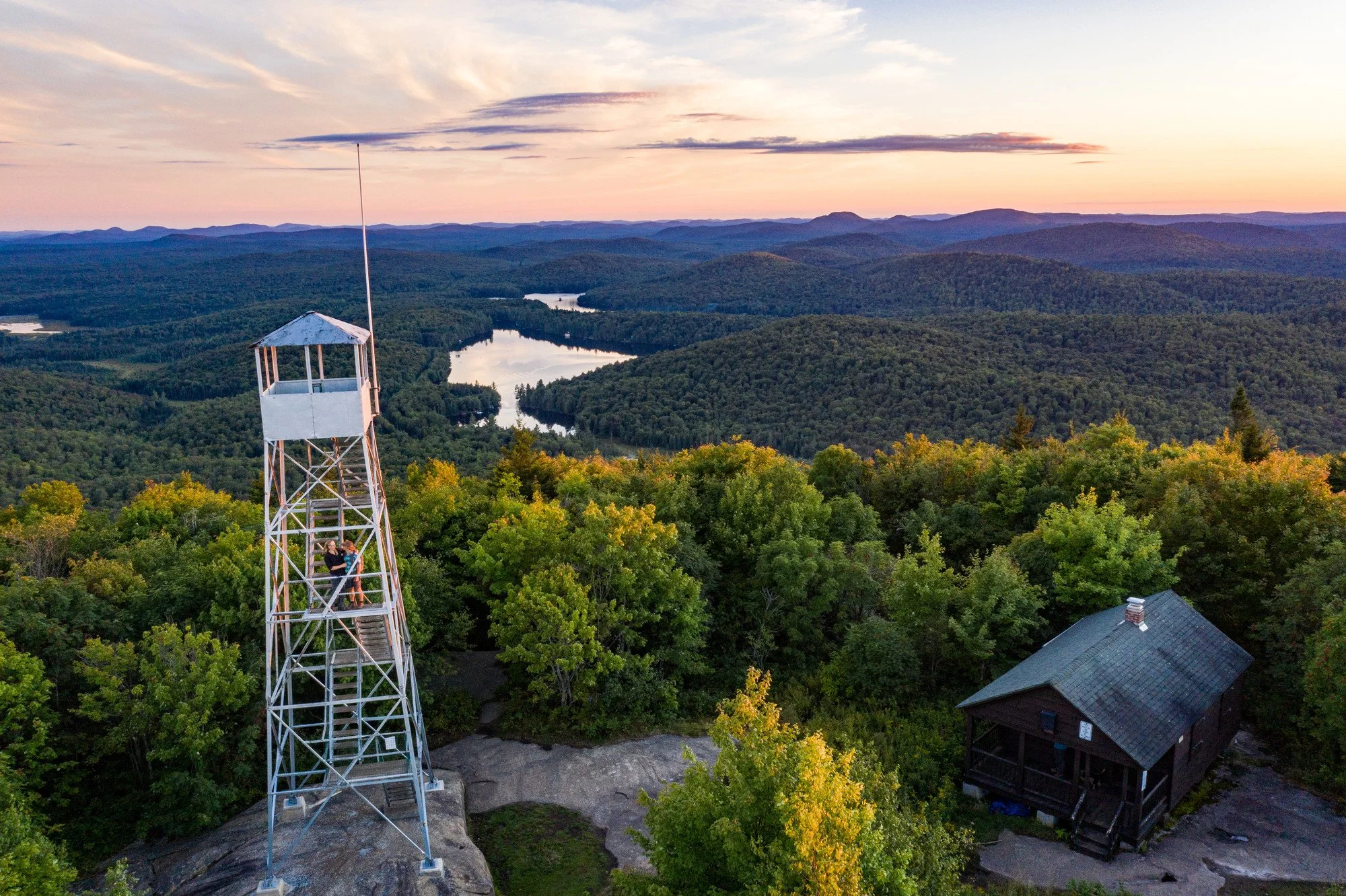
Mt. Arab near Tupper Lake.
Listen to ADK Talks.
Whether the Adirondacks are home, a favorite vacation destination, or a place that keeps drawing you back, understanding the people and communities behind the landscape adds another dimension to the experience.
Listen to What It Takes for Adirondack Communities to Thrive with Blake Gendebien on Apple Podcasts, Spotify, Amazon Music, or wherever you enjoy podcasts.
Don't miss the next Adirondack story. Subscribe to ADK Talks on your favorite podcast platform, and sign up for In Good Taste, the free ADK Taste newsletter. Discover new episodes, interesting people, local food, events, and places worth exploring—delivered with an Adirondack perspective.
Editor's note: Blake Gendebien is a Democratic candidate for Congress in New York's 21st Congressional District. This interview is part of ADK Talks' coverage of the people, issues, and ideas shaping the Adirondacks and does not constitute a political endorsement.
Read the latest news and insights from ADK Taste.









Ultimate Guide to the Adirondacks
Your insider’s guide to exploring the Adirondacks—where to go, what to eat, and the experiences that make this place unforgettable.
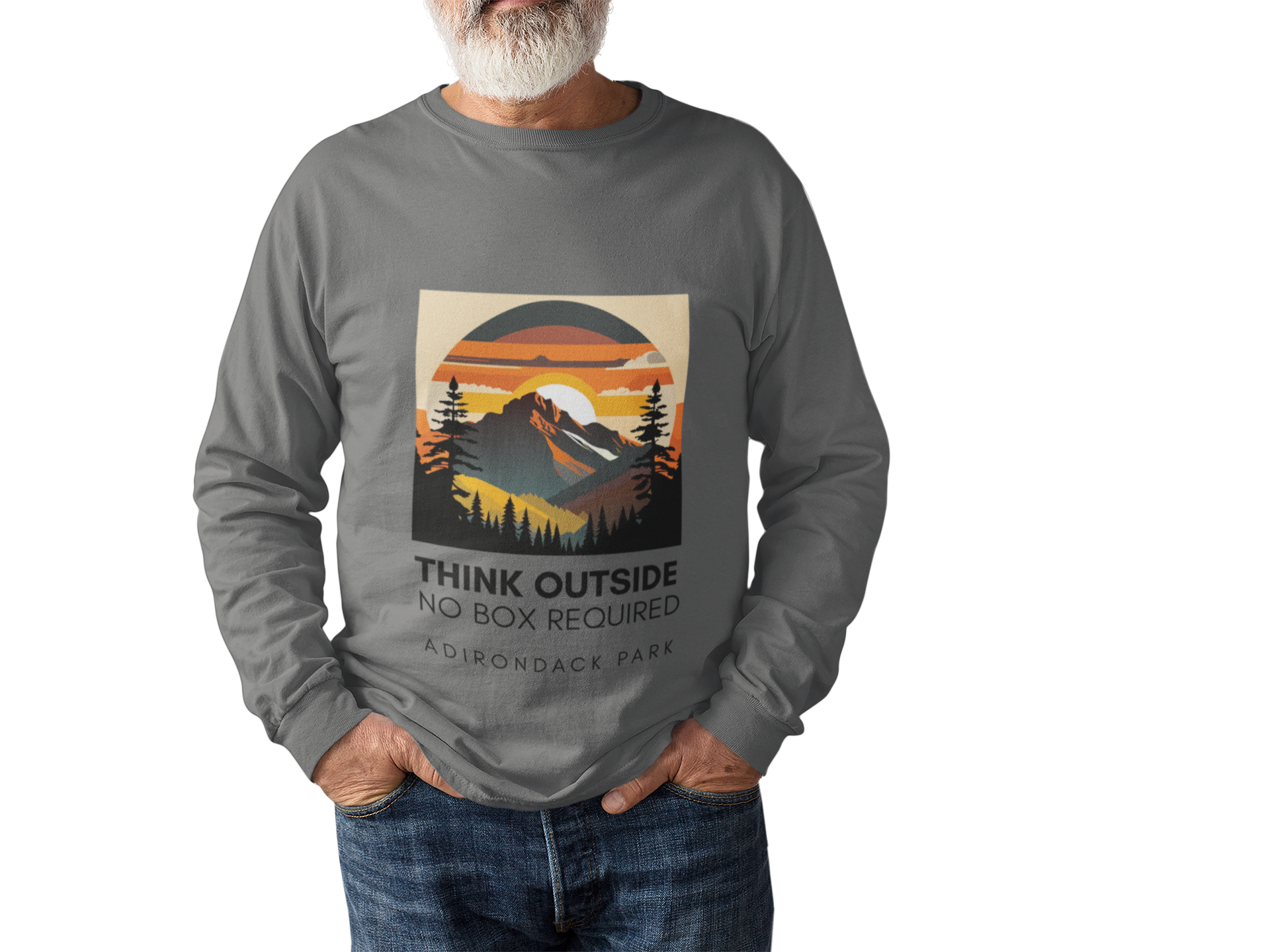
Shop for unique Adirondack apparel, gifts and merchandise.













ADK Talks Podcast
Love the Adirondacks? You’ll love our podcast. We take listeners beyond the guidebooks and into the heart of the Adirondacks. We share stories from the people behind the best places to eat, shop, stay and explore in the ADK. Find us on Apple Podcasts, Spotify or wherever you listen to podcasts.



















It’s early morning, and the mist hovers above the glassy surface of your favorite Adirondack lake, undisturbed but for the rhythmic dip of your paddle. The only sound is the gentle ripple of water breaking against your canoe. The air is crisp, carrying the scent of pine and the promise of another perfect day in the Adirondacks. Your worries are left ashore, traded for the serenity that only paddling these waters can provide.
You’re not just wearing any shirt. You’re donning an invitation to adventure, to explore the thousand lakes and secret inlets of the North Country.
Our Adirondack Paddler’s Long-Sleeve Tee is made of the softest cotton. It's perfect for layering or wearing on its own. It’s designed for those who know the joy of a paddling in the Adirondacks, who’ve felt the thrill of a canoe gliding silently through mirror-still waters.
This ultra-cotton long-sleeve tee is perfect for Adirondack paddlers of all kinds—canoers, kayakers, SUPs, guide boaters and more. It is a clear comfort winner in any season.
There are no side seams for a relaxed fit. The shoulders are taped for improved durability. We love that the cotton used for these shirts is environmentally friendly.
Check the size chart; friends and family tell us this long-sleeved tee may run a little small.