
AccuWeather has singled out upstate New York as one of the country’s most promising places for fall color in 2026. Here’s what that could mean for the Adirondacks—and when to start looking.

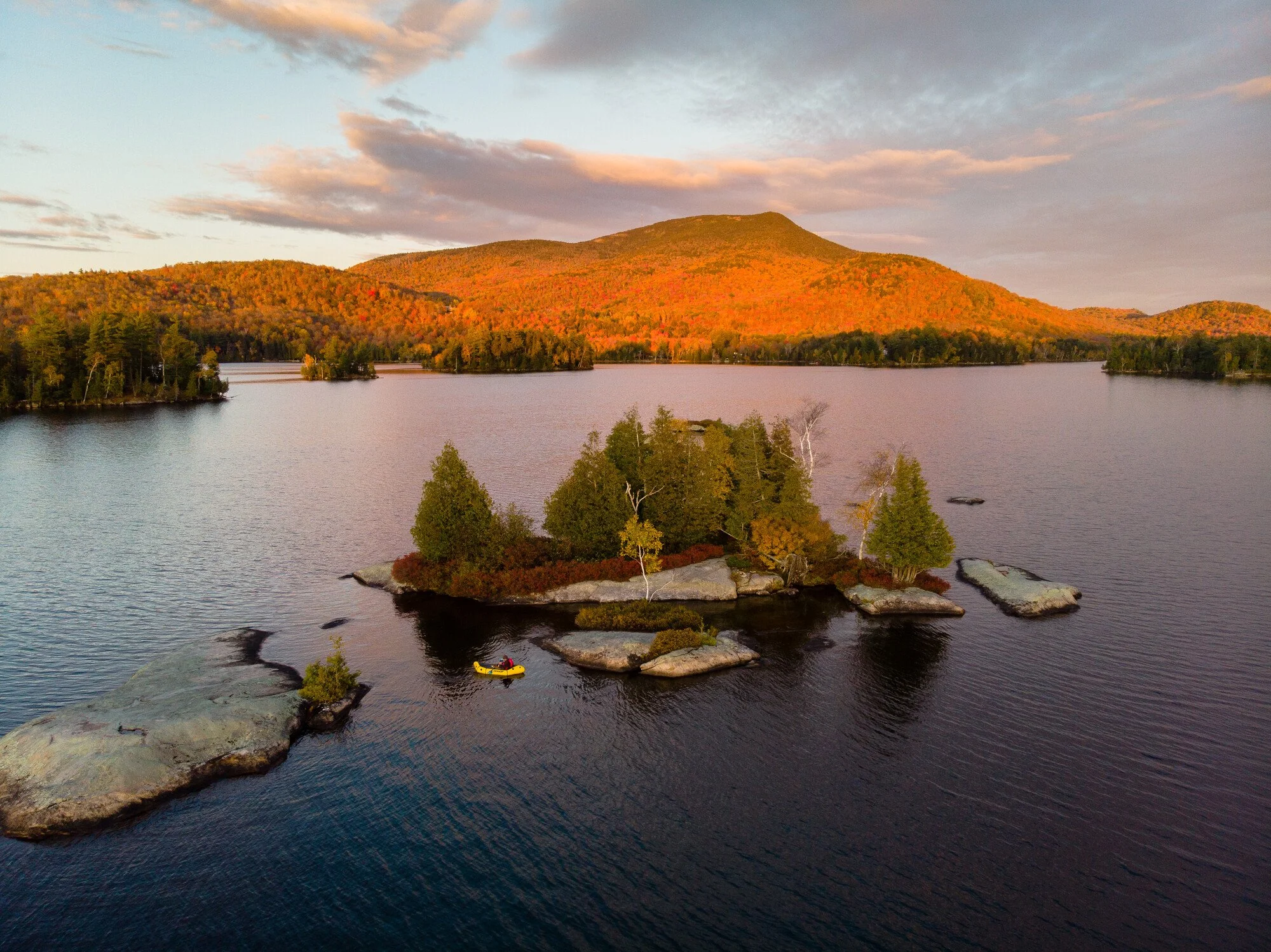
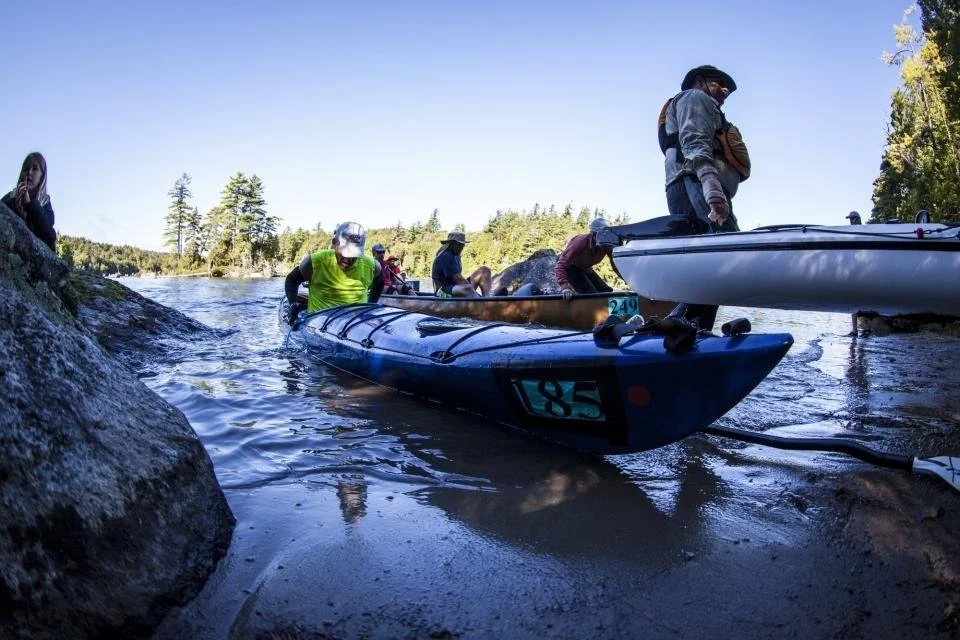
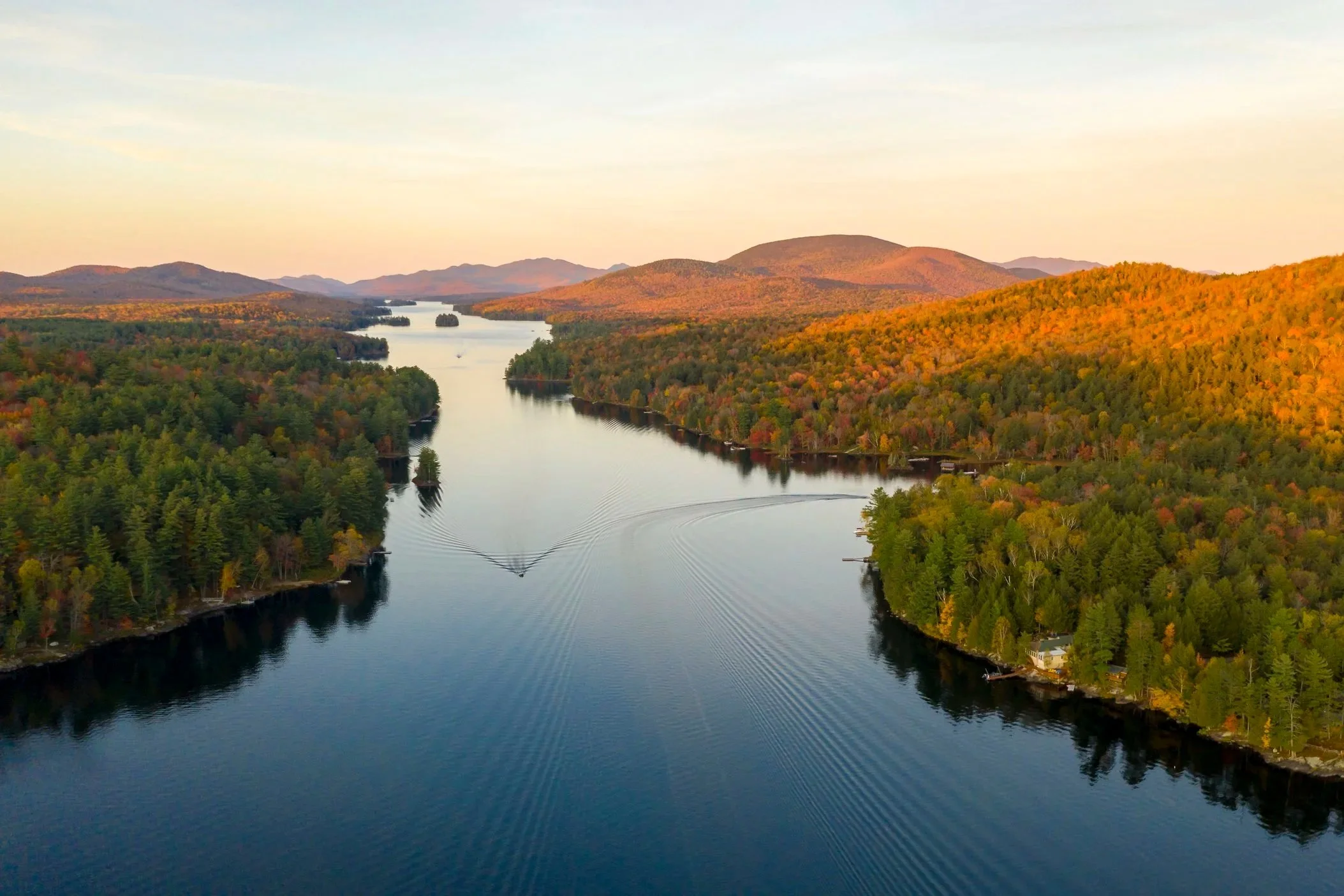
Paddling Tupper Lake in the fall.
If leaf peeping is on the fall calendar, 2026 may be a particularly good year to point the car toward the Adirondacks.
A new national fall foliage forecast from AccuWeather identifies upstate New York and New England as two of the most promising regions in the country for vibrant fall color this year. Better yet, some recent weather conditions in the Adirondacks appear to support that prediction.
No one, of course, has given the trees a schedule. But as September gets underway, the ingredients for an impressive Adirondack foliage season are beginning to line up.
Why 2026 could be a particularly colorful year.
Brilliant fall foliage requires more than cold weather.
AccuWeather says wet conditions in late spring and early summer, followed by drier weather and cooler nights as autumn approaches, could help produce vibrant color across upstate New York and New England. The forecaster expects peak foliage to arrive generally on schedule across the Northeast, with most areas reaching peak color between late September and mid-October.
There's science behind that combination.
Cornell University plant scientists describe warm, sunny days followed by cool nights as a sweet spot for fall color. Temperature and moisture are major factors affecting the display; excessive heat, drought or too much warm, wet weather can all work against brilliant foliage.
As daylight shortens and temperatures cool, trees stop producing chlorophyll, the pigment responsible for green leaves. As the chlorophyll disappears, yellows and oranges become visible, while favorable conditions can help produce the brilliant reds and purples associated with anthocyanins.
In other words, a memorable foliage season isn't simply about getting cold. The weather has to cooperate.
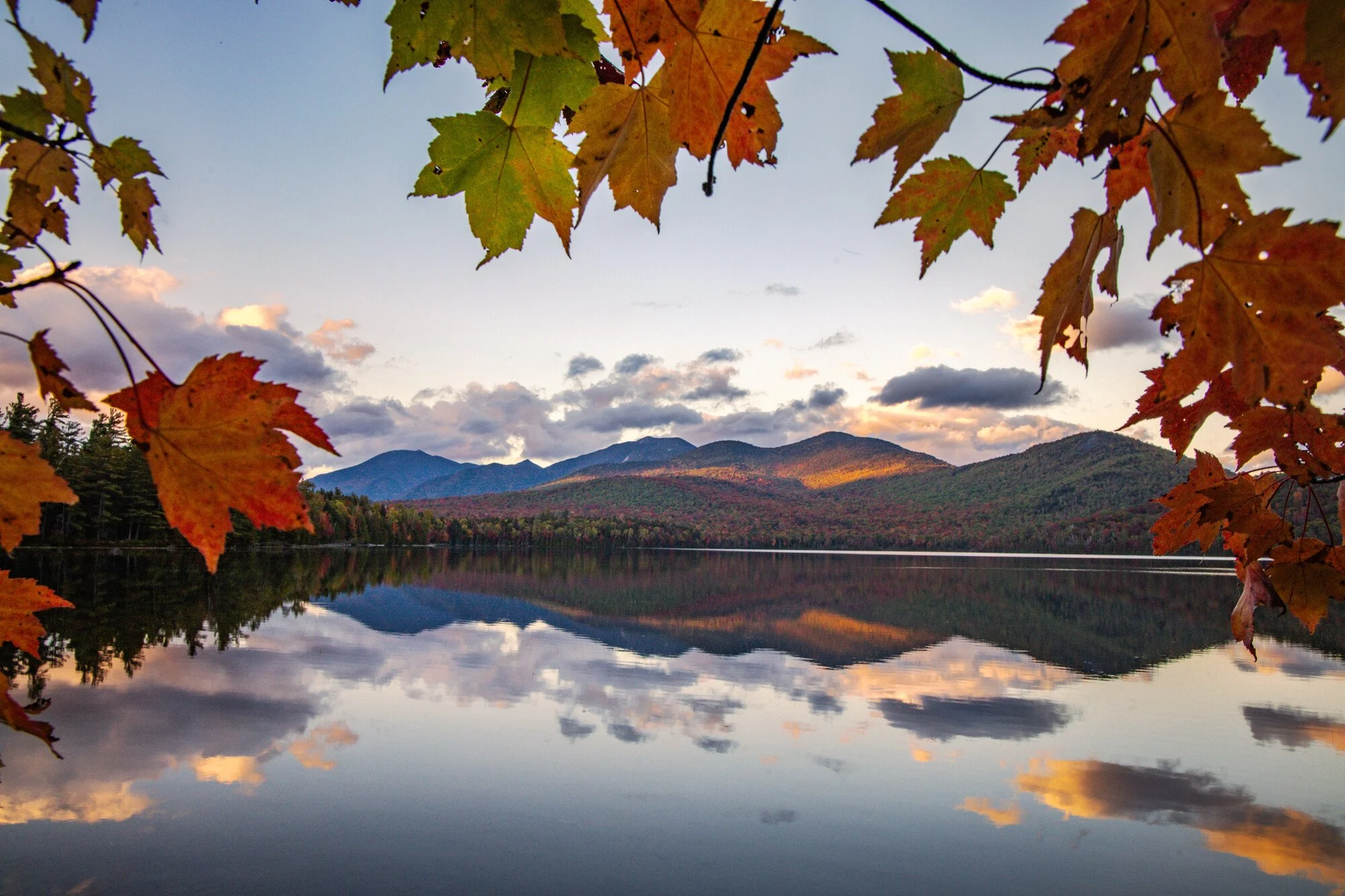
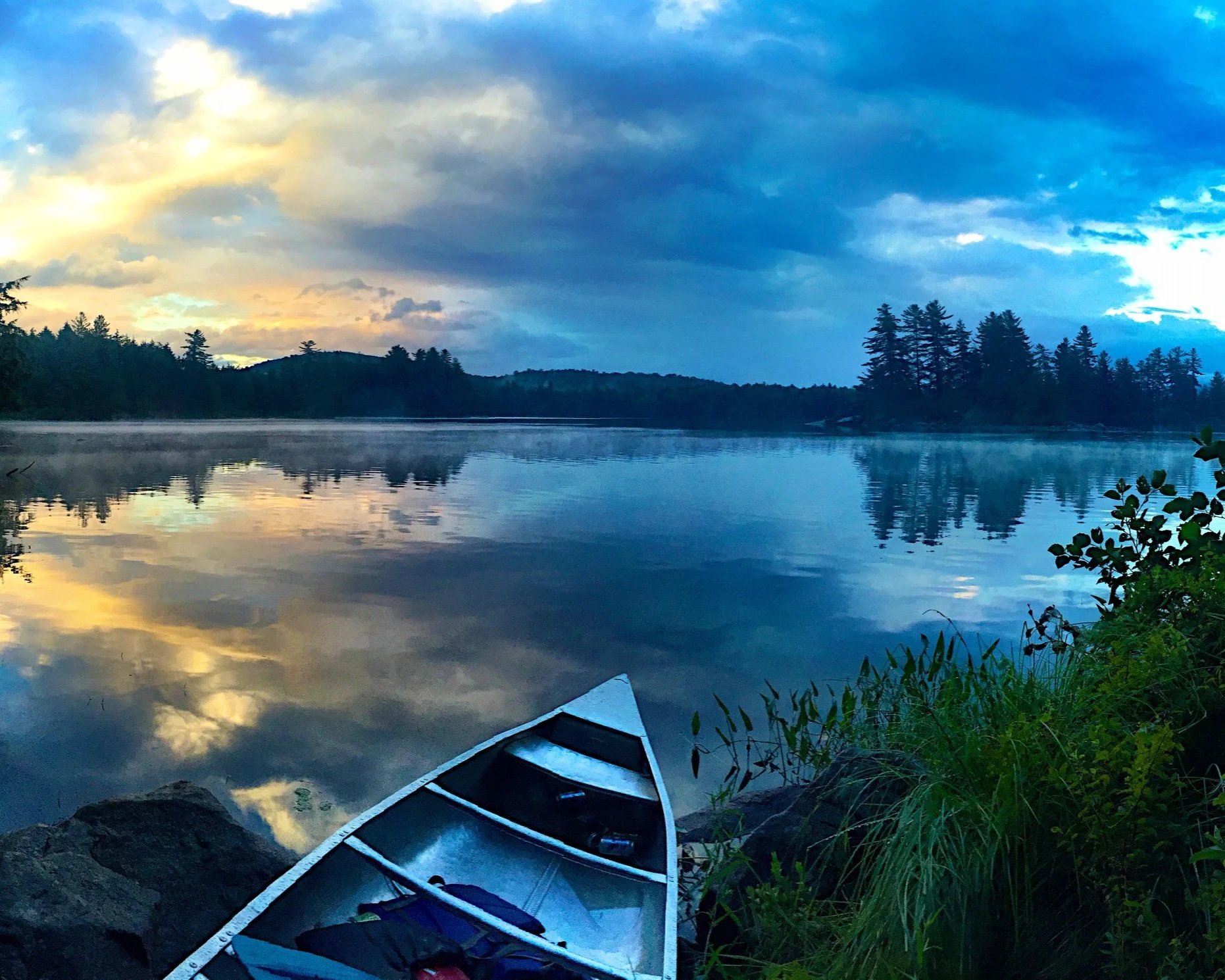
Clear Pond in the Adirondacks.
The Adirondacks are showing some promising signs.
A national forecast for "upstate New York" is one thing. The more interesting question for leaf peepers is whether Adirondack conditions support it.
Encouraging signs are emerging in the northern Adirondacks.
National Weather Service observations at Saranac Lake showed August rainfall running above normal late in the month. By August 28, Saranac Lake had received 3.40 inches of precipitation for the month, compared with a normal 3.25 inches to that point.
Then came the cool nights.
Saranac Lake dropped to 42 degrees on August 20, 46 degrees on August 27 and 39 degrees on August 28. That last overnight temperature was seven degrees below normal.
The southern Adirondacks tell a somewhat different story. Glens Falls finished August with 2.01 inches of rain, 1.37 inches below normal, although temperatures were close to average for the month.
That's also an important reminder: the Adirondacks cover six million acres, and fall doesn't arrive everywhere at once.
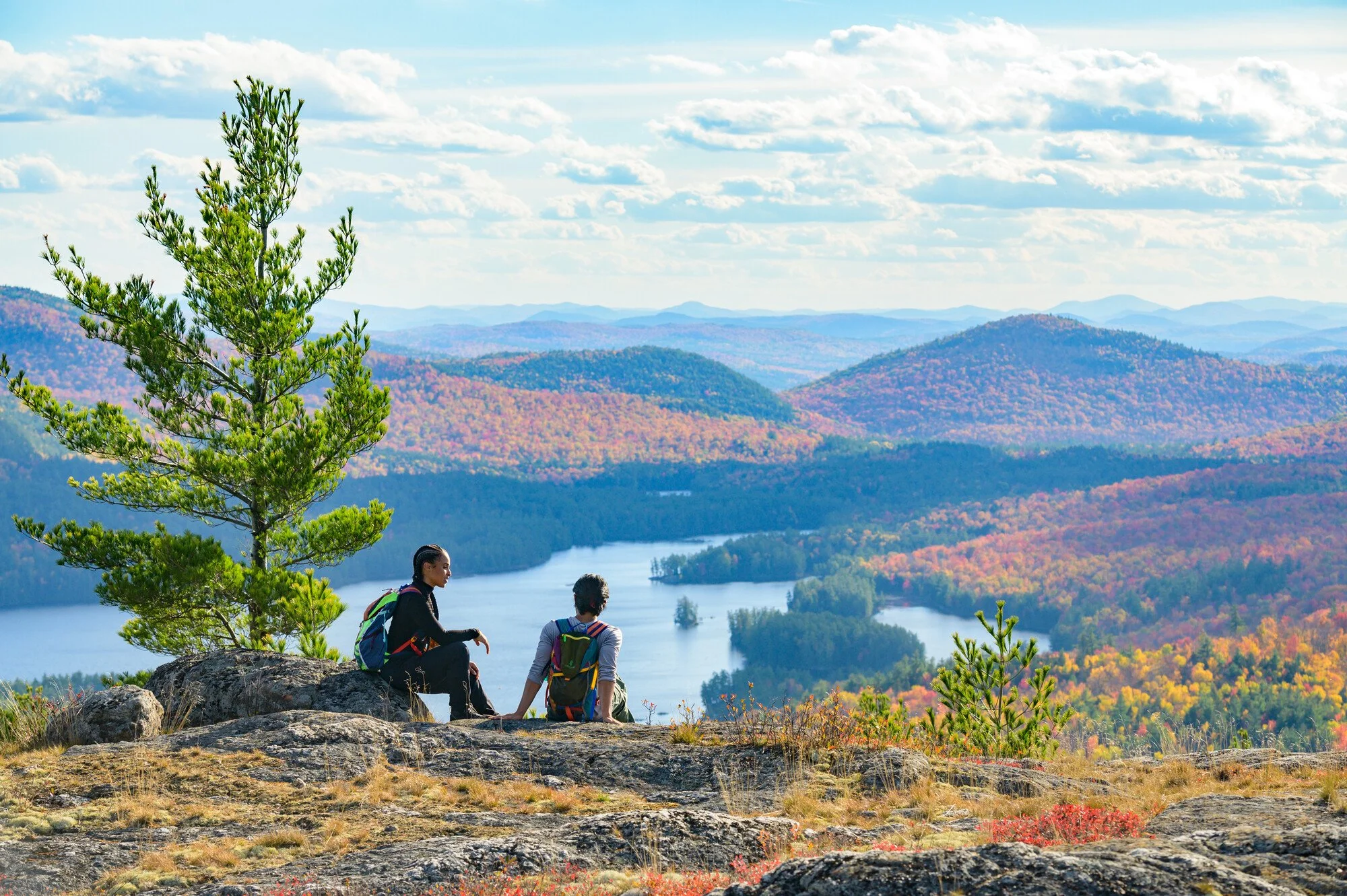
Hiking Treadway Mountain.
There is no single Adirondack peak foliage weekend.
For travelers trying to book the perfect fall weekend, this is both mildly inconvenient and very good news.
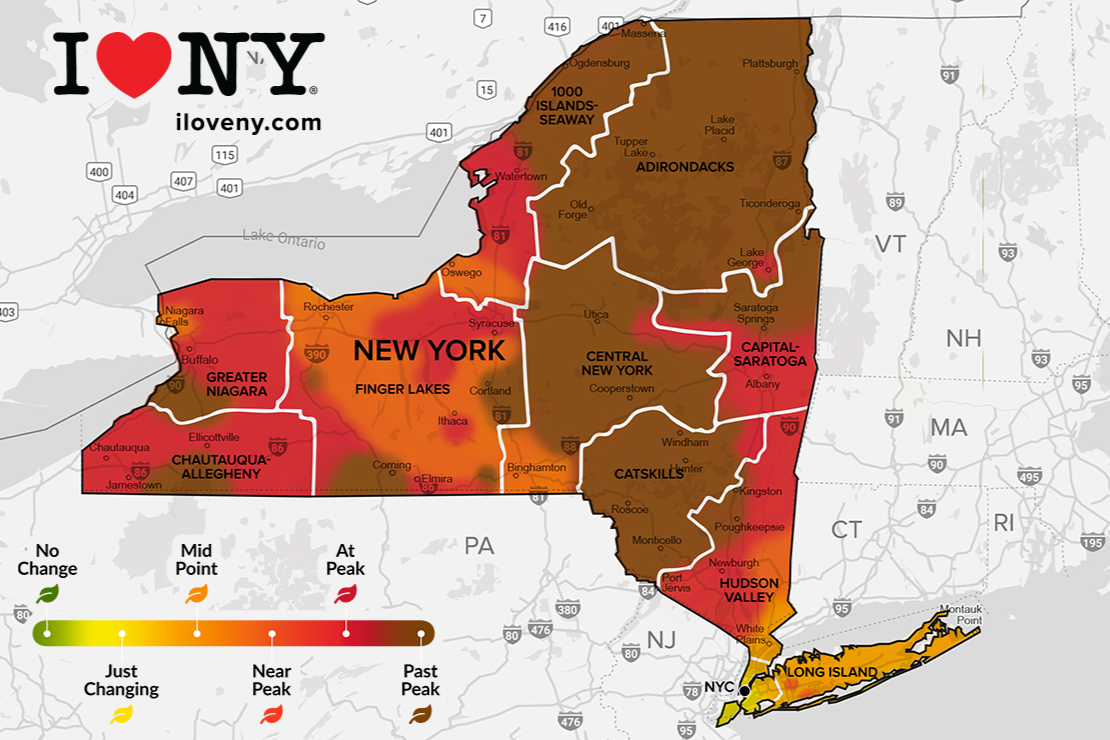
Fall color historically begins in the Adirondacks' higher elevations in early September and works its way down and south as the season progresses. I LOVE NY advises travelers that actual timing varies from year to year and recommends checking its weekly foliage reports during the season rather than relying solely on historical peak dates.
Cornell experts similarly note that higher elevations in the Adirondacks tend to turn first because of their cooler temperatures.
That creates a traveling wave of color across the region rather than one fleeting "peak foliage" moment.
In practical terms, travelers looking early in the season should watch the High Peaks and northern Adirondacks first. As September progresses, attention shifts through the central Adirondacks and eventually toward lower elevations and southern destinations such as the Lake George region.
New York State DEC generally places Adirondack peak color during the last weeks of September into early October, although location, elevation and that year's weather can move the timetable.
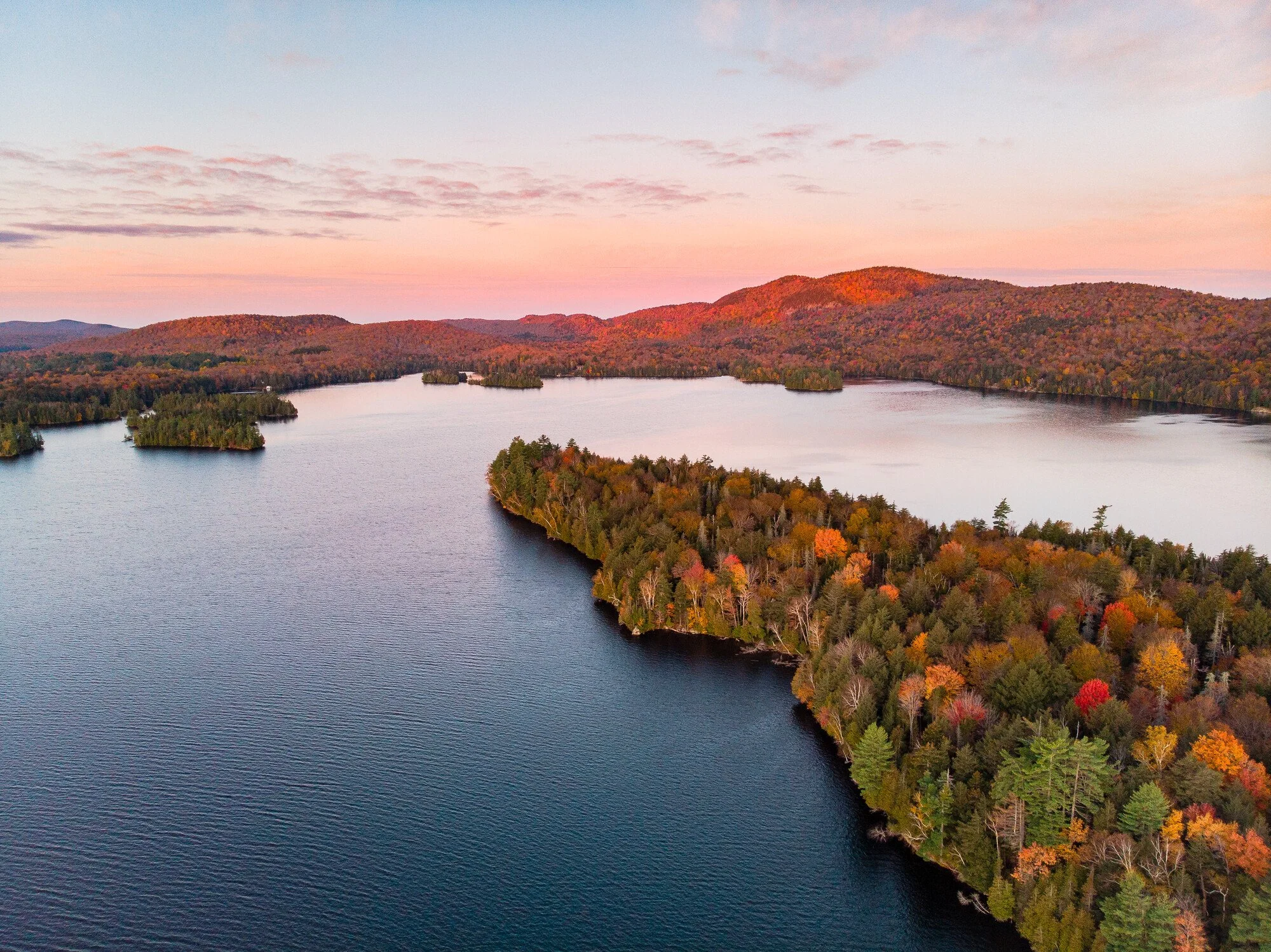
Blue Mountain Lake surrounded by brilliant Fall Foliage.
Where to see Adirondack fall foliage.
Part of the appeal of an Adirondack foliage trip is that seeing the leaves doesn't necessarily require climbing a mountain.
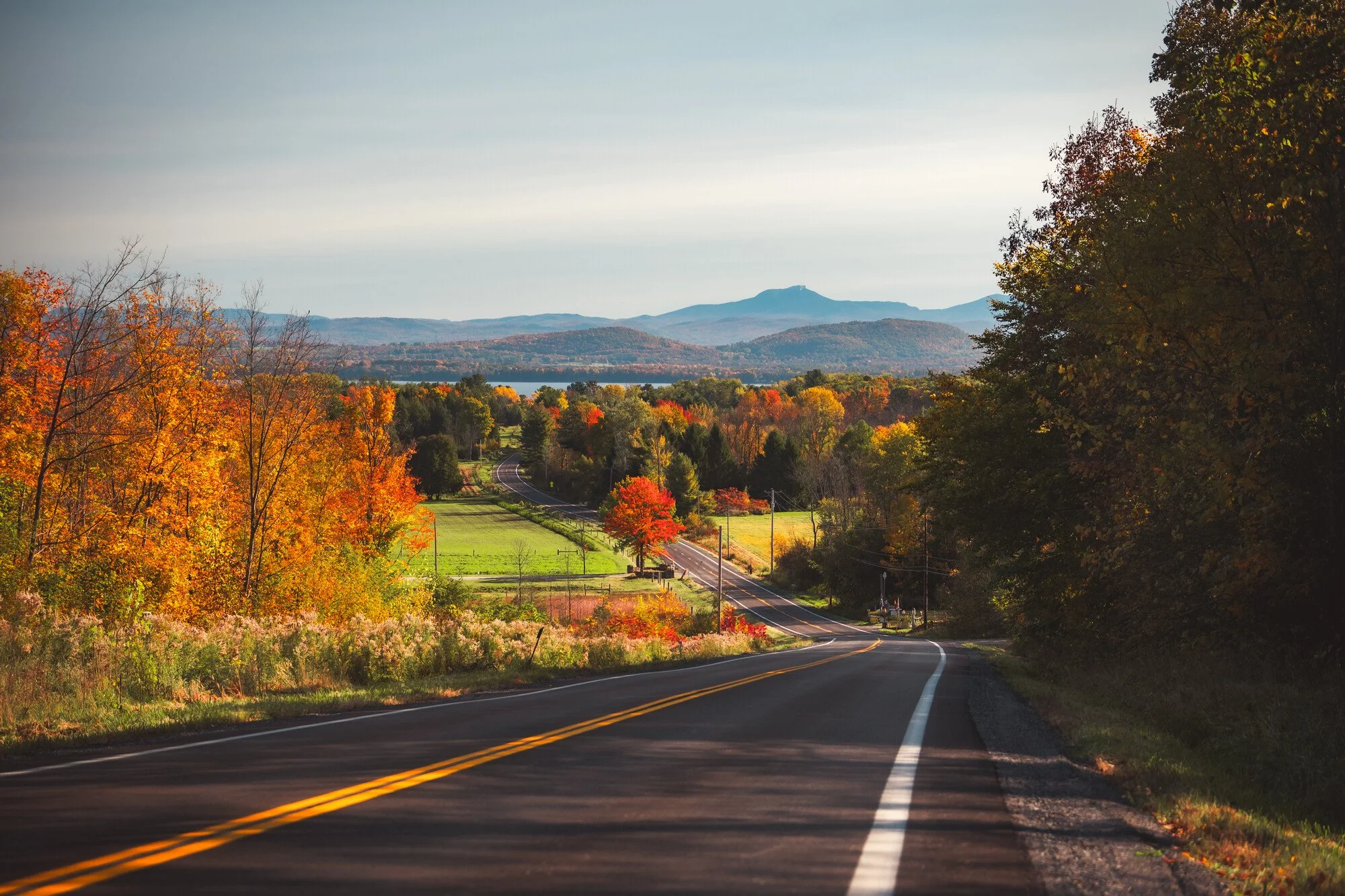
For big panoramas, the High Peaks region offers some of the Adirondacks' most dramatic combinations of elevation and color. Lake Placid and the surrounding mountains are natural early-season destinations, while Tupper Lake, Saranac Lake, Long Lake and Blue Mountain Lake put fall color against water—a particularly good combination on a calm morning.
Scenic drives make it possible to follow the color as it moves through the region. Fire towers and accessible summits add elevation for those willing to earn the view, while gondola and chairlift rides offer another way up without quite so much earning.
And farther south, Lake George often extends the foliage season after higher and more northerly areas have passed peak.
The trick isn't finding the best Adirondack foliage spot. It's matching the destination to the stage of the season.
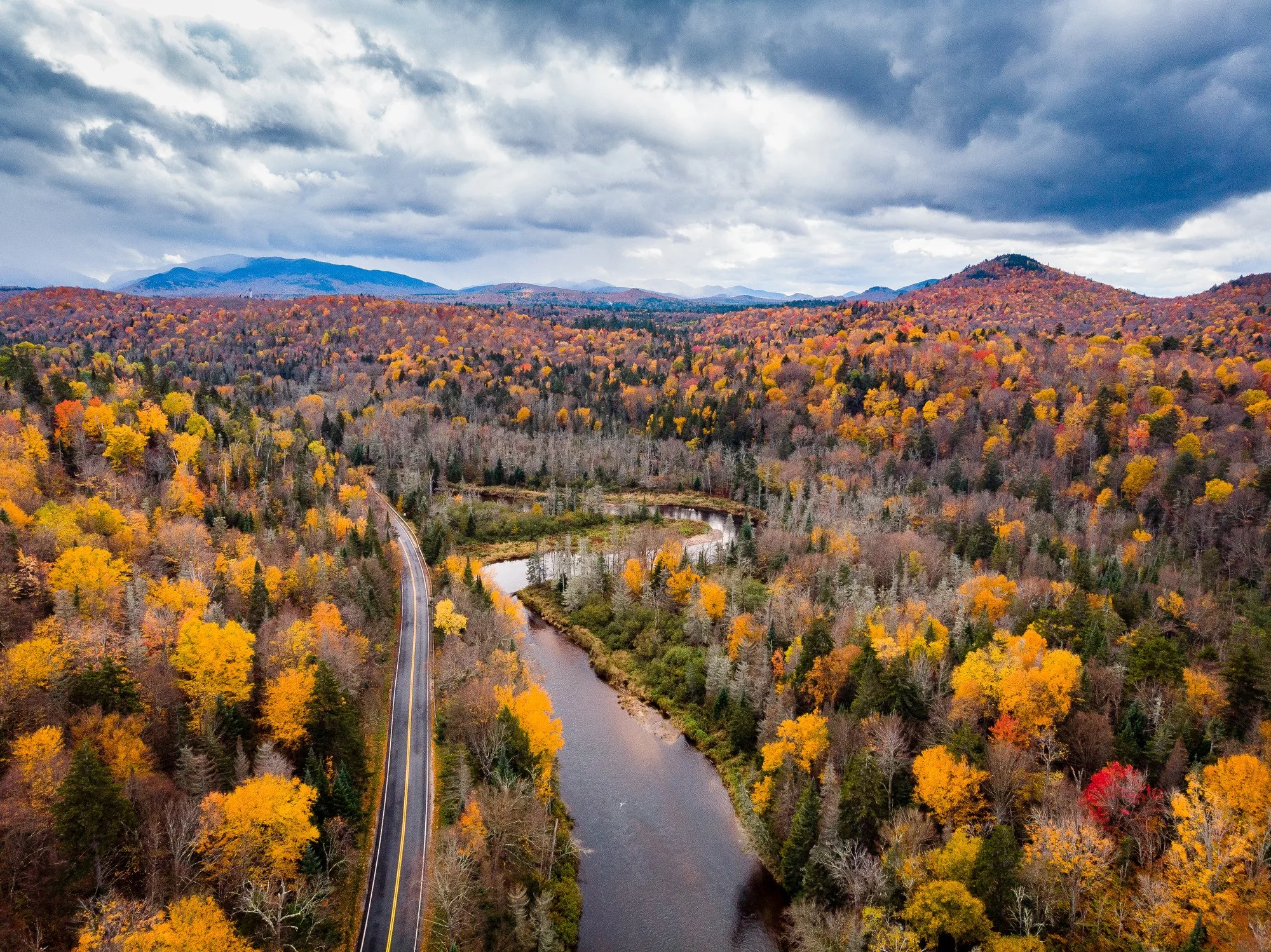
Wilmington Notch in fall.
Forecasts predict. Foliage reports observe.
There is one significant caveat to all this promising news: September weather still gets a vote.
Prolonged warmth can delay color. Drought can stress trees and lead to early leaf drop. Heavy rain and strong winds can bring down leaves just as they reach their best. Sunny days and crisp, cool nights, meanwhile, can help intensify the show.
That's why travelers shouldn't treat any predicted peak date as a reservation with Mother Nature.
Instead, use the seasonal forecast to decide whether an Adirondack foliage trip looks promising—and current foliage reports to decide where to go.
I LOVE NY publishes weekly field reports as the season progresses, tracking actual color conditions around the state.
Check the latest New York Fall Foliage Report
For now, though, the early outlook offers plenty of reason for optimism.
After a summer growing season that provided moisture in parts of the northern Adirondacks, some distinctly chilly late-August nights and a national forecast putting upstate New York among America's most promising foliage destinations, 2026 could deliver quite a show.
The Adirondacks are almost ready to change clothes.
Want more unexpected Adirondack finds? Subscribe to the ADK Taste newsletter for our hand-picked guide to the best things to do, eat, see and experience across the Adirondacks—delivered weekly.
All photos courtesy ROOSTadk.com, unless otherwise noted.
Find the latest news and insights from ADK Taste.
















Ultimate Guide to the Adirondacks
Your insider’s guide to exploring the Adirondacks—where to go, what to eat, and the experiences that make this place unforgettable.
Shop for unique Adirondack apparel, gifts and merchandise.

















ADK Talks Podcast
Love the Adirondacks? You’ll love our podcast. We take listeners beyond the guidebooks and into the heart of the Adirondacks. We share stories from the people behind the best places to eat, shop, stay and explore in the ADK. Find us on Apple Podcasts, Spotify or wherever you listen to podcasts.




















Show off your love for the Adirondacks in style with this Adirondack Park Unisex Heavy Blend™ Hoodie. Featuring a bold canoe-and-mountain design and “Est. 1892” tribute, this hoodie is a must-have for anyone who dreams of paddling serene Adirondack lakes or exploring rugged High Peaks.
Whether you’re relaxing by the campfire, strolling through Lake Placid, or looking for the perfect Adirondack-themed gift, this hoodie delivers warmth, comfort, and timeless style.
Crafted from a soft, durable cotton-poly blend, this item is ideal for layering year-round. The spacious kangaroo pouch pocket keeps hands warm on chilly evenings, and the adjustable drawstring hood adds a snug, cozy fit. Ethically produced with OEKO-TEX certified dyes, it’s as kind to the environment as it is to your weekend wardrobe. Extended sizes available.
This is more than just a hoodie—it’s a piece of the Adirondacks you can wear anywhere. Treat yourself or surprise the ADK enthusiast in your life—perfect for birthdays, graduations, or that next mountain getaway.
Product Highlights:
Soft & durable 50% cotton / 50% polyester blend
Spacious kangaroo pocket for warmth & convenience
Adjustable drawstring hood for the perfect fit
Ethically produced with OEKO-TEX certified dyes
Medium-heavy weight—ideal for year-round adventures
SMLXL2XL3XLWidth, in20.0822.0524.0225.9827.9929.92Length, in27.1727.9529.1329.9231.1031.89Sleeve length from center back, in33.5034.5035.5036.5037.5038.50Size tolerance, in1.501.501.501.501.501.50