
The Adirondacks’ enigmatic aquatic beast.

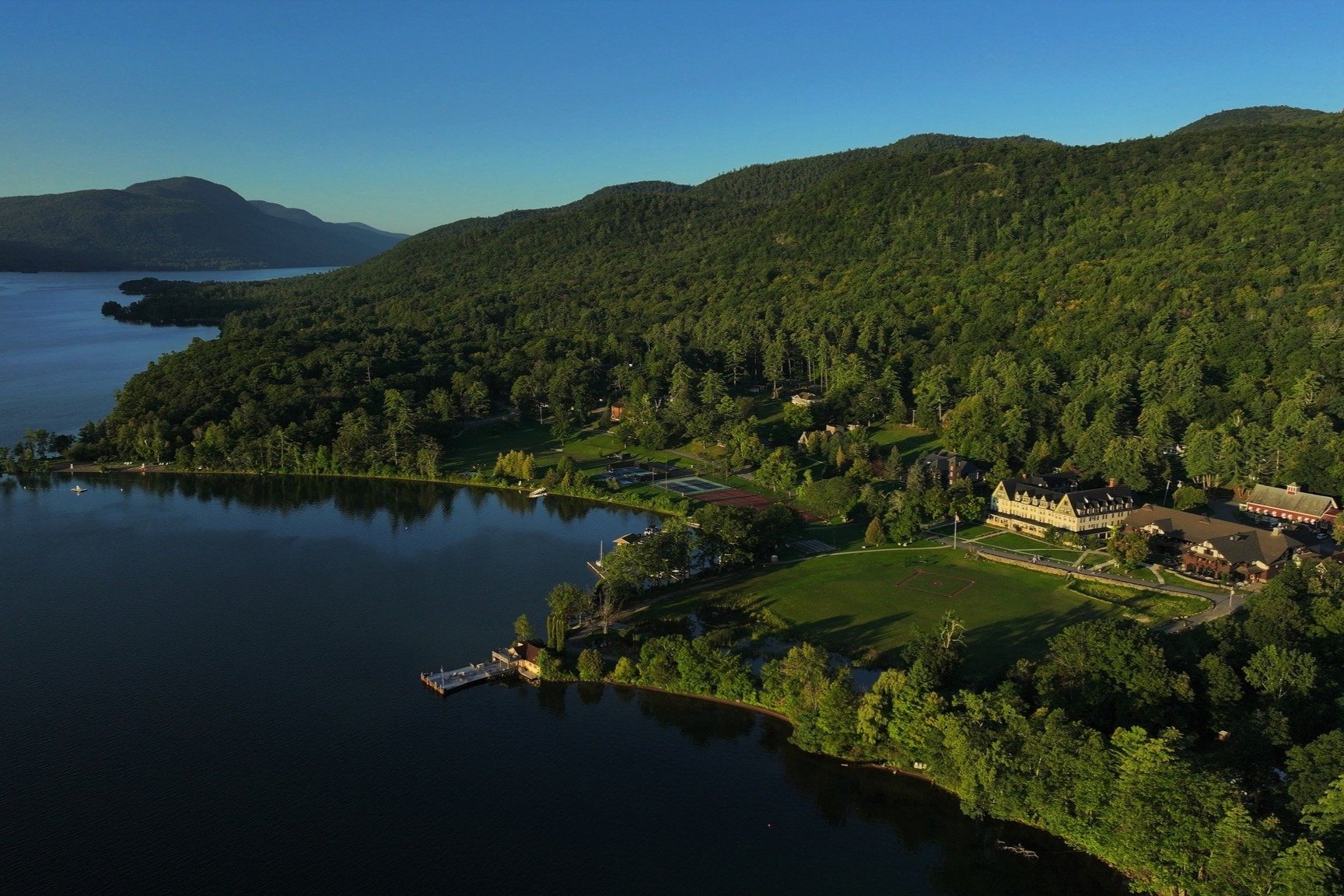
Lake Champlain in the northeast Adirondacks.
Lake Champlain, on the Northeastern edge of the Adirondacks, is notable for its historical significance in colonial America, serene beauty, short tenure as a Great Lake, and favorite destination for sailing, fishing and freshwater sports. It’s also known for its elusive resident—Champ, the lake monster.
For centuries, this cryptid, like Sasquatch and the Loch Ness Monster, has captured the imagination of locals, tourists, and cryptozoologists alike, spawning numerous sightings, legends, and a thriving subculture of Champ enthusiasts.
The history of Champ, the Adirondack lake monster.
The legend of Champ dates back to the indigenous Abenaki and Iroquois tribes, who spoke of a giant creature inhabiting the lake. These early accounts were eventually imparted to and repeated by European settlers. French cartographer Samuel de Champlain, the founder of Québec and the lake's namesake, is often cited as the first European to have sighted Champ in 1609. However, there is no documentation or supporting evidence to verify this.

Image courtesy lakechamplainregion.com.
Sightings became more frequent throughout the 19th and 20th centuries. An 1819 report in the Plattsburgh Republican, entitled "Cape Ann Serpent on Lake Champlain," reports a "Capt. Crum" sighting an enormous serpentine monster.
Despite being 200 yards from the creature, Crum estimated the monster to have been about 187 feet long with three teeth, eyes the color of peeled onions, a white star on its forehead and a “belt of red” around its neck. He also claimed that "two large Sturgeon and a Bill-fish" followed the monster.
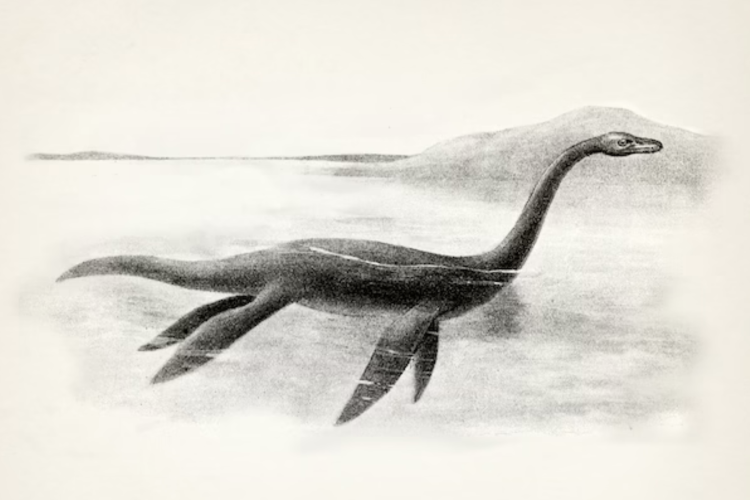
In 1873, a New York Times article detailed a railroad crew's encounter with a "gigantic serpent," bringing Champ into the national spotlight. The creature was described as being over 30 feet long, with a snake-like body, bright silvery scales that glistened in the sun and large, coiled movements. These descriptions have remained consistent over the years, suggesting a plesiosaur-like appearance.
Champ’s Kodak moment: The “Mansi Photo.”
One of the most compelling pieces of evidence for Champ's existence came in 1977 when Sandra Mansi captured a photograph that purportedly shows the creature's head and neck emerging from the lake. The "Mansi Photo" remains one of the most famous and scrutinized pieces of cryptozoological evidence. Despite extensive analysis by the FBI, the photo has neither been conclusively debunked nor proven, maintaining its status as a central piece of the Champ mystery.

Photo: Sandra Mansi
Other notable sightings include a 2003 sonar scan by the Fauna Communications Research Institute, which recorded an unusual echolocation pattern. The researchers noted that the sounds were similar to those produced by beluga whales, yet no such marine animals are known to inhabit Lake Champlain. This intriguing discovery reignited interest and speculation about the nature of Champ.
How and where to spot Champ.
For those eager to try their luck at spotting Champ, Lake Champlain’s Adirondack Coast offers several locations for a search.
Bulwagga Bay, Port Henry, NY: Modern sightings began here in 1819, and some say it's still an excellent place to look for Champ. You can add your name to the Big Board of Champ Sightings if you are lucky enough to see Champ.

The Champ Sightings tote board.
Essex, New York, where some believe natural rock formations look like petrified snakes, and by a railroad crew, steamship passengers, and a boy fishing in 1873
Charter a boat and search the open waters for Champ. Local guides often share historical anecdotes and the best techniques for spotting the elusive monster.

Champ Beach in Port Henry.
Champ spotters recommend early morning and dusk when the waters of Lake Champlain are calmer, and visibility is higher. Sightings tend to spike during the summer, possibly due to increased human activity stirring up the lake and rousing Champ from his watery lair.
Bring binoculars or a camera with a good zoom lens to increase your chances of spotting the creature from a distance.
Theories and skepticism.
Explanations about Champ's true nature range from the plausible to the fantastical. Some scientists suggest that the sightings could be attributed to giant sturgeon or garfish, which can grow to significant sizes and have prehistoric appearances.

Photo courtesy lakechamplainregion.com
Others propose that Champ might be a surviving plesiosaur, a type of marine reptile from the age of dinosaurs, though this theory faces significant biological and ecological challenges.
Skeptics argue that many sightings are likely misidentifications of common animals, floating logs, or wave patterns. The human brain's propensity to find familiar shapes, a phenomenon known as pareidolia, could explain why so many witnesses report similar descriptions.
Champ in popular culture
Champ's allure extends beyond local folklore into broader popular culture. The creature has been featured in numerous documentaries, including an episode of the History Channel's "MonsterQuest" and Discovery Channel's "Lake Monsters."
Port Henry, NY, on the shores of Lake Champlain, hosts an annual Champ Day celebrating the lake monster. This family-friendly event includes fun and games, food, live music, boat races and more.
A popular children’s book, “Lucy and the Lake Monster,” is now a movie and is available to stream on tubi. Producers filmed on location in the Adirondacks in Port Henry, New York and in various places around Lake Champlain's Bulwagga Bay.

Champ Cafe in Ticonderoga.
And, if your quest to spot Champ is fruitless, you can always stop by the Champ Cafe coffee shop in Ticonderoga for delicious coffee drinks, snacks, breakfast items and fun Champ merch.
Whether you are a firm believer in cryptids or a curious skeptic, the legend of Champ adds an enchanting layer to Lake Champlain's natural beauty. The mystery invites both serious researchers and casual tourists to explore the lake's depths, fostering a sense of wonder and community spirit.
So next time you find yourself on Lake Champlain and the Adirondack coast, keep an eye on the water—you never know what might be lurking beneath the surface.

Champ Day parade float in Port Henry, NY. Photo courtesy lakecamplainregion.com.
Places to stay, shop, eat, and things to do in the Lake Champlain region and Adirondack coast.





























Show off your love for the Adirondacks in style with this Adirondack Park Unisex Heavy Blend™ Hoodie. Featuring a bold canoe-and-mountain design and “Est. 1892” tribute, this hoodie is a must-have for anyone who dreams of paddling serene Adirondack lakes or exploring rugged High Peaks.
Whether you’re relaxing by the campfire, strolling through Lake Placid, or looking for the perfect Adirondack-themed gift, this hoodie delivers warmth, comfort, and timeless style.
Crafted from a soft, durable cotton-poly blend, this item is ideal for layering year-round. The spacious kangaroo pouch pocket keeps hands warm on chilly evenings, and the adjustable drawstring hood adds a snug, cozy fit. Ethically produced with OEKO-TEX certified dyes, it’s as kind to the environment as it is to your weekend wardrobe. Extended sizes available.
This is more than just a hoodie—it’s a piece of the Adirondacks you can wear anywhere. Treat yourself or surprise the ADK enthusiast in your life—perfect for birthdays, graduations, or that next mountain getaway.
Product Highlights:
Soft & durable 50% cotton / 50% polyester blend
Spacious kangaroo pocket for warmth & convenience
Adjustable drawstring hood for the perfect fit
Ethically produced with OEKO-TEX certified dyes
Medium-heavy weight—ideal for year-round adventures
SMLXL2XL3XLWidth, in20.0822.0524.0225.9827.9929.92Length, in27.1727.9529.1329.9231.1031.89Sleeve length from center back, in33.5034.5035.5036.5037.5038.50Size tolerance, in1.501.501.501.501.501.50